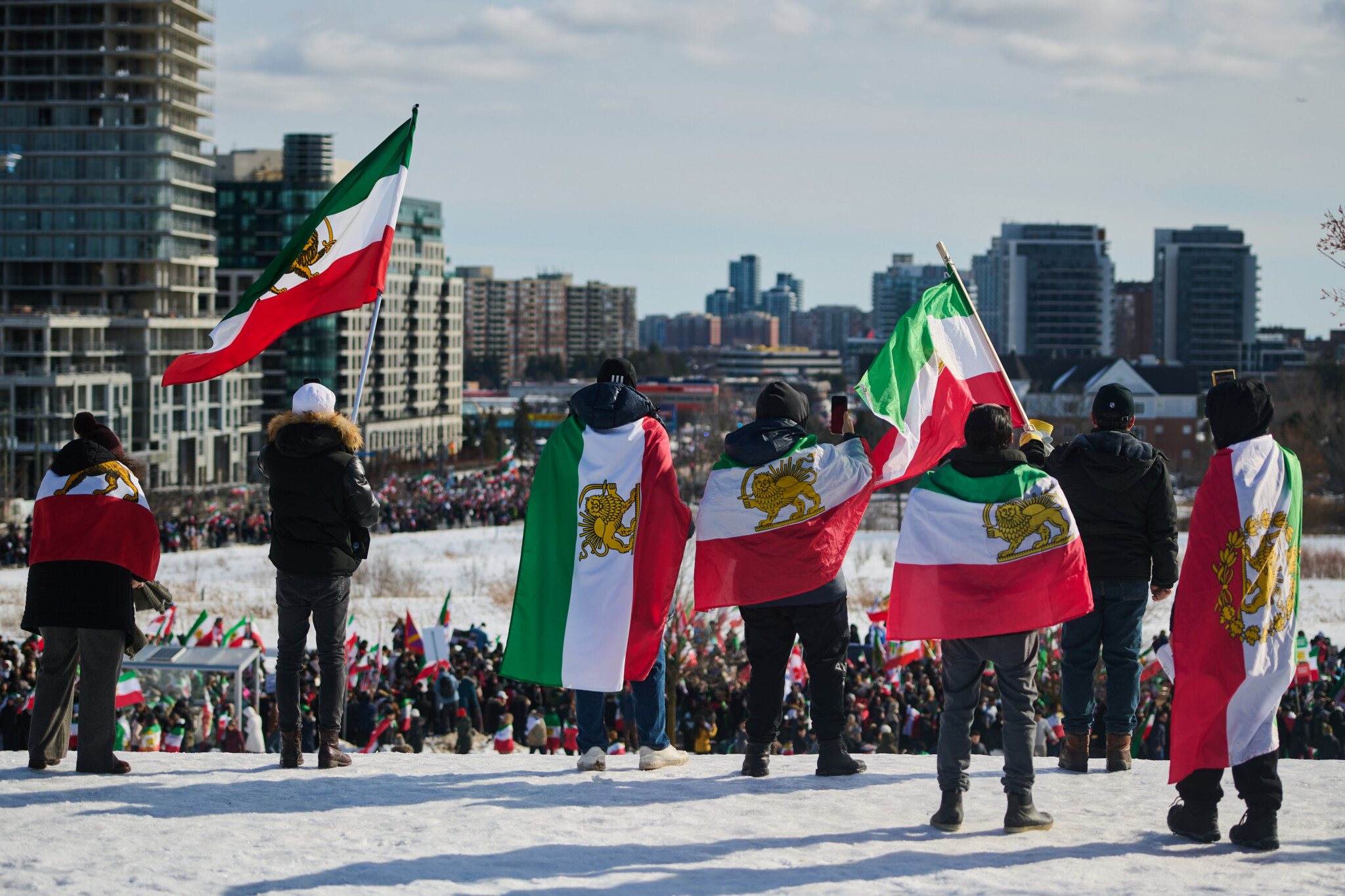
‘A mix of emotions’: Why Iranian-Canadians are now holding their collective breath
You can listen to this episode on Amazon, Apple, and Spotify.
Episode Description
Kaveh Shahrooz, lawyer, human rights activist, and former senior policy advisor on human rights to Global Affairs Canada, discusses the U.S. and Israel’s strikes on Iran and the expanding regional conflict. He describes the scale of Iran’s retaliation, the significance of Ayatollah Khamenei’s assassination for Iranian Canadians, and whether October 7 was the regime’s catastrophic miscalculation that will spell its demise.
He also analyzes Canada’s muddled policy response, the regime’s martyrdom ideology, and the diverging objectives between Israel and the U.S. regarding Iran’s future.
Episode Summary
The ongoing conflict in the Middle East has entered a critical phase, with Iran facing mounting pressure from multiple fronts while grappling with significant strategic setbacks. The situation has evolved rapidly following initial strikes by Israel and the United States, prompting a broader regional response that has drawn in several countries and raised concerns about further escalation.
Iran’s response strategy has diverged from initial expectations. Rather than focusing exclusively on Israel, Iranian forces have expanded their targets to include American military installations across the region and critical infrastructure in multiple countries. Recent strikes have targeted oil facilities and data centers, while attempted attacks on Turkey have raised particular alarm given its NATO membership and military capabilities. This approach appears designed to pressure regional governments into advocating for negotiations with the United States, though the effectiveness of this strategy remains uncertain.
The death of Iran’s supreme leader has marked a pivotal moment for the Islamic Republic and the Iranian diaspora community. The leader, who rose unexpectedly to power despite initially being viewed as a potential puppet figure, ultimately consolidated control and shaped the modern Iranian state through strengthening the Revolutionary Guard. His passing represents a fundamental shift in the country’s political landscape, though the nature of what comes next remains unclear.
Canada’s policy position on the conflict has appeared inconsistent, with initial statements suggesting support for the United States followed by subsequent clarifications that have muddled the government’s stance. Domestic political considerations, including pressure from various constituencies within the governing party, appear to be influencing policy decisions alongside efforts to maintain relationships with both American and European allies.
The presence of individuals with ties to the Iranian regime in Canada continues to generate concern within Iranian-Canadian communities. Despite legislation designed to bar such individuals and enable deportation of those who misrepresented their backgrounds, enforcement has been minimal. Reports of regime-connected individuals living in Canada with unexplained wealth persist, though precise numbers remain difficult to verify.
Iran’s strategic position has deteriorated dramatically over recent years. The country’s defense doctrine traditionally relied on maintaining influence through proxy forces across the region, creating strategic depth that would keep conflicts away from Iranian territory. This approach appeared effective until recent events systematically dismantled these networks. The destruction of Hamas, the weakening of Hezbollah, and the collapse of allied governments have eliminated much of Iran’s regional buffer, leaving the country increasingly vulnerable to direct attack.
The ideological dimension of the conflict presents particular challenges for Western policymakers. Iranian leadership views the struggle through a religious and cosmological lens rather than conventional geopolitical calculations, with martyrdom considered honorable rather than something to be avoided. This worldview complicates traditional deterrence strategies and requires different analytical frameworks.
This summary was prepared by NewsBox AI. Please check against delivery.
Kaveh Shahrooz discusses the escalating conflict in the Middle East, focusing on Iran’s strategic setbacks and evolving response to strikes by the U.S. and Israel. He analyzes Iran’s expanded targets, including American installations and critical infrastructure in multiple countries, and the implications of Ayatollah Khamenei’s death. Shahrooz also examines Canada’s inconsistent policy response and the presence of regime-linked individuals within Canada. He highlights the erosion of Iran’s regional influence and the challenges Western policymakers face due to Iran’s ideological perspective on the conflict, emphasizing the importance of understanding their view of martyrdom.
How might Iran's shift to targeting US installations and regional infrastructure impact the broader Middle East conflict?
Given Canada's 'muddled' policy, what domestic factors are influencing its approach to the conflict and its relationship with Iran?
With Iran's regional influence weakened, how does its 'martyrdom ideology' complicate Western efforts to de-escalate the conflict?


Comments (0)