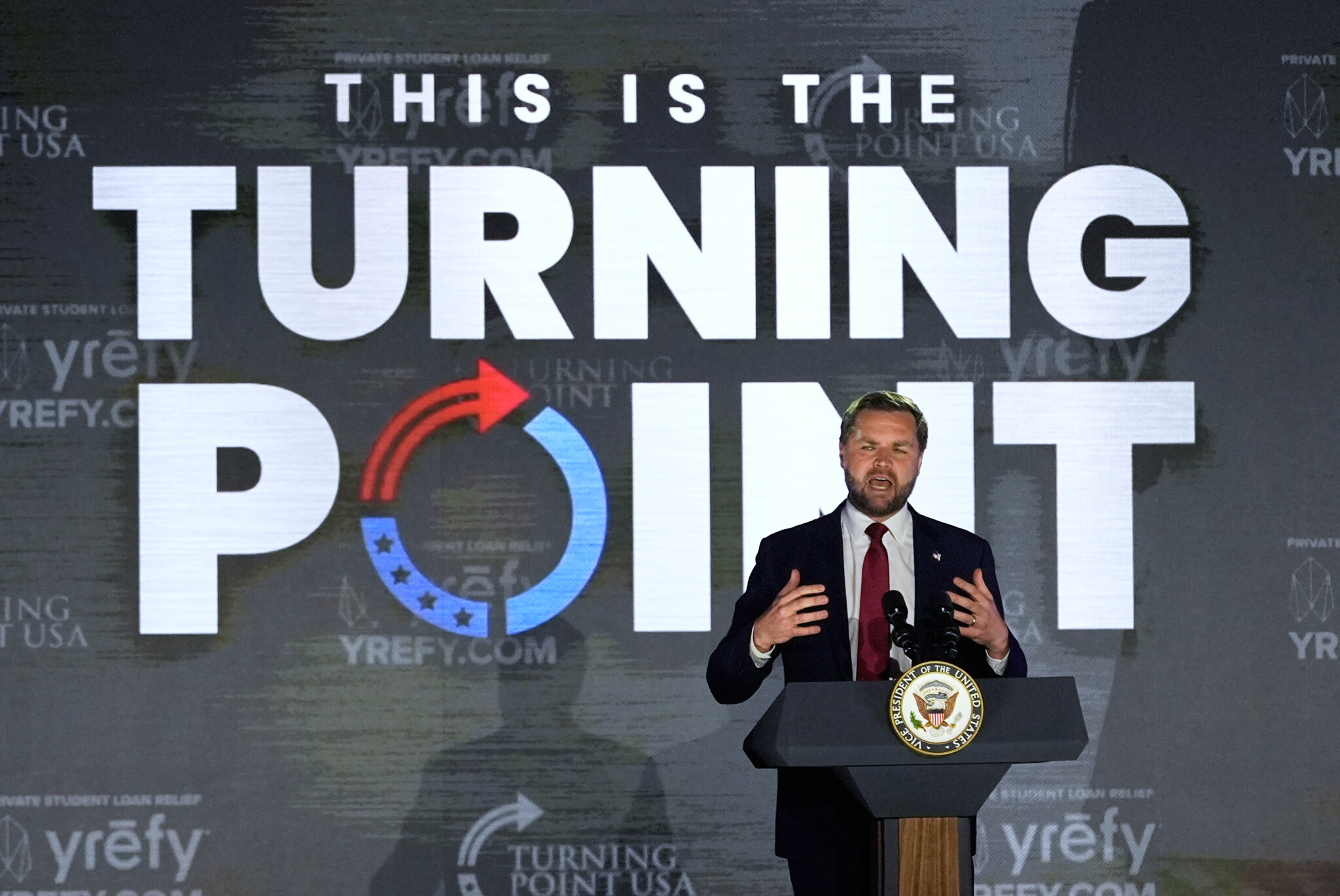
‘A populist, nationalist movement’: What is AmericaFest—and why should Canadians be paying attention?
Rudyard Griffiths and Sean Speer discuss Turning Point USA’s major AmericaFest 2025 conference held over the coming days. They explore how the MAGA movement is evolving beyond traditional conservatism toward populist nationalism and more heterodox and fringe positions on immigration, Israel, and culture. They address the competition to succeed Trump’s legacy, featuring figures like JD Vance and Tucker Carlson, while questioning whether these political currents still represent conservatism or something darker and different.
You can listen to this episode on Amazon, Apple, and Spotify.

Program Summary
This is an automated summary. Please check against delivery.
The American conservative movement faces a critical juncture as one of its largest annual gatherings prepares to convene, revealing deep shifts in the ideological foundations of right-wing politics in the United States. The event serves as a barometer for understanding the evolving direction of Republican Party politics and the broader MAGA movement as it enters its second year under the current administration.
The conference has emerged as a key venue for potential successors to current leadership, with high-profile political figures positioning themselves for future prominence. The gathering represents more than a simple political convention, functioning instead as a showcase for the competing factions and ideologies now vying for dominance within conservative circles. The transformation reflects a fundamental realignment from traditional Republican orthodoxy toward a more populist and nationalist orientation.
This shift represents a departure from the country club conservatism that once defined the party. The movement has evolved into something markedly different from the political philosophy that dominated Republican thinking in previous decades. Traditional conservative voices and establishment figures have been largely sidelined, replaced by personalities who embrace more heterodox positions on immigration, foreign policy, cultural issues, and economic matters.
The evolution appears driven by grassroots sentiment rather than elite imposition. Recent polling data suggests the Republican base has shifted significantly, embracing positions that would have been considered antithetical to conservative principles in earlier eras. Political figures are responding to these bottom-up pressures, adapting their messaging and positions to align with the changing center of gravity within the party.
The speaker lineup at such gatherings reveals the extent of this transformation. While some mainstream political figures maintain their presence, the roster increasingly includes controversial personalities known for promoting conspiracy theories and fringe viewpoints. Some speakers have faced legal troubles, while others have expressed views on religious nationalism and gender roles that fall well outside mainstream political discourse.
The changes raise questions about terminology and classification. What was once described as far-right politics may now represent the center of the American right, given the widespread acceptance of previously marginal positions. This presents challenges for understanding whether these developments represent an evolution of conservatism or the emergence of something fundamentally different, potentially better characterized as reactionary populism or white nationalism.
The transformation has implications beyond American borders. Canadian political observers express concern that these intellectual and political currents may eventually influence conservative movements in other countries. The absence of gatekeeping voices within the movement has allowed previously fringe elements to gain prominence and legitimacy.
The shift also reflects broader changes in how political movements organize and communicate. The rise of online platforms, podcasts, and social media has created new pathways to political influence, bypassing traditional media and institutional structures. Political figures increasingly engage with these alternative channels, recognizing their importance in reaching and mobilizing supporters.
As the movement continues to evolve, questions persist about its long-term trajectory and impact on democratic institutions.
Is AmericaFest's shift from traditional conservatism to populist nationalism a sign of evolution or a departure?
What are the potential implications of AmericaFest's evolving ideology for Canadian politics?
How are new media platforms shaping the rise of populist nationalism in American politics?


Comments (0)