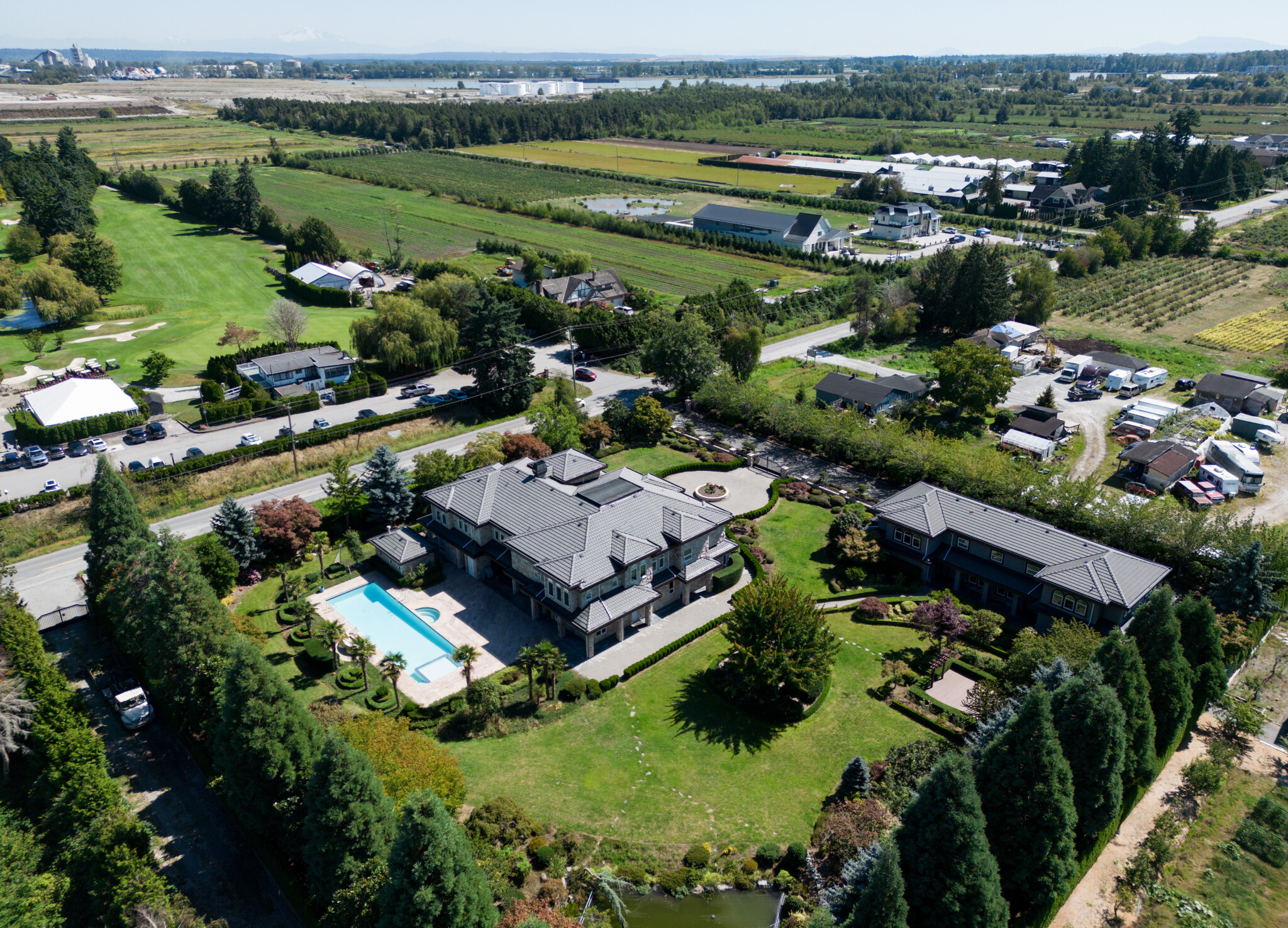
‘A watershed moment’: Why an Indigenous land claim could change Canadian property rights forever
Dwight Newman, professor of law at the University of Saskatchewan, discusses a landmark B.C. Supreme Court decision that recognized the Cowichan Tribes’ Aboriginal title over urban land in Richmond, B.C.
He explains the legal implications for property owners who received letters warning the claim could affect their ownership rights and the tension between modern property ownership and Indigenous title rights. He also explores how this legal precedent could influence land ownership across Canada, and how cultural movements around land acknowledgments and “land back” campaigns have informed judicial decisions.
You can listen to this episode on Amazon, Apple, and Spotify.
Program Transcript
This is an automated transcript. Please check against delivery.
HARRISON LOWMAN: Welcome to Hub Hits. I’m your host, Harrison Lowman, managing editor of the Hub. Well, this summer, the B.C. supreme Court issued a landmark decision. It was the first time a Canadian court granted indigenous title over urban land involving parts of 2,000 acres near B.C. what does it mean for reconciling Indigenous land claims and Canadian property rights rights? That Canadians were notified in a notice from their government a few days ago, a notice that has created some debate and and discussion across Canada. For that, I’m joined by Dwight Newman. He’s a professor of law at the University of Saskatchewan, specializing specifically in Indigenous rights law. Dwight, thanks so much for joining us on the Hub today. How are you doing?
DWIGHT NEWMAN: Oh, I’m good and happy to be with you.
HARRISON LOWMAN: So give us your expertise here. A few days ago in Richmond, B.C. residents received a letter from their mayor. It read in part that the B.C. supreme Court decision of the Cowichan Tribes versus Canada, this case I was just talking about, could negatively affect the title of your property for those whose property is in the area outlined in black. The court has declared aboriginal title to your property, which may compromise the status and validity of your ownership. And then they included a map which you can see in our screen back here showing the territory there. Not something you want sort of slipping into your mailbox. This all in effort, you know, of the mayor to sort of inform his residents about what the future could hold. From your legal perspective, though, Dwight, how concerned or not concerned should residents be about receiving this letter?
DWIGHT NEWMAN: Well, they should be concerned if they homeland there. But in one way, there’s nothing new from the letter. I mean, this is really just describing an implication from the decision this summer of the court. And I’m sure many of the residents there were paying attention already once they heard about that decision. But the City of Richmond, I think, is working to advise its residents and to meet with them about the path forward. The decision is under appeal now. And so that’s the decision right now of the court. But to be clear, the court didn’t make a declaration saying that that land is to be transferred, the privately owned land. The Cowichan tribes were seeking a declaration of aboriginal title, but they were only seeking a transfer of the land owned by the City of Richmond and the Federal Crown. But what the judgment says ends up having this implication that more land would be recognized as aboriginal title land if the Cowichan tribes decided to pursue that. And I mean, other statements in the decision actually say aboriginal title just takes a priority over private property land generally, so could have implications throughout British Columbia but why people shouldn’t be concerned is they might have other defenses if it actually came to that. And in any case the decision is being appealed. And so it really depends on the outcome of the appellate court decisions as to where things go.
HARRISON LOWMAN: So let’s get a sense of where the case is now heading to the Court of appeals in B.C. government asked for the decision and make sure I have my terminology right here for it to be stayed. So the decision, it does not exist. It is not enforceable right now. Some hoping for this case to be pushed right to the Supreme Court given how impactful it will be. Right. Do I have a sense of where the case exists now?
DWIGHT NEWMAN: Yeah, that’s right. And so it’s going to take some time. I mean the stay only concerns implications of the decision directly for federal land and city of Richmond land that’s within that area. And nothing in the decision was having a direct effect on the privately owned land as yet anyway. But it does create a set of risk factors for the status of that land that the owners probably weren’t thinking about before this decision and may not have been thinking about before receiving this letter. Although as I say, one would hope that they’d been watching the news since the summer. I think people in British Columbia generally are pretty aware of and concerned by this decision and certainly those that are right there in the claim area should have woken up to it in the summer. But the city of Richmond is taking appropriate steps.
HARRISON LOWMAN: Dwight, I wish a lot more Canadians were watching the news. I suspect some of them weren’t aware of what was going on here and it came to somewhat of a shock. But tell me, there are indigenous groups that say this shock is unfounded. They say that it’s fear mongering. A member of the Cowichan tribe said they don’t want to displace ordinary British Columbians from their land, that they have no intention of seizing the private property of Canadians. What do you make of that assertion and the remarks around that?
DWIGHT NEWMAN: Right. That may all be true. I mean certainly that’s a reconciliatory path in some ways, but it’s not legally binding on the first nations that they say that now. And so those concerned by the decision would just be left trusting to that. And whether everyone’s going to trust to that over the longer term is a different question. First nations could change their mind on that down the road.
HARRISON LOWMAN: Well, this is the thing and Sean got into this. Sean Spear, our co founder, got into this with you before. How impactful is this decision as it relates to other parts of the country. Is this something that is, is a B.C. decision or do you see it having ripples across the country in that other indigenous groups will be seeking similar outcomes?
DWIGHT NEWMAN: Well, whatever is decided in this is an important precedent for across the country, but right now it only is binding within British Columbia because it’s a British Columbia court. Courts in other provinces could take a different view. I think we’ll see some comment on a similar issue from an upcoming New Brunswick Court of Appeal, but we’ll see what it says. If the Supreme Court of Canada were to rule on it. It has implications anywhere where there are aboriginal title claims. But significant parts of Canada also have treaties that mean that there aren’t aboriginal title claims in those places. So it’s very context dependent and complex, unfortunately, in terms of describing all of the effects of this in different places.
HARRISON LOWMAN: This is why we have you here to explain the complexities in that this is specific in B.C. in that there weren’t, I don’t think there were really any indigenous treaties signed. You can correct me if I’m wrong, which then allows for a case like this to go where it has. Right?
DWIGHT NEWMAN: That’s right. There were very few treaties in British Columbia. A little bit of the northeastern corner is in one of the same historic treaties with the Prairie Provinces. And there were a few very small treaties on Vancouver island, but for the most part there weren’t treaties. And so there have been aboriginal title claims over almost the entirety of British Columbia. And people sometimes say well over 120 or 130% of British Columbia because the claims overlap. But in any case, over like 90, 95% of British Columbia, there have been aboriginal title claims and just a small part of it excluded from that.
HARRISON LOWMAN: You mentioned the years there. We talk about critics. Some of the folks that are frustrated by the decision point to the fact that it’s, it’s looking at what’s been called a seasonal settlement near Richmond and the couch and tribe seeking ownership of the territory is based near Vancouver island, if I’m not mistaken, which is quite a ways away. And they haven’t occupied said land for 150 years. From your legal perspective, how do you parse that?
DWIGHT NEWMAN: Well, on the law as it has developed in the courts, it would seem they met the tests. So the fact they haven’t occupied it in 150 years doesn’t matter if they were dispossessed of it wrongfully. According to the courts at the time that, that, that Canada or British Columbia asserted sovereignty. I guess apart from that, what they needed to prove was that at that moment, which is in 1846, they had exclusive sufficient occupation of the land. And to prove the exclusivity, they had to prove, in essence, that even when they weren’t there, in the seasons when they weren’t there, others didn’t go there because they were scared of the Cowachan tribes. And so they put in a lot of evidence on that, some of it kind of gruesome, actually. But this is what the court’s tests have called for. And they put a lot of material to meet those tests. I mean, we can talk about whether those tests are ideal or not, but on the legal approach of the courts, that’s how it worked out.
HARRISON LOWMAN: But there’s also other indigenous groups challenging that, aren’t there?
DWIGHT NEWMAN: Indeed, yeah. I mean, there’s a dispute also about fishing rights in the case. I should be clear, although all the attention is obviously on the title issue and with the combination of disputes there. The Musqueam and Suwasan, who are both located on the Vancouver side, didn’t agree with the Calichan tribes claims in some respects. But the court tried to adjudicate between evidence put forward by the two sides or these three indigenous parties. And so the Musqueam and Tsawasan are also part of the appeal that’s going forward, along with the city of Richmond and the Province of British Columbia and the government and the federal Attorney general. And we’ll probably see interventions from other groups at the appellate stage now as well, given the significance of the issues.
HARRISON LOWMAN: Just a few more questions for you. I’m wondering if we pull the lens back. There’s two kind of ideas at loggerheads here, right, Dwight, it’s fee simple. What you and I would see as sort of like modern day ownership over property odds with indigenous title. Right? Do I have that right? Those are the, the two things fighting against one another.
DWIGHT NEWMAN: Well, that’s what this particular dispute is ending up being about. The part that the general public is most concerned with. Those getting the letters they normally would have fee simple ownership. And then there’s this Aboriginal title concept that the courts have recognized. I mean, the courts in doing that are trying to respond to an injustice related to a past dispossession. But the question is whether it makes sense to do that today by displacing a current landowner almost 200 years old.
HARRISON LOWMAN:: It had nothing to do with.
DWIGHT NEWMAN: Didn’t have anything directly to do with what happened almost 200 years ago.
HARRISON LOWMAN: Their argument being that for them to regain territory would be the ultimate justice and the ultimate form of, you know, the, you know, real ownership restored sort of thing. Is there a world in which, Dwight, that this didn’t end up in the courts, that this ended up in sort of some negotiation that ended in compensation, this sort of thing, or did you think it was bound to end up in the court system?
DWIGHT NEWMAN: Well, there have been some negotiations ongoing and I mean, there’s been controversy about some of those as well. But I mean, the province of British Columbia and the federal government have ended up agreeing to Haida title over all of Haida Gwaii, or what used to be the Queen Charlotte Islands, subject to a provision in that agreement that was trying to protect private property. And there’s some dispute today on how effective that is, but I guess there have been treaties reached with a lot of first nations across Canada in places other than British Columbia. I guess the negotiations in British Columbia just haven’t played out so well. One of the functions of courts here is actually to state the background law. And there’s been really differing expectations on that that make negotiations challenging. If the government doesn’t think very much land would be recognized as aboriginal title and first nations think a lot would be. You don’t really have potential for a negotiation to work out. So sometimes the courts have to get involved. And so I’m not surprised they.
HARRISON LOWMAN: I know you’re not a cultural critic, but with all these things, these decisions exist with a cultural background behind them. And I’m wondering what you think of. There’s been people in Canada that have been insisting on indigenous land acknowledgements before every public events, often at, I imagine, legal events, legal association events, et cetera. And there’s the more radical thinking of this idea of the land back movement. A banner was unveiled at a recent Shawn Mendez concert. He’s a popular musician here in Canada. Courts don’t exist in a vacuum. And I’m just wondering how you view culture or that type of thinking interacting with decisions around land ownership, or do you think it doesn’t have an effect?
DWIGHT NEWMAN: Oh, as you say, courts don’t exist in a vacuum. So the presence of those kinds of ideas and emotions in culture is significant. An aspect of them certainly is well motivated in terms of the idea that there would be some response to injustices in the past. That’s a noble thing and a thing I think that most Canadians would get around in some form or another. But the forms that that’s taken that sort of imply something more dramatic are out there in the culture. And there haven’t been as many comments the other way or sort of cultural developments the other way. And actually this decision in some ways is provoking a lot of discussion that wasn’t happening before. It’s a bit of a watershed moment in terms of the discussion around Indigenous rights in Canada because it’s waking up people to some of the impact of this broader culture around the issue. And these things are very important, but they’re difficult to discuss and they’re complex. And like the legal issues involved are complex and sort of simple slogans in cultural contexts don’t directly engage with those. But I’m sure they have an effect on the courts at some level.
HARRISON LOWMAN: Symbolic talk and slogans versus actually implementing and the substance and consequences of that. All I’ve got to say is before I leave you, I would love to be on the fly of the wall this public information session town hall that the Richmond mayor is hosting on October 28, because I think it will get quite heated. And yeah, we’ll have to see where this case goes. As always, thank you so much for guiding us through it. That is Dwight Newman, professor of law at the University of Saskatchewan, specializing in Indigenous rights law. Dwight, thank you so much for joining us on the Hub today.
DWIGHT NEWMAN: Thank you.
How might the Cowichan Tribes' land claim decision impact property rights for Canadians nationwide?
What is the legal basis for Indigenous title claims over urban land, and how does it differ from traditional property ownership?
Given the potential for widespread implications, why is negotiation not always the primary route for resolving Indigenous land claims?

Comments (0)