‘A weaponization of the bureaucratic process’: Should a controversial Christian rocker have had his concerts cancelled?
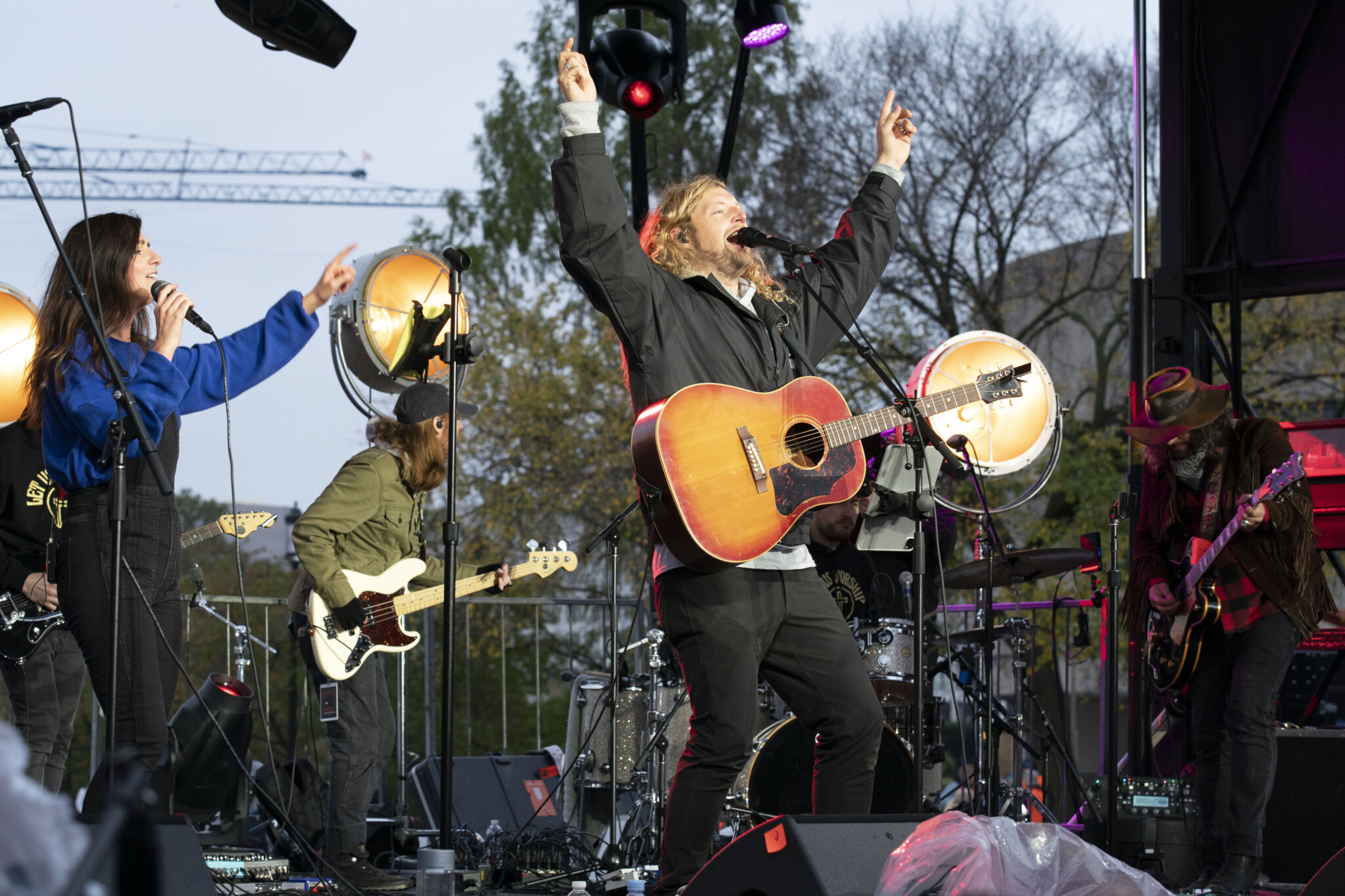
Christine Van Geyn, litigation director for the Canadian Constitution Foundation, discusses the major controversy surrounding American Christian worship leader Sean Feucht’s Revive 25 tour in Canada. Many of Feucht’s concerts have been canceled due to what have been called safety concerns and allegations of hate speech. She argues that the revocation of permits and fines issued to Feucht are unjustified and infringe on his Charter rights to freedom of expression, religion, and assembly. She also spells out what hate speech looks like in Canada.
You can listen to this episode on Amazon, Apple, and Spotify.
Program Transcript
This is an automated transcript. Please check against delivery.
HARRISON LOWMAN: welcome to hub hits. I’m Harrison Lowman, managing editor of the hub controversial American Christian worship leader, musician and activist Sean Feucht is touring Canada again, his revive in 25 tour has gained the attention of hundreds of faithful followers, along with the condemnation of Canadians who say that he is hateful towards certain minority groups. Numerous of his planned concerts have been cancelled across the country with cons with concerns over what officials are saying are safety concerns. Others say This is major overreach. This week, a concert planned in West Kelowna BC on Saturday was called off. Today. We’ll see if it goes forward. He’s set to perform at the Alberta legislature. Grounds for more on the controversy hate speech and Charter rights, I’m joined by Christine Van Geyn, litigation director for the Canadian Constitution Foundation, Christine, thank you so much for joining us.
CHRISTINE VAN GEYN: Thanks for having me.
HARRISON LOWMAN: Today on the hub, you’re very welcome. So what are the Charter rights that come into play here? Can you briefly describe there’s many you know, in this sort of you know, cloud we find ourselves in? Can you help us navigate ourselves through that cloud and tell us what those are?
CHRISTINE VAN GEYN: Yeah, I would say there’s two sort of problems with the whole Feucht situation from the perspective of what the government’s actions have been. First, there’s the revocation or the denial of permits based on what seem to be pretexts. There are claims that in most of these places, the claim is that he can’t perform because there’s some health and safety issue, there’s some logistical issue. Some places have been more forthright. Montreal, for example, said it was because of the content of his speech. I think that’s probably why it had his permits have been either denied or revoked in most places, I don’t think it’s actually a health and safety concern, as the city of Vaughan alleged, and and really, when administrative authority is exercised, it needs to be exercised properly and reasonably without this kind of pretext. I’ve written for the hub about a very famous case from Canada’s history, Ron Corelli and Du Plessis, where, very similarly, a unpopular religious minority group, in that case, the Jehovah’s Witnesses, a famous Jehovah’s Witness restaurateur, had his liquor licence pulled because his religious views were unpopular with the premier of Quebec, and that was an improper and unreasonable exercise of that authority. Now there’s also Charter rights at stake here. Mr. Feucht has religious freedom right, even though, even though he’s an American. Yes, it seems suddenly progressives are arguing that foreigners on our soil don’t have constitutional rights. That would create, you know, a different outcome in other cases that I think they wouldn’t be happy with, but suddenly they’re arguing this for Mr. Feucht. So he has rights to freedom of expression, freedom of religion, freedom of assembly, and so do the people who would like to see him perform.
HARRISON LOWMAN: You’ve used the phrase hecklers veto. Can you explain what that means and how you think it’s been seen across the country these last few weeks.
CHRISTINE VAN GEYN: Yeah, so that sort of applies both in the Montreal case of Mr. Feucht and in the West Kelowna case. West Kelowna has claimed that they cut to deny his permit, or either or revoke his permit because of the risk of counter protesters. This was also mentioned in Montreal where counter protesters actually did show up. I actually think that counter protest is the right response to controversial speech that you disagree with, but because of other laws we have in Canada, these bubble zone laws around places of worship, the right of people to express their dissatisfaction with Mr. Feucht speech inside. Cities wouldn’t even be permitted, so lots of interesting issues with his case. The hecklers veto essentially allows groups who are disruptive to silence opinions with whom they disagree by shutting it down through obstruction or heckling. And it’s a it’s a problem mostly in universities, but I think it’s a bigger problem when governments cave to that kind of argument.
HARRISON LOWMAN: coming out of this, if there’s challenges, et cetera, how does the law view this individual? Or does it matter? Or am I barking up the wrong tree? Is he a musician? Is he an activist? Is he a religious figure? Like, how? How do you define the person behind us on the screen?
CHRISTINE VAN GEYN: It sort of doesn’t really matter, right? Because he’s all of those things, and all of those things are protected by our Constitution. Whether he’s a worship performer or a pastor or a church leader, he would have those type of religious protections, but he also has those as a private individual. They’re part of artistic expression as well. So it sort of doesn’t really matter. He is protected under all kinds of different parts of our Constitution.

HARRISON LOWMAN: as a consequence of his attempt to perform. We’ve seen regulatory rules and fines even issued. Is that the case?
CHRISTINE VAN GEYN: Yes. So what appears to have happened in Montreal, specifically, that’s the only place where there, as far as I know, there’s been a fine. The City of Montreal pulled his permit, or they denied him a permit. I think they pulled his permit, and the mayor’s office put out a statement alleging that his speech is discriminatory and hateful. This is before he’s even spoken. By the way, they don’t know what he’s going to say at these performances, which, by the way, is mostly singing, singing worship music.
So they pulled this permit, or they denied it, and a local Spanish speaking church stepped in and offered to host him free event open to the public. So Mr. Feucht performed there. He did his worship service inside the church, and very disturbingly, with sort of these echoes of what happened in roncarelli, where the police charged into Mr. Ron chiarelli’s restaurant while people were dining and pulled all the liquor off the shelves. The police in Mr. Feucht’s case charged into the church and issued this fine of I believe it was $2,500 it seems, although there seems to be not a huge amount of clarity, it seems like the fine the city is claiming is because the church failed to obtain a special event permit for this worship service which shouldn’t be required. I
mean, hosting a worship service inside a church is part of the ordinary use of that church. It looked like they used all the ordinary equipment you would expect to see inside a church service, so a permit shouldn’t have been required. It just seems like an inappropriate and unreasonable use of the police and mayor’s authority, In that case.
HARRISON LOWMAN: our rights on public property versus private How does that work?
CHRISTINE VAN GEYN: So in this case, that was a church as private property. I mean, you can private property can be subject to regulation, but in this case, it shouldn’t have been a requirement to obtain a permit for the ordinary use of the building.
HARRISON LOWMAN: Interesting, and let’s just stay for the record, your organisation is not involved in any of these cases currently, right? Like you’re, you’re a neutral observer that has concerns. You know, independently of any,
CHRISTINE VAN GEYN: yeah, we’re not involved in any of the cases. I certainly have views. I think that that ticket against the church is completely absurd and unjustifiable and needs to be fought. They do have legal representation. I’m not sure if Mr. Feucht is challenging any of the other denials of the permits, but to me, the church incident where the police entered the church and issued this ticket is the most egregious,
HARRISON LOWMAN: and what are the consequences? You know, should that be found to have been the wrong decision government officials that issued these permits, etc, like, what are the consequences for making those decisions?
CHRISTINE VAN GEYN: Initially, I would expect that the ticket, I actually expect the ticket will be withdrawn. But generally, if there would be a judicial review, there could be a finding that the exercise that the ticket was unreasonable and unjustified.
HARRISON LOWMAN: I just want to get into who this person is, because this is an issue constantly in media. Someone said to be controversial. They never state what the person is. You know who they are or what they say.
Christine Van Geyn Yeah. Had to go and look up the things that he’d said, because you’d think, with all the reporting on this, that some of these outlets that are calling for his performances to be cancelled would tell us why?

HARRISON LOWMAN: Yeah, so I’m going to mention some of the things he said. This doesn’t mean that we agree with them. And again, you know you can disagree this age old statement. You know, I don’t agree with what you have to say, but I, but I will defend your right to say them, which is, I assume, what both. Us feel, but we can get into that coming out of this. But he’s called controversial. He’s had a faith consultation in the White House with Trump. He’s connected to the mega movement. These are some things he said out loud on Twitter called Christian drag queens demonic, sick and twisted, perverting the minds of children. Called it demented to mandate tampons be placed in fourth grade locker rooms on his cancelling in Kelowna, he said, we are only dangerous to the demonic strongholds of Canada. So making comments about Canada now is that hate speech in this country.
CHRISTINE VAN GEYN: I do not think it’s hate speech under our existing law. Kind of the governing laws are a case from the Supreme Court called What caught in Saskatchewan, another case called Ward and Quebec. And these cases make it clear that it’s only in the most exceptional cases, the most exceptional speech that under what caught speech that has what is called the hallmarks of hatred. So an example would be comparing a racial group to insects or calls for genocide, for example, are criminalised in Ward. The other Supreme Court case that’s more recent, the court clarified that speech that is merely offends people which this speech I disagree with to be clear, even as a Christian, I do not agree with what Sean Feucht says about these issues, or the way he says them. The the fact that it offends people is not enough to criminalise it in Canada, and I don’t think anything that Mr. Feucht has said rises to the level required under what caught.
HARRISON LOWMAN: How do you explain that to the public? Because many of them will not be convinced, right? There’s a lot of people who remember these groups that, you know, feel hurt what he has about what he has to say, and you know, emotion gets brought into it. How do you go about communicating to those folks? There’s a difference between something that’s offensive versus actual hate speech.
CHRISTINE VAN GEYN: Well, I think that the problem actually lies with our case law. I think our case law is very unclear. I think that these notions that are laid out in what caught, of hallmarks of hatred, I think that the court didn’t quite get it right in what caught, because it’s led to a lot of confusion. It’s led to confusion about when charges should be laid, both among crowns, among police, and with the standard that the court then has to grapple with. So I understand why the public is confused, because I think the courts are confused.
The court did as I say, try to clarify it in word, by saying speech that merely offends us isn’t enough to criminalise it, but what I think the bigger issue is, is that we as a society need to become more tolerant of speech that we disagree with, and we need to allow debate about why things are perhaps poorly stated or wrong, so that people who are wrong have an opportunity to be corrected. We’ll never actually solve problems of discrimination if we don’t allow the discriminatory ideas to be confronted. Now I’m not I’m not defending anything Mr. Feucht says, and I’m not saying that it rises to the legal threshold, but I do think it’s important that we as a society are able to have discussions about these topics without feeling like everyone is going to call for our cancellation.
HARRISON LOWMAN: I think some of that’s changing. The pendulum is kind of swinging. Who’s the onus on though? Is it on us as the public to sort that out of the courts, or is it a group effort?
CHRISTINE VAN GEYN: I don’t think that we should rely on the courts to make our lives better. I think that the courts are often coming to conclusions with which I disagree, and they’re often giving a lot of deference to the government, who I think makes choices that are in the short term interest of certain political leaders. I also think that judges are fallible and they’re subject to the pressures of our culture. So I don’t think that we should just leave this to the courts. This is something we need to have a conversation with our children or friends about, about being tolerant of people who just have different ideas, and just maybe if you disagree with them. Don’t go to the concert.
HARRISON LOWMAN: Mm, hmm, conversations like this. So, so let me ask you a few more questions. Another thing you brought up in your piece for the hub was potential double standard people on the right, you know, they get frustrated by these sorts of things because they think that there’s ideology at play behind these cancellation decisions. Of course, there is. So they would, they would say, you know, we saw protests where there were those sympathetic to Hamas, you know, spouting things like explode their Zionist heads. Why do those protests go forward? Why is that considered free speech? There’s others that would separately say, okay, protests around wet, so wet and be. LM blocking transportation, traffic, etc. Why is that okay to go forward, but not this? These are very different issues. You know, when it comes to, you know what’s being talked talked about, or you know what people are frustrated about. But do you think there’s sort of a double standard at play? What does that look like?
CHRISTINE VAN GEYN: Obviously, there is. It’s like, suddenly the progressive left cares about permits for marching in the streets and shutting down traffic for you know, whatever their cause is. And look, I actually think you should be allowed to have a protest that marches down the street is disruptive. I think that that should be allowed. I don’t think that you should be able to indefinitely blockade traffic, or encamped on private property for an extended period of time. The law is quite clear on that, but that is conduct that was defended in Montreal, specifically repeatedly when there were these encampments at McGill, when there was actual destruction of property in downtown Montreal, but then suddenly permits matter inside a church that is just doing an ordinary worship service. I mean, give me a break. At least. I’m going to defend the right of people, whatever their speech, to engage in that speech without all of these bureaucratic requirements. It’s obviously a weaponization of the bureaucratic process to try to cancel Sean Feucht performances, because the people who are calling for it just don’t agree with the content of his speech, and that’s the core problem here.

HARRISON LOWMAN: I like the weaponization of the bureaucratic process is a good phrase that I’ll have to use one day. I just want to end on this like, apparently, he’s going to perform on the Alberta legislature grounds. We were talking previously. I think it’s probably the only legislature where he would be allowed to perform. You can tell me what you think. Is this something that you know you would go to to see and explore again? What’s actually being said if, if we were both in Alberta. Now, would you be going to check it out if you had a free afternoon?
CHRISTINE VAN GEYN: So when he performed in Toronto, he performed inside a church, and I did go to check it out outside, to see. I didn’t go in, but I wanted to see, because it was quite close to my house, what everything, what it was all about, and see if there would be counter protesters. There weren’t. I don’t know if he would have been permitted on other legislative grounds, because I don’t know if he applied. I actually expect that he would have been permitted in Ontario and perhaps even on Parliament Hill, because you’re allowed to express yourself on legislative grounds. Typically, you do apply in advance. Who allows you to you apply to the legislative grounds yourself, and then they allow it or not. And generally they generally they do, and it’s not supposed to be content based restriction. If it were, there are plenty of things that happen on the legislative grounds that I think that the government disagrees with. And if it was up to the government, would shut down, for example, their regular pro life protests, they’re regular anti war protests, all kinds of controversial topics are take place on legislative grounds, and that’s a great venue for them, because it’s quite literally our public square where ideas should be debated.
HARRISON LOWMAN: I was going to say probably those places should be the epicentres when it comes to free speech in this country where you allow the most sort of public displays of XYZ,
CHRISTINE VAN GEYN: yeah, and where counter protests should be permitted as well.
HARRISON LOWMAN: Okay, that’s Christine Van Geyn, and she’s the litigation director for the Canadian Constitution Foundation. Thank you so much, Christine, for joining us. Really appreciate it.
CHRISTINE VAN GEYN: It’s a pleasure.