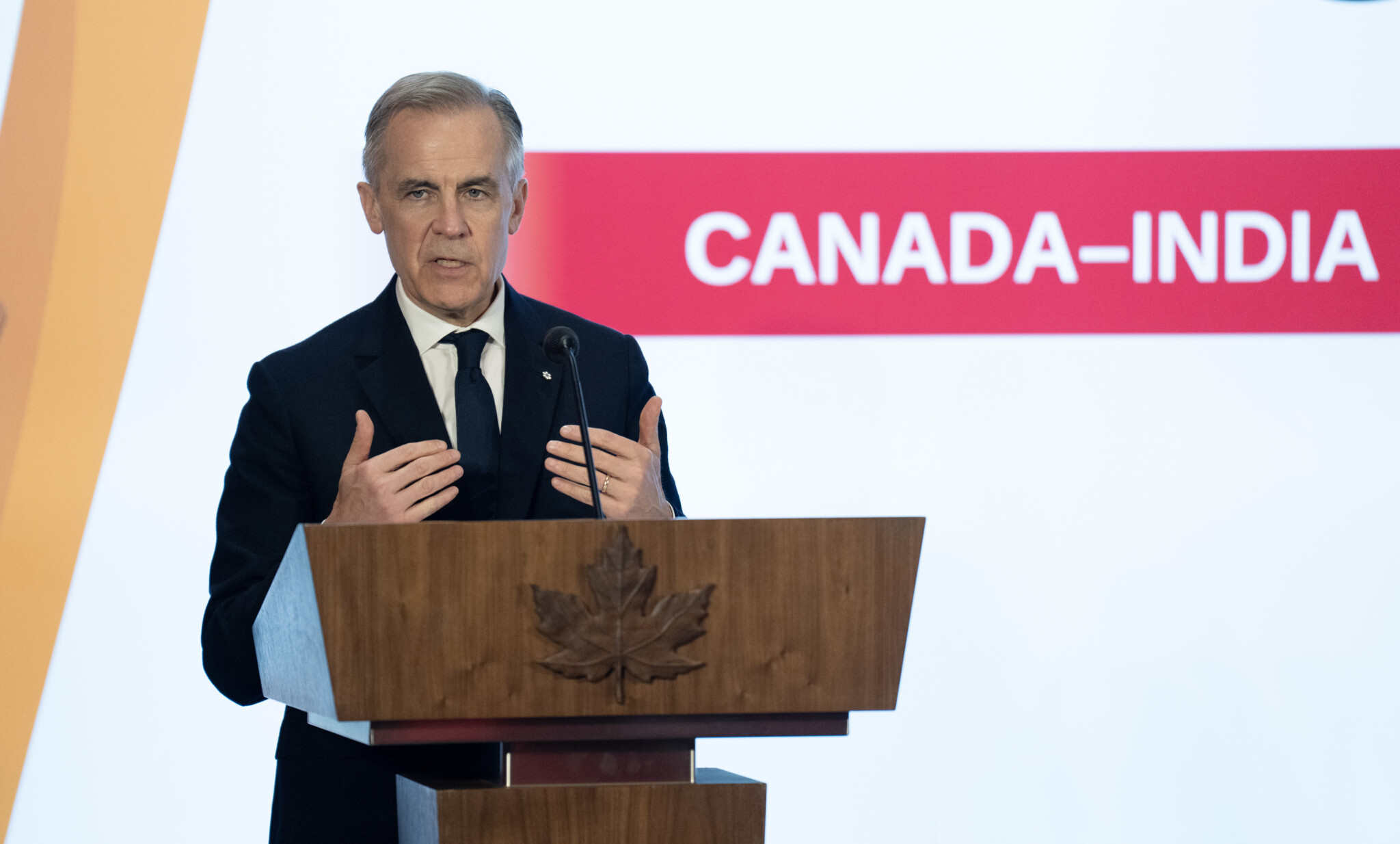
‘All the choices are bad’: David Frum explains why Carney’s visits to China and India are a direct response to Trump
You can listen to this episode on Amazon, Apple, and Spotify.
Episode Description
Leading author, journalist, and thinker David Frum discusses Prime Minister Mark Carney’s shift in Canadian foreign policy. Frum examines Canada’s re-engagement with China and India despite sovereignty violations, arguing the country faces difficult choices between values and survival, especially in the Trump era. He also explores the viability of middle-power coalitions and why Canada must prepare for bad options with limited resources in an increasingly dangerous world.

Episode Summary
Canada faces a fundamental shift in its foreign policy approach as geopolitical realities force difficult choices between traditional values and economic survival. The country finds itself navigating unprecedented challenges to its sovereignty while simultaneously confronting an uncertain relationship with its southern neighbor.
Recent violations of Canadian sovereignty have presented the government with complex dilemmas. Foreign interference in domestic affairs and serious incidents on Canadian soil have gone largely unaddressed as the country prioritizes economic relationships over diplomatic confrontation. This represents a significant departure from Canada’s historical position as a values-based middle power that could afford to take principled stands on international issues.
The current government appears to recognize the tragic nature of choices facing a country with diminishing options in an increasingly hostile global environment. Canada’s position has fundamentally changed from that of a protected nation under a security umbrella to something resembling a frontline state managing dangerous relationships on multiple fronts. This transformation requires sacrifices that would have been unthinkable in previous decades.
The shift reflects a broader reassessment of Canada’s place in the world. For generations following World War II, the country enjoyed exceptional fortune, receiving security guarantees without significant cost while maintaining the freedom to pursue idealistic foreign policy goals. That era has definitively ended. The benign international environment that allowed Canada to emphasize values over hard power calculations no longer exists.
Canada now confronts a neighbor that presents threats rather than guarantees, creating pressure not only on bilateral relations but also affecting other regional dynamics. This new reality demands the development of leverage through multiple channels, even when success remains uncertain. The government faces the challenge of balancing competing risks rather than adhering to fixed principles, a pragmatic approach that prioritizes survival over ideological consistency.
Several potential pathways for building international partnerships exist. Deep cultural and historical connections with Atlantic nations, particularly Britain, offer one avenue. Geographic proximity suggests possibilities within the Americas, though significant differences in economic interests, values, and political traditions complicate such arrangements. Pacific Rim partnerships with major trading nations dependent on international commerce represent another option, though none of these alternatives guarantee success.
The effectiveness of any strategy remains unclear, but the imperative to attempt multiple approaches simultaneously reflects the limited resources and constrained choices available. Canada must prepare for scenarios that may not materialize while hoping for outcomes that seem increasingly unlikely. The distinction between what will happen and what requires preparation has become crucial for strategic planning.
This represents a maturation of Canadian foreign policy thinking, moving from what some characterize as naive idealism to hard-nosed realism about international relations. The willingness to accept closer economic relationships with powers that have violated Canadian sovereignty demonstrates how dramatically the calculus has changed. What would previously have been considered unacceptable compromises now appear as potentially necessary accommodations to ensure national survival.
This summary was prepared by NewsBox AI. Please check against delivery.
David Frum discusses Canada’s evolving foreign policy under Prime Minister Mark Carney, arguing that re-engagement with China and India is a pragmatic response to the challenges posed by the Trump era and a changing global landscape. Canada faces difficult choices between upholding its traditional values and ensuring its economic survival, particularly in light of sovereignty violations. Frum suggests Canada’s shift reflects a move from idealistic foreign policy to a more realistic approach, acknowledging the need for strategic partnerships and a willingness to make compromises previously considered unacceptable. He emphasizes the importance of preparing for various scenarios and building leverage through multiple channels, given Canada’s limited resources and increasing global threats.
How has Canada's foreign policy shifted, and why is it described as a choice between values and survival?
What are some of the potential international partnerships Canada might pursue, and what challenges do they present?
According to the article, how has Canada's relationship with its southern neighbor impacted its foreign policy decisions?


Comments (0)