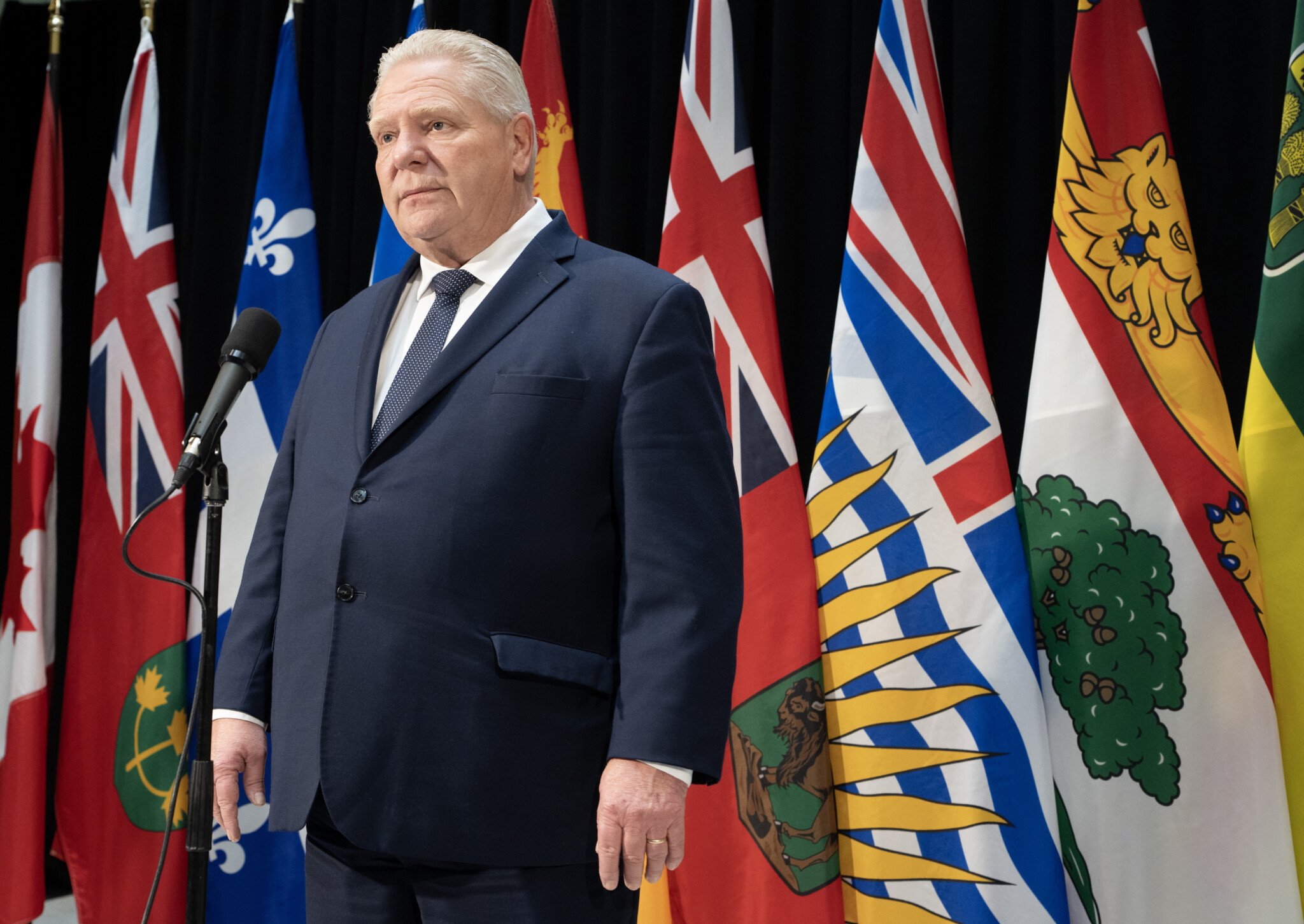
‘An acute case of fiscal incontinence’: The Roundtable on how Ontario’s $13.8 billion deficit exposes Canada’s broken fiscal model
You can listen to free versions of this episode on Amazon, Apple, and Spotify.
Episode Description
Rudyard Griffiths and Sean Speer dissect Ontario’s massive budget deficit and Canada’s broader fiscal crisis. They examine how governments across the country are abandoning fiscal discipline, relying on deficit spending rather than organic economic growth.
In the second half, they explore the collapse of entrepreneurship in Canada, the concentration of economic activity in government, and how an increasingly narrow tax base enables unsustainable spending. They argue this represents a fundamental shift away from economic freedom and individual autonomy toward European-style state dependency.
If you liked what you heard in the first half of the program and wish to subscribe to full-length editions of The Roundtable, please consider becoming a Hub Hero. Hub Heroes also get access to all our paid content on TheHub.ca. All these benefits are conferred for one year. Sign up now!

Episode Summary
Ontario has unveiled a budget that reflects a growing pattern of fiscal expansion across the country, raising concerns about the sustainability of public finances at both provincial and federal levels. The spending plan represents a significant departure from previous fiscal projections and highlights a broader trend of governments struggling to balance expenditures with revenues in an era of elevated borrowing costs.
The budget reveals a substantial deficit that far exceeds earlier forecasts, marking a dramatic reversal from what had been anticipated as a path toward balanced books. Provincial debt levels continue to climb, with per capita obligations reaching levels that place the jurisdiction among the most indebted in the nation. This fiscal trajectory has emerged despite years of political rhetoric emphasizing fiscal responsibility and prudent management.
The pattern extends beyond a single province. Recent budgetary announcements across multiple Canadian jurisdictions demonstrate similar challenges, with governments consistently projecting spending restraint in future years while expanding current expenditures. This approach has created a credibility gap, as outer-year projections repeatedly fail to materialize once those periods arrive.
A fundamental tension has emerged in Canadian public policy between declining tax bases and expanding government services. An increasing proportion of the population receives various forms of government support while contributing minimal tax revenue, creating what economists describe as a structural imbalance. Middle-income Canadians now receive subsidies for housing, childcare, dental care, and other services once considered personal responsibilities, effectively reclassifying broad swaths of society as requiring state assistance.
This expansion of the welfare state has occurred without corresponding increases in taxation across income levels. The result is a growing gap between public expectations for government services and willingness to fund those services through taxation. Governments have bridged this divide through borrowing, a strategy that faces increasing scrutiny as interest rates remain elevated and debt servicing costs consume larger portions of budgets.
The fiscal challenges coincide with concerning trends in economic dynamism. Business formation rates have declined significantly over recent decades, while business exits have increased. Self-employment as a share of the population has fallen substantially from historical peaks, suggesting reduced entrepreneurial activity and economic mobility. Canada’s performance in business creation now lags behind international peers, including countries that have implemented structural reforms to encourage entrepreneurship.
This summary was prepared by NewsBox AI. Please check against delivery.
Rudyard Griffiths and Sean Speer discuss Ontario’s significant budget deficit and Canada’s broader fiscal challenges, highlighting a shift away from fiscal discipline towards deficit spending. They argue that governments are increasingly relying on borrowing rather than fostering organic economic growth. The discussion emphasizes the decline in entrepreneurship, the concentration of economic activity within the government sector, and the unsustainable nature of relying on a narrow tax base to fund expanding government services. This trend, they contend, represents a move towards European-style state dependency, impacting economic freedom and individual autonomy. The article also notes the growing gap between public expectations for government services and the willingness to fund them through taxation.


Comments (1)
If we’re at a point now where a parliamentary committee can summon a corporate CEO to appear before them and account for themselves, how long will it be before members of the media are compelled to do the same?
Well, at least those whose companies receive handouts from Ottawa…