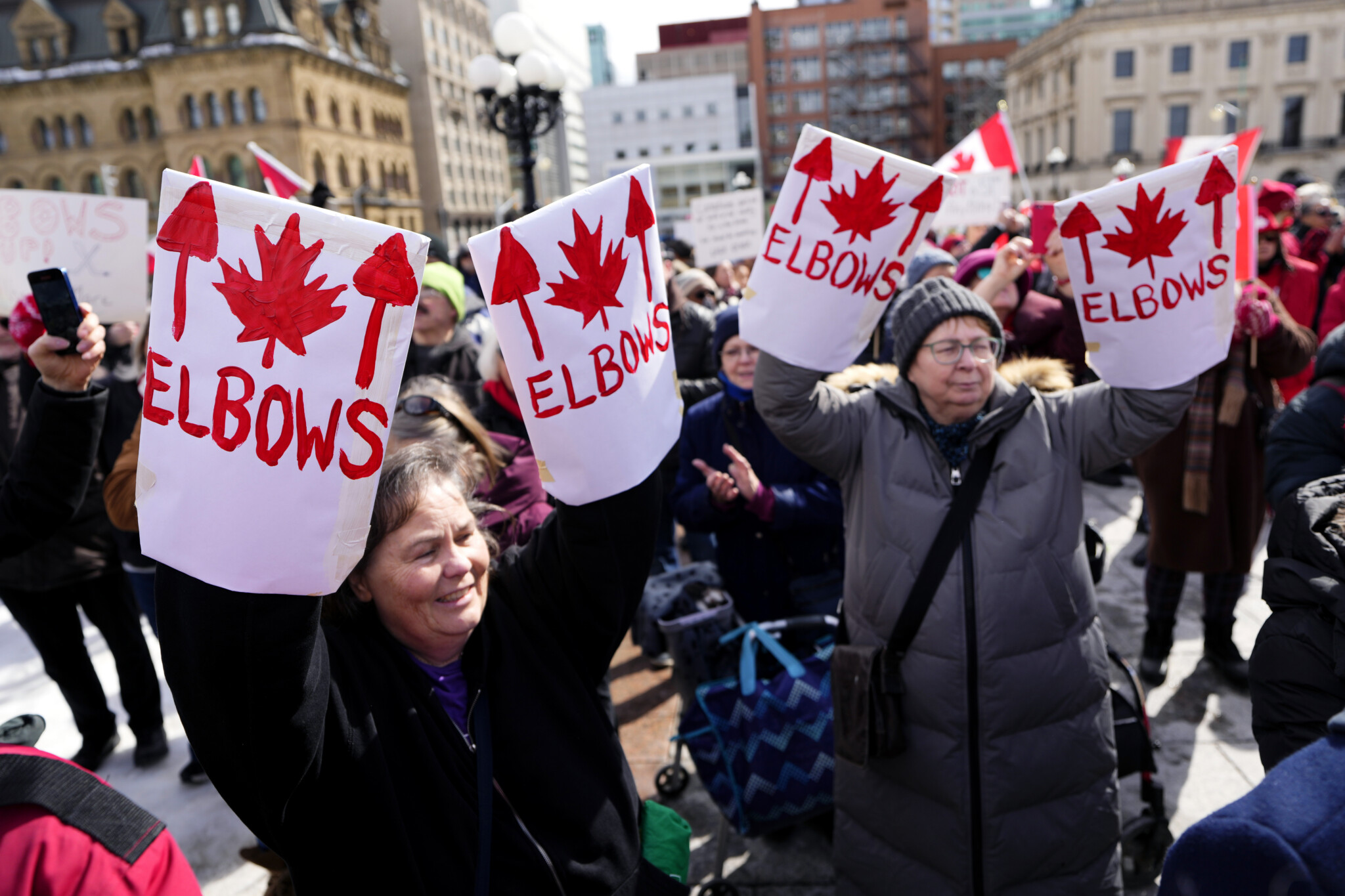
‘Every hand went up when asked who’s afraid of America’: Is Elbows Up just political hype?
You can listen to this episode on Amazon, Apple, and Spotify.
Episode Description
Elamin Abdelmahmoud, culture writer and editor of Elbows Up: Canadian Voices of Resilience and Resistance, defends his book—a progressive response to Trump’s threats to Canadian sovereignty.
He attempts to define Canadian identity and what he sees as the role CanCon protections play in our national defence. Abdelmahmoud shares Canadian public anxieties over American threats. He also responds to criticism that the left has been late to the Canadian patriotic party.
Episode Summary
Canadian cultural and political identity has emerged as a central topic of national conversation as the country grapples with questions about its relationship with the United States and its own internal cohesion. Recent discussions have highlighted deep anxieties about sovereignty, cultural independence, and what defines Canada as a distinct nation.
The debate has intensified following provocative statements from American political figures about Canadian sovereignty. These remarks, regardless of their likelihood of materializing into actual policy, have created widespread uncertainty among Canadians about their country’s future autonomy. The psychological impact of such rhetoric has proven significant, altering how citizens perceive their relationship with their southern neighbor and raising fundamental questions about national security and independence.
Cultural production has become a flashpoint in these discussions. Canada’s publishing industry, film sector, and broader creative economy operate in the shadow of American cultural dominance. While Canada maintains a robust production infrastructure that serves major international projects, concerns persist about whether Canadian stories and perspectives receive adequate support and recognition. The tension between commercial success in serving foreign productions and nurturing distinctly Canadian narratives remains unresolved.
Historical context plays a crucial role in understanding current anxieties. Trade negotiations from previous decades established frameworks that some argue left Canadian cultural sectors vulnerable to American influence. The question of whether cultural content should be protected from market forces or allowed to compete freely continues to divide opinion. Success stories in Canadian entertainment demonstrate the potential for homegrown content to achieve international recognition, yet these remain exceptions rather than the norm.
Indigenous perspectives have gained prominence in conversations about Canadian identity. Recognition of historical injustices, including residential schools and land dispossession, has become increasingly central to how the country understands itself. The slow pace of implementing recommendations from truth and reconciliation processes reflects ongoing challenges in addressing these foundational issues. Some argue that confronting uncomfortable historical truths is essential for building a more authentic national identity.
The concept of Canadian identity itself resists simple definition. As a relatively young and geographically vast country, Canada encompasses diverse regional perspectives and cultural traditions. This pluralism is viewed by some as a strength that allows for inclusive multiculturalism, while others see it as a weakness that prevents the development of a cohesive national character. The absence of a singular defining narrative creates both flexibility and uncertainty.
Political responses to sovereignty concerns have varied across the ideological spectrum. Different parties and constituencies have expressed varying levels of alarm about external threats and different visions for how Canada should assert its independence. Public anxiety appears widespread, cutting across traditional political divisions and reflecting genuine concern about the country’s future trajectory.
The publishing industry exemplifies broader tensions about cultural sovereignty. Major Canadian publishers operate under foreign ownership while continuing to produce Canadian content. Questions arise about whether this arrangement represents a pragmatic accommodation to global market realities or a compromise of cultural independence. The role of government support in sustaining Canadian cultural production remains contentious, with debates about whether such intervention represents necessary protection or inefficient market distortion.
This summary was prepared by NewsBox AI. Please check against delivery.


Comments (2)
The only thing that made me sadder this week then the Cdn men’s Olympic hockey loss was this guest’s interpretation of what Cdn culture should be. To summarize:
– Cdns need to accept that Canada is a genocidal colonialist state
– One of our 2 major political parties is fascist
– Cdns should turn off “Heated Rivalry” and embrace boring Cdn-made TV. It’s good for us. It’s our culture and after all, someone really should watch them. Thank goodness there is an endless supply of tax dollars to fund these ventures.
– It’s ok to write books about how superior our culture is to the Americans and then sell them through a NY-based publisher who keeps the profits. Some would see this as a conflict of principles, but hey when progressives need to get paid, it’s fine.
Of course, the guest being a “culture critic” from the CBC, he needed to insert a healthy does of finger wagging by shouting out a prestigious Cdn writer—sorry can’t recall the name—whose claim to fame was being one of first to find out “what’s really going on in Gaza.”
Harrison, at the end of this episode I wanted to throw my elbows up and run for my life across the southern border. Seditious? Perhaps. But this vision of Canada is akin to wearing a hair shirt and flogging ourselves while eating liver everyday. We are bad ppl and we need to do what’s good for us.
Word of advice: don’t go to the Stampede. Your friend will convince everyone he talks to to vote for separation.