‘Half the truth’: Why the Canadian Museum for Human Rights lost its only Jewish trustee
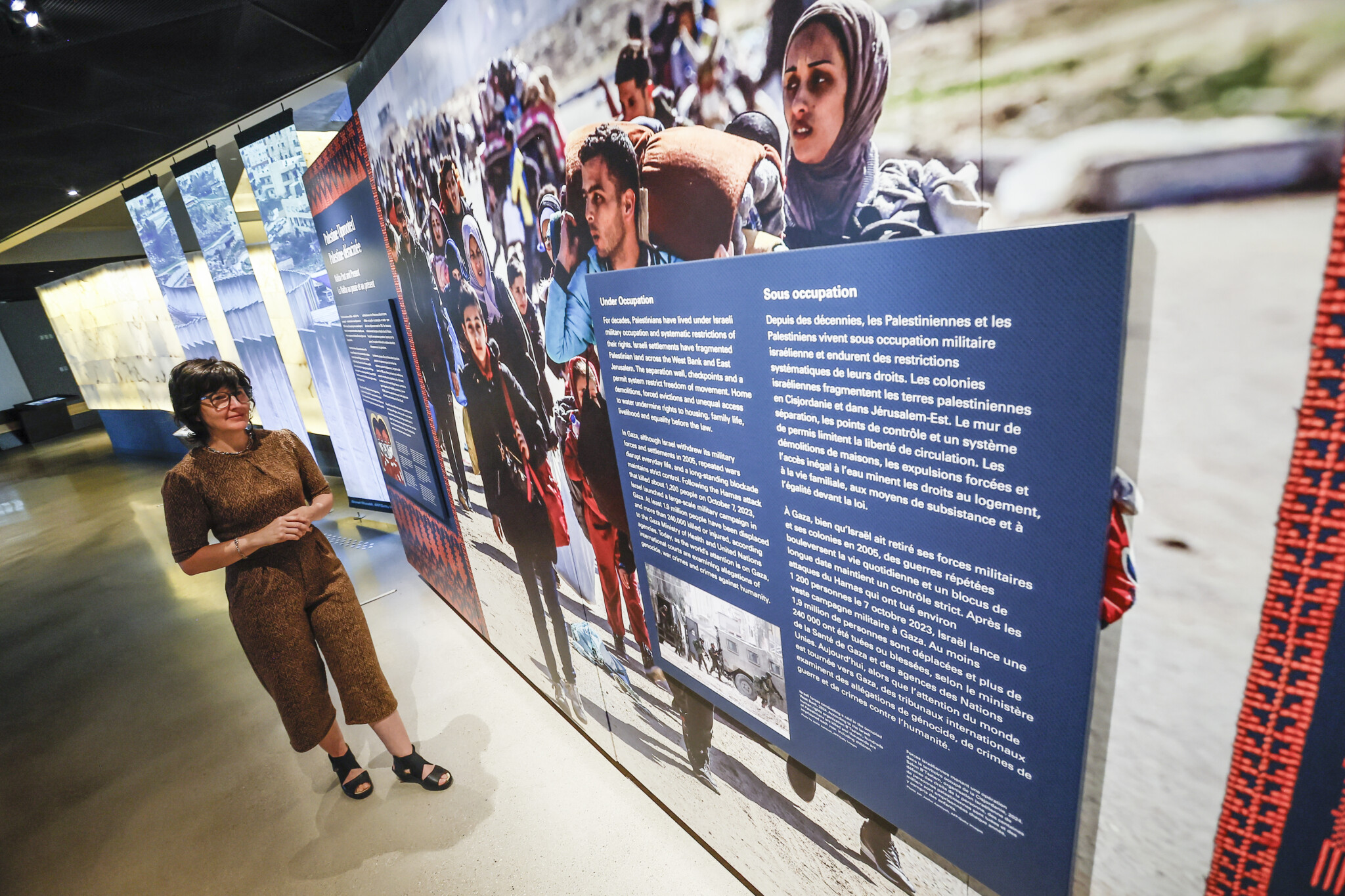
The Canadian Museum for Human Rights in Winnipeg is facing significant controversy over its new exhibit, Palestine Uprooted: Nakba, Past and Present, which traces the displacement of approximately 750,000 Palestinians in 1948. The exhibit has drawn sharp criticism from members of Canada’s Jewish community, ultimately prompting the resignation of the museum’s only Jewish trustee. Mark L. Berlin, a professor of practice at McGill University’s Institute for the Study of International Development and a former senior advisor on the Middle East to the attorney general of Canada, joined The Hub’s Fault Lines podcast to explain his decision and outline his concerns about the exhibit’s framing.
Berlin described his resignation as the culmination of two and a half years of attempting to steer the exhibit toward a more historically balanced presentation. “After falling on deaf ears, knowing the exhibit was imminent, I felt it would be disingenuous for me to continue to serve,” he said. His central objection was not with the personal stories of Palestinian displacement—which he described as “heart-wrenching” and real—but with what he characterized as a deeply contested political narrative being presented as settled historical fact. “The verbiage that’s used in both the website materials and at the exhibit itself really risks replacing education and replacing it with advocacy,” Berlin argued. “I just feel that’s unfair for the Canadian public to be presented with something under the guise of museology’s highest practices.”
Among the most significant omissions Berlin identified were the absence of any description of Hamas as a terrorist organization with genocidal goals, no clear attribution of the war’s origins to the October 7th attacks, no mention of the Arab invasion of Israel in 1948, and—critically—no account of the simultaneous displacement of approximately 850,000 Jews from Arab countries. “To present only half the story presents only half the truth,” Berlin said. He drew a distinction between this exhibit and others at the museum, such as those covering residential schools, the Underground Railway, or Japanese Canadian internment, arguing that the Israeli-Palestinian conflict is uniquely contested and cannot be responsibly presented from only one perspective. “This is curation by omission,” he said. “And that’s the failure of the museum.”
Berlin also pushed back against claims by the museum CEO that the Jewish community had been meaningfully consulted during the exhibit’s development. He alleged that the museum’s outreach had been confined to a small minority of Jewish voices—organizations like Jews for Palestine and Independent Jewish Voices—which he estimated represent between 1 and 4 percent of Canada’s Jewish population, while the mainstream organizations representing the broader community, including CIJA, B’nai Brith, and the Simon Wiesenthal Center, were effectively shut out. “The mainstream Jewish community asked on several occasions to be consulted,” he said. He added that three one-hour conversations held in January of this year were dismissed by those who attended as falling far short of genuine consultation.
On the question of political interference, Berlin applauded Heritage Minister Marc Miller for publicly calling on the museum to address the exhibit’s gaps, and dismissed NDP leader Avi Lewis’s characterization of the minister’s remarks as inappropriate interference. “For Avi Lewis to suggest that he not insert himself into the discussion is a silly partisanship swipe of the most ridiculous nature,” Berlin said. He also reflected on what a better process might have looked like, suggesting that meaningful community engagement—bringing Jewish and Palestinian Canadians together for months of storytelling and dialogue before any curation began—could have produced an exhibit that honoured both communities’ trauma. “Our role, both at the museum and myself as a human rights lawyer, is to bring people together and not exacerbate already deeply held divisions,” he said.
Berlin concluded by warning that the exhibit has already had a corrosive effect on public discourse, pointing to an avalanche of antisemitic commentary appearing beneath news articles covering the story. “I warned against it. I said it was going to foment greater hatred against Jews,” he said. “When I look at the avalanche of hate that accompany all these articles in the commentary section, what I feared has come true.” He described the online hostility, some of it directed at him personally, as so extreme he would not repeat it on air, and argued that the museum had provided a platform for that hatred to flourish. “That’s the legacy so far of this exhibit. Isn’t that too bad.”
This is an automated summary. Please check against delivery.
The Canadian Museum for Human Rights is embroiled in controversy over its exhibit ‘Palestine Uprooted: Nakba, Past and Present,’ which has led to the resignation of its only Jewish trustee, Mark L. Berlin. Berlin criticized the exhibit for presenting a one-sided narrative of the Israeli-Palestinian conflict, lacking essential context about Jewish displacement and the origins of the conflict. He expressed concerns about the museum’s failure to engage with the broader Jewish community and warned that the exhibit could exacerbate antisemitism. The situation highlights the complexities of curating narratives around deeply contested historical events.
What are the implications of the museum's exhibit on public discourse regarding the Israeli-Palestinian conflict?
How could the Canadian Museum for Human Rights improve its approach to controversial topics like the Israeli-Palestinian conflict?
What role should public institutions play in addressing contested historical narratives?

Comments (1)
What struck me most here is the point about process. On issues this charged, an institution like the Museum cannot simply curate first and consult later. If the purpose is to deepen understanding rather than harden divisions, meaningful engagement with the communities most directly affected has to come before the exhibit takes shape, not after the controversy begins.
Mark’s suggestion of bringing Jewish and Palestinian Canadians together for sustained dialogue before curation seems to me exactly the kind of approach a human rights institution should be modelling. The measure of success should not be whether one side feels vindicated, but whether the process creates greater understanding without diminishing anyone’s trauma.