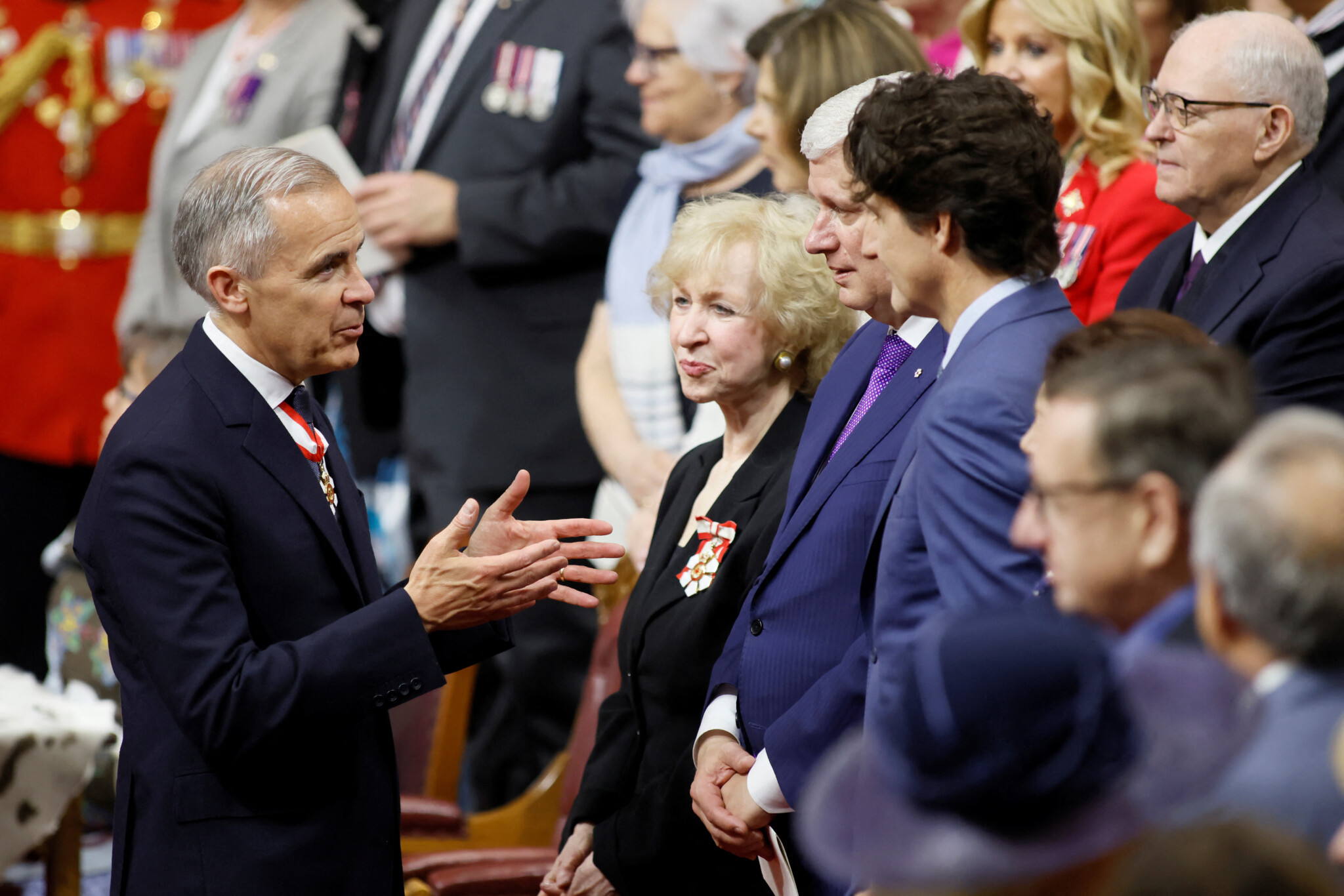
‘He’s meeting the mood of the country’: Hub Politics on whether Carney is dismantling Trudeau’s policy legacy
In this episode of Hub Politics, host Sean Speer is joined by Amanda Galbraith, co-founder and president of Oyster Group, and David Coletto, founder and CEO of Abacus Data, to discuss how since becoming prime minister, Mark Carney has systematically dismantled key parts of Justin Trudeau’s policy legacy, including with respect to carbon taxes, immigration, pipelines, and even criminal justice policy.
The conversation then addresses caucus tensions, pending personnel changes, including this week’s announcement that Canada’s ambassador to the U.S, Kirsten Hillman, is stepping down, and the potential challenges of refashioning Liberal politics in Carney’s image.
You can listen to this episode on Amazon, Apple, and Spotify.

Program Summary
This is an automated summary. Please check against delivery.
Canada’s political environment has experienced a dramatic transformation as governing priorities realign with shifting public concerns, marking a departure from the policy framework that dominated the previous decade. The change reflects a broader recalibration in Canadian politics, driven primarily by economic anxieties and a growing sense of financial precarity among voters.
The evolution represents a stark contrast to the political climate of the mid-2010s, when issues such as climate action, gender equity, and Indigenous reconciliation commanded significant public attention and shaped electoral outcomes. That era followed a lengthy period of conservative governance and reflected voter appetite for progressive social policy. However, subsequent events fundamentally altered the political landscape, creating new imperatives that have reshaped government priorities.
The pandemic served as a pivotal turning point, triggering a cascade of economic disruptions that shifted public focus dramatically. Rising inflation emerged as a defining concern, fostering what observers describe as a scarcity mindset among Canadians. This psychological shift pushed earlier progressive priorities to the background as immediate economic concerns took precedence. Issues like cost of living, housing affordability, and healthcare access now dominate public discourse, reflecting widespread anxiety about financial security.
This reorientation has proven politically consequential. Leadership transitions have demonstrated the malleability of public opinion, with government approval ratings showing remarkable volatility in response to changes at the top. The phenomenon underscores how personality and perceived competence can override policy continuity in shaping voter sentiment. Political success increasingly depends on leaders distinguishing themselves from their predecessors, even within the same party.
Provincial politics reflect similar dynamics, with successful leaders positioning themselves as protectors of constituent interests during uncertain times. The narrative of security and focused attention on immediate concerns resonates strongly with voters experiencing economic anxiety. Complex policy documents matter less than whether citizens trust their leaders to navigate challenging circumstances, particularly amid external pressures from international trade relationships.
Public opinion itself remains fluid and responsive to leadership, shaped by political figures as much as it shapes them. Effective governance requires alignment between leadership messaging and the prevailing public mood. Successful politicians craft narratives that resonate with voter concerns, creating frameworks that provide reassurance during periods of instability.
The challenge for governing parties lies in maintaining internal cohesion while pursuing this reorientation. Political caucuses contain diverse ideological perspectives, from progressive urban representatives to members from resource-dependent regions. Holding together these disparate factions requires strong leadership authority, which derives primarily from public approval rather than internal party relationships.
This authority becomes particularly important when implementing policy shifts that may alienate some party members. Leaders who have restored their parties’ electoral prospects command significant leverage, as elected officials recognize their political survival depends on maintaining public confidence. However, this authority remains contingent on sustained public support, creating pressure to maintain alignment with voter priorities.
Is Carney's shift away from Trudeau's legacy a response to public mood or a strategic political move?
How has the pandemic fundamentally altered Canadian political priorities, according to the article?
What is the primary source of a leader's authority when refashioning party politics, as discussed in the article?

Comments (4)
Im shocked at how shallow this is. I have co.e to expect much more. IMO, to anyone looking closely, Mr. Carney might be changing the window dressing, but he certainly is not installing new windows.
Even the “pipeline ” MOU is simply an expression of “we would if we could”, definitely not a reversal of any of the policies and laws that have submarines the O&G sector for the past 10 years. If anything, he has increased the pace of the tax and spend, daddy-knows-best actions of the last government and the nepotism and corruption continues unabated. And why wouldn’t they? They have had a free pass on accountability by shutting down committees by giving sweetheart deals to the Communists and the separatists everything they are exposed. And we, as obedient slaves have not stood up to force their hand on any of it.
Disappointing.