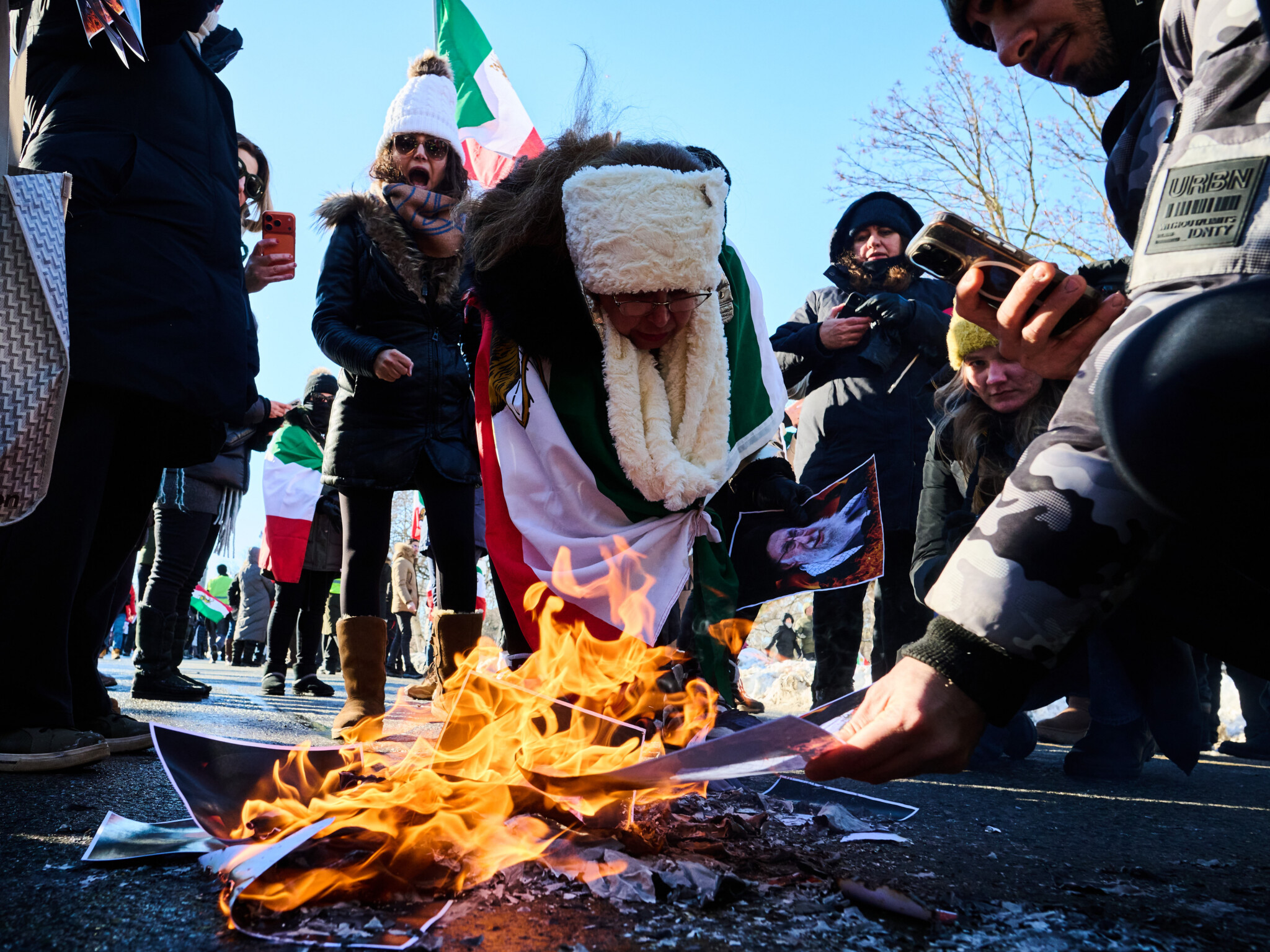
‘Immense horror’: Iranian regime marks 47 years of Islamic rule amidst mass killings of protestors
You can listen to this episode on Amazon, Apple, and Spotify.
Episode Description
Kaveh Shahrooz, lawyer, human rights activist and former senior policy advisor on human rights to Global Affairs Canada, discusses Iran’s ongoing brutal crackdown on mass protests during the 47th anniversary of the Islamic Revolution. The Iranian Canadian examines the Iranian regime’s proven tactics of violence and internet blackouts, opposition leadership, and whether Iran should be booted from the Winter Olympics as a consequence.
He also critiques Canada’s inadequate response, particularly its failure to address regime officials and Islamic Revolutionary Guard Corps members residing in this country.
Episode Summary
Iran’s government has employed familiar tactics in responding to widespread protests that erupted in late December and intensified in early January, raising questions about the regime’s approach to domestic dissent and its standing in the international community. The protests represent the latest chapter in decades of tension between Iranian citizens seeking reform and a government that has consistently resisted meaningful change.
The Iranian government has long maintained a pattern of distinguishing between what it characterizes as legitimate grievances and what it labels as rioting or foreign-influenced unrest. This approach allows authorities to claim openness to public concerns while simultaneously justifying violent crackdowns against protesters. The so-called reformist wing of the government continues to advocate for addressing problems within existing structures, but this strategy has repeatedly failed to produce substantive reforms over the past two decades.
The recent protests were met with unprecedented levels of force, with authorities deploying military-grade weaponry typically reserved for warfare against civilian demonstrators. The government also implemented its standard playbook of shutting down internet access to prevent coordination among protesters and limit information flow to the outside world. Following days of intense violence, the streets have grown quieter, though underlying anger and grievances remain unaddressed.
Opposition to the regime has increasingly coalesced around the son of Iran’s former monarch, who has lived abroad for decades and has called for public demonstrations. However, this leadership has faced criticism for failing to build a more inclusive opposition movement that incorporates diverse ethnic communities and political perspectives across the ideological spectrum.
The international community now faces questions about how to respond to the violence. Discussions have emerged about whether Iran should face consequences in international forums, including potential exclusion from major sporting events. Such measures would follow precedents set with other nations, though implementation remains uncertain. Iranian athletes who might speak out against the regime face severe risks upon returning home, as past incidents have demonstrated.
Canada’s role in the situation has drawn particular attention given its large Iranian diaspora population. Despite previous announcements about pursuing regime-affiliated individuals and designating certain Iranian military organizations as terrorist entities, follow-through on these commitments has been limited. The country has inadvertently become a destination for regime officials and their families, who have established financial and property interests there.
The Islamic Revolutionary Guard Corps, which serves as both a military and economic force within Iran, has been increasingly recognized internationally as a terrorist organization. However, enforcement of such designations has proven challenging, with some of the most significant impacts falling on individuals who were conscripted into mandatory military service rather than high-ranking officials.
The difficulty in obtaining accurate information from inside Iran continues to complicate international understanding of events. Communication blackouts and restricted access make it challenging to verify the full extent of casualties and document human rights violations. As internet access gradually returns, more information about the scale of violence is expected to emerge.
This summary was prepared by NewsBox AI. Please check against delivery.
How does the Iranian regime use internet blackouts and violence to suppress protests, as discussed in the article?
What is Kaveh Shahrooz's critique of Canada's response to the Iranian regime's actions, according to the article?
Beyond condemnation, what concrete actions could international bodies take in response to the Iranian regime's crackdown, based on the article's context?

Comments (1)
The liberals have far too many anti-American and antisemites to have a rational policy on the Iranian mullahs, too many cheering “the resistance”.