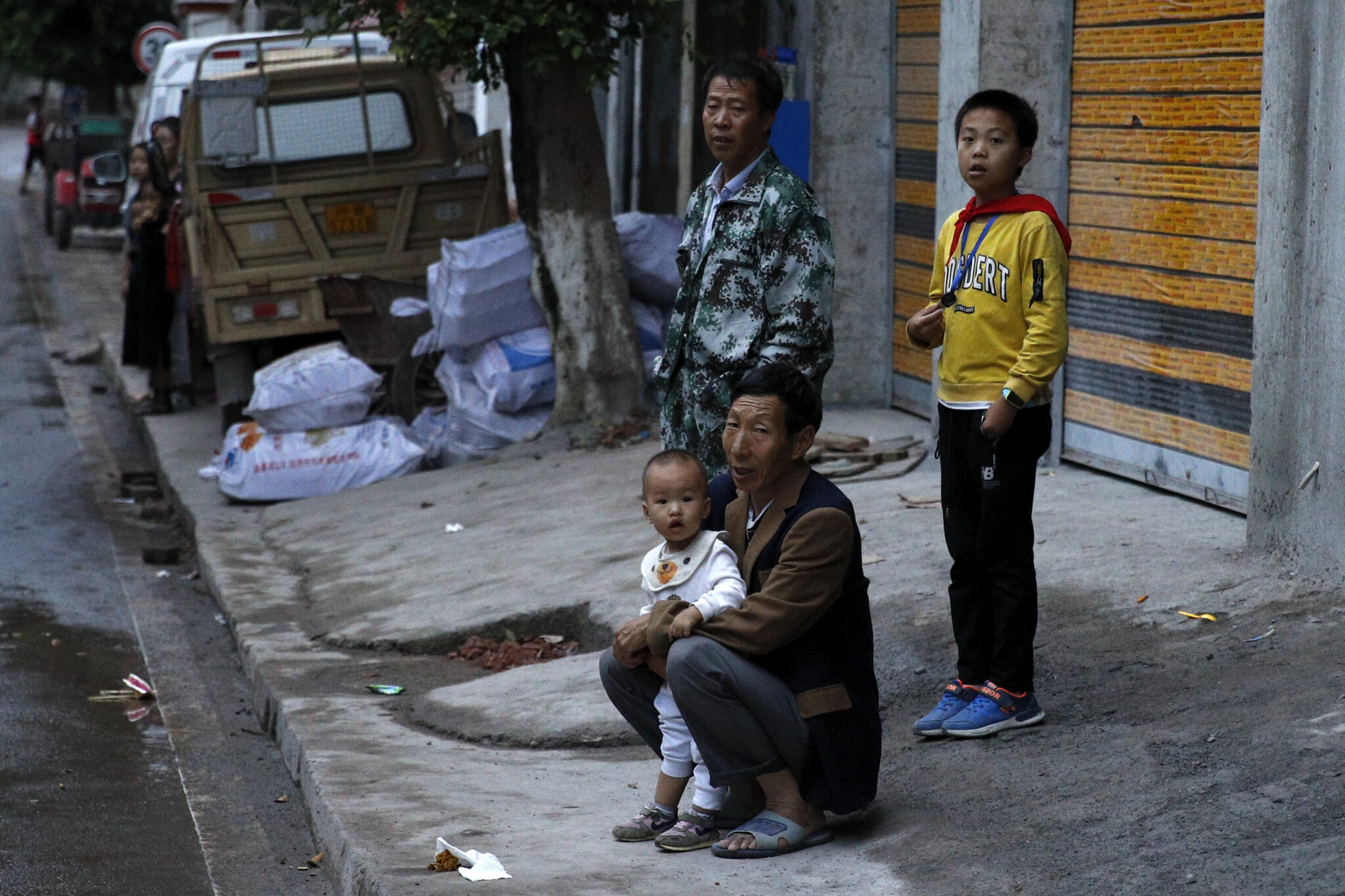
‘In one generation, the population will be halved’: Why China may not be the world superpower we think it is
Nancy Qian, professor of economics at Northwestern University, discusses China’s growing pains, including its fertility crisis, per capita GDP struggles, and youth unemployment problems. The founding director of China Econ Lab discusses what these struggles spell for the Middle Kingdom’s future.
You can listen to this episode on Amazon, Apple, and Spotify.
Program Transcript
This is an automated transcript. Please check against delivery.
HARRISON LOWMAN: Welcome to hub hits. I’m Harrison Lowman, managing editor of the hub when you think about China, you think about a behemoth, a rich and prosperous world superpower, a country on the verge maybe of surpassing the US when it comes to world dominance and claiming the international throne. But when you look under the hood and view China domestically, things might look a bit different. Everything is not how it seems. For more on that, I’m joined by Nancy Qian, the James J O’Connor professor of economics at Northwestern University. Nancy, thank you so much for joining us on hub hits today. How are you.
NANCY QIAN: I’m doing well. Thanks for having me.
HARRISON LOWMAN: You’re very welcome. You’re very welcome. Okay, so the headline of your piece that caught my attention while I was riding to work one day, the Chinese family is in crisis. Why is the Chinese family in crisis? In your view?
NANCY QIAN: You know, one of the things that people don’t realise is how few children China has been having for how long, and what that does to a society. You know, the average Chinese household has one child, and now today, we’re living with parents who, themselves were only children, and you have this tremendous stress on parents who are taking care of their elderly parents and taking care of their children at the same time, and so everyone is stressed out.
HARRISON LOWMAN: So let’s put some numbers to this, which from your piece, fertility rates, which is the average number of children a woman will have in her lifetime in China, that was 7.51 children per woman in 1963 which was, I think, the modern peak, and now it’s around one one child per woman. Is that? What the number is? Right. Now.
NANCY QIAN: that’s exactly right. I mean, everyone was really stunned by how fast fertility rates fell. It fell and fell and fell. At first, it wasn’t so surprising, you know, because there was a one child policy. But what was really surprising is when the one child policy was lifted, and this was in 2016 fertility rates didn’t come up. It just kept dropping. And a few years ago it hit one. I mean, imagine one. One means that, if it keeps going, it means that in one generation people, the population will be halved.
HARRISON LOWMAN: And I think you need 2.1 to maintain the current population. Here in Canada, we have low fertility rates too, but it’s made up for the fact that we welcome a lot of immigrants into the country. Is China doing that? What does China’s immigration acceptance look like within the country?
NANCY QIAN: East Asian countries in general, don’t really have immigration and that includes Japan, South Korea, China. This is changing a little bit. For example, in Japan, there’s some discussion of that, but that hasn’t happened in China yet. The way the Chinese see it, they have 1.4 billion people, which, you know, is a huge population. The US is like 330 million. And the land is around the same size as us, land mass and arable land share is less, right? There is less land for agriculture. So the way the Chinese see it is that first they need to reduce population in China before they even allow immigration in and so the surprise now is how fast population is going down.
HARRISON LOWMAN: Interesting. And Xi Jinping his government, Are there signs that they’re aware of the problem that’s coming down the track and that they’ve taken steps to try and fix it. Do we have a sense of what their thinking is right now.
NANCY QIAN: the Chinese government is definitely aware of the fertility rates. I mean, they’re the ones collecting the data, and they’re definitely aware of all the economic and social problems that this can cause. Because of this recognition of the problem of lower fertility rate, that they relax the one child policy that had been in place since 1979 1980 then they increase the allowed fertility from two to three. At this point, there’s essentially no limit, and the government, in the last year has even been introducing financial incentives for parents to have kids, but it just doesn’t seem to be enough.
HARRISON LOWMAN: And you now write that, what do playgrounds look like in China right now?
So one of the most remarkable things you see when you visit China, if you’re from Canada or the US, is that the playgrounds are empty. So there are the playgrounds are beautiful, and most big cities, like Shanghai and Beijing, they’re everywhere, and they’re empty. They’re full of, well, they’re not full, but the people who are there are either very, very young children, you know, preschool age children, or babies, or the elderly, everyone who’s of age for school, and that means starting kindergarten, first grade, second grade. Those kids, there are very few of them, and they’re mostly at home doing homework to survive in this intensely competitive school education system.
HARRISON LOWMAN: Because I was going to ask my next question was about youth employment. You know, a lot of. Old people, less young people, but the young people that are there, there’s a lot of stressors in their lives. Can you give me a sense of what employment prospects look like for young people in China, and what those stressors look like as well?
NANCY QIAN: So the youth unemployment numbers hit a historical peak a few years ago, and it hasn’t really abated that much. And you know, for the last generation, I would say the last 20 years, there was a sense that if you go to school and you do well in school, then you can get a good job, a good job, I mean, a middle class job. That can get you a job in a city with a middle class life. You know, of a middle class life, you get married, you have an apartment, you can have a child, a car. So those jobs are there’s a sense is that those jobs are fewer and fewer now, and no matter how hard you work in school, you can’t get the job that you thought you were going to get. So just this last year. You know, these statistics are not published, but there’s a the word on the street from elite universities is that 20% of their graduates haven’t been able to find jobs this year.

HARRISON LOWMAN: Wow, and and coupled by the fact that there’s mental health issues, right? You talk about depression that the young people are feeling. You know, we feel this here in Canada, Canadian youth here, but what does it look like in China? And is it any different?
NANCY QIAN: There are a lot of similarities in youth depression between China and the rest of the world, right? You know, we’ve just seen this rise in youth depression since the pandemic, and China is no different. I would say, you know, the thing that is different is the magnitude in the US. We talk a lot about prescription medication for all sorts of things that kids may need and some kids may not need, like ADHD. I was reading some report that around 15 to 30% of high school students or college students have taken some type of medication for ADHD at some point. So China is similar in that there’s a rise, but the magnitude is very notable. You know, I was visiting a school in Shanghai, and the teacher told me that 100% of their fifth grade. Fourth grade boys were on medication for ADHD, and they asked the parents that put the kids on it if they’re not already on it, so that they could have longer attention spans, so that they can study for the exams that’ll help them get into middle school and then later high school and university. Is true to that. We don’t really see so much in the US or Canada.
HARRISON LOWMAN: Is true success when it comes to education, Nancy, them making it to university, post secondary schools here in North America. Like, is there a prestige that comes with that? Or, you know, is it equally seen as impressive to, you know, attend school in Asia.
NANCY QIAN: Hundreds of 1000s of Chinese students have gone to the west to study, and that’s definitely something that parents and grandparents are extraordinarily proud of when it happens. But ultimately, when you think about the millions of people in China, that’s really just a small number for most Chinese for most ordinary Chinese families, what they really want is, they just want their kids to get into university, you know, do their best. Of course, you know, the more the better. But just to get into university, graduate with a university degree, so that they can get a middle class job, right? They don’t need to study abroad and go home and be a partner of a foreign management consultant firm to make their parents proud. And what we’re seeing is that those parents, like the ordinary middle class Chinese and the parents of the elite Chinese who used to go abroad and study at Harvard, everyone is stressed.
HARRISON LOWMAN: interesting, so all of them. So let’s pull the lens back. We’ve talked about workers entering the economy. Let’s talk about the economy itself. From your perch as an economist, is China a rich or poor country?
NANCY QIAN: It depends on what you’re looking at. So I am a development economist at heart, which means that I think about poverty and I look at the whole country. When you look at the whole country, China is a middle income country, meaning that the average income of a Chinese person is 1/6 of what it is in the United States, and median households have disposable incomes of around $15 per person. That’s not a lot of money, right? Per person per day. That’s not very much money at all. And there are hundreds. There’s hundreds of millions of people in China.
I mean, to be precise, 500 million people living in rural areas. And, you know, they just got indoor plumbing recently. So in that sense, China is very poor. And I see the picture you’re showing and you know, that’s probably a village with tourists, so it’s actually better off than the average rural, mountainous village. But then, you know, of course, there’s great in China’s big there’s great inequality. You go into the city centre of Shanghai, where I’m from, you go into the French concession, and you see lines and lines of, you know, luxury German cars and cars with brands that I never even heard of before. I learned about things like, you know, what is a concept car? And I learned what a Bugatti was when I was in China. So, you know, there is just a lot of inequality. So depending on what slice you look at, you can say it’s very rich. You can see it’s very poor, but overall it is a middle income country problem with middle income country, middle income country problems.
HARRISON LOWMAN: I was struck by this stat you talk about rural Chinese citizens. China’s median per capita disposable income for rural citizens is in American $2,777 in the US, you say that figure is $63,589 what do you make of that gap?
NANCY QIAN: I think it’s very hard for people in the West, in not, I don’t want to say the West, and people in high income countries like the US and Canada, to envision what life is like as a median person in a middle income country, and this is China, but also like Mexico, Brazil. You know, when we travel and we do tourism, we only see a very narrow slice. We don’t see the daily lives of ordinary people. And what it means is that these people don’t have cars, or they aspire their whole lives, put all their monies together. Put all their money together to buy a car. That’s a couple of $1,000 it means that they don’t really have good health care. You know, they don’t see dentists. They don’t they get basic vaccines that if they break a leg, it might not heal properly. They may not get an x ray on time. They actually won’t get an x ray on time, most likely, it means that many people are sharing a room together. They’re living in a very congested space.
HARRISON LOWMAN: You write that China’s per capita GDP in 2019 was around just over $8,000 placing it between Montenegro and Botswana. But you know, if you talk to Chinese government officials, they would tell you, and it is the truth that the World Bank says this as well. Between 1978 and now, almost 800 million Chinese people have been lifted out of poverty. How do you wrestle with that stat as well that they would sort of return fire and say, you know, look at the they may not highlight the current poverty, but there’s a look at the progress that has been made over such a short period of time. What’s your response to the those comments?
NANCY QIAN: the progress? I mean, there has been progress, and it’s been remarkable, right? When we think of where China was in the 80s. I mean, I was born in China in the late 70s. I was living there as a small child in the early 80s, we had 10 people living in 30 square metres. Just imagine how congested that is. My mother made $4 a month in salary, and she lived in a workers dormitory, and in my we shared. There was three or four households on this third floor of just the big house, and we shared one bathroom, which was also the kitchen. So we would take baths while the neighbours the kids would take baths while the neighbours would cook dinner, right? So, and that’s an area where all the Bugattis are lined up today, so China has experienced tremendous growth, and but we also want to keep in mind what growth means.
So I think we should celebrate countries like China and India for lifting billions of people out of poverty. But let’s also think about what that means. When the World Bank says poverty, they’re talking about $1 a day and $2 a day. So there are, it’s true that there are very few people in China today who are living in extreme poverty at that level, and that should be celebrated. But that’s not what we’re talking about today. In 2025 today, I think the discussion is, should we see China as a monolithic economic and geopolitical superpower, or should we see it as a middle income country? And what I’m saying is we should look at China and see it as a middle income country. It has power. It has geopolitical power, of course, because it’s huge. But let’s not forget the hundreds of millions, almost 1 billion people, who are living with so much less than what even the you know when we think of how poor people live and poor families live in countries like the United States and Canada.

HARRISON LOWMAN: those poor people, when they’re frustrated about their struggles, their lack of ability to afford things, who are they wagging their fist at? Who are they blaming for? This when they’re spoken to
NANCY QIAN: it’s really going to vary by people, you know, I’ve heard people who directly blame government policy and here, you know, and for example, one thing that’s causing a lot of stress for Chinese families is the very rigid structure of the Chinese education system, which is mandated by the central government but also implemented by local governments. So right now, and for you know, for many, for many years and right now, only 50% of middle school graduates are allowed to go to high school. So all Chinese middle school graduates take an exam at the end of eighth grade, everyone and the top half, goes to academic High School, at the end of which you can take an exam and get into college, and most people will get into some some university. These days, the admissions rates have been higher and higher, but the bottom half, and again, remember, these are 15 year olds. The bottom half go to vocational high school, and they can never apply for college, like they’re out of the system. So, you know, that’s a policy that I actually think that’s a policy that the Chinese government is going to do away with soon. I mean, there’s a lot of talk about it in China and a lot of criticism. People are aware that this is not a great idea, and it’s causing unnecessary stress.
HARRISON LOWMAN: Interesting. Final few questions here, what are the promising China signs in China? Where would you say? You know, it’s excelling beyond what we have in North America, beyond what we have in Europe.
NANCY QIAN: So one thing that’s always very impressive when you go to China are the high speed railways, you know. So I was just there, and I needed to go from Beijing to Shanghai. And instead of taking a car and get, which would be, would be like two hours to the Beijing Airport, because it’s a big city, it’s like Chicago right during rush hour, and then getting there a couple of hours in advance, and then flying to Shanghai, and then, you know, taking another couple of hours from the Shanghai airport, Pudong airport, to the city centre. I just got on a train. I took a 10 Minute subway ride to the train station. I got there 10 minutes in advance. I got on my train. I worked for the entire six hours on the train I was in so I think I left my office at three, I got on the train at four, I was in Shanghai by 10, and I met my friends for drinks and I went to bed. That was amazing. So you know, like Shanghai and Beijing are not close. And if we had high speed rails, we could do that from Chicago to New York.
HARRISON LOWMAN: if only. And the thing is, too they’re built much faster. So when you’re in these mega cities and you’re surrounded by these skyscrapers, and you’re telling people that they’re actually living in a middle income, I wouldn’t go so far as to say developing country and places, but, you know, you label them as such, what’s the response you’re getting Nancy?
NANCY QIAN: It really depends on who you talk to. You know, if you’re going to talk to someone, if you’re going to talk to an academic or someone working in policy, they’ll say, you know, of course, it’s obvious. You don’t have to go very far before you see the middle incomeness, even in the neighbourhoods with Bugattis, you just have to turn the corner right in these really, really fancy neighbourhoods, you just turn the corner in the alleyways, and you see how people work and how they live. You know, there are mechanic workshops or machine shops that fixes stuff that goes into these really fancy buildings.
And on top of these machine shops, there’s a whole family living there. Sometimes there’s just 20 men migrant workers. You don’t have to look very far to see it. It just depends on how observant you are, and that’s going to vary by people. And you know, I’m going to say, I think that’s that that’s just human, and that’s very common with the US. If you go around the US, if you go to very glitzy parts of or just very well to do parts of, you know, Chicago, this is where I live. You go to really nice suburbs, and you ask, well, you know, how do you think the median American is living? I think some people will know, and some people will not know, even if it’s pretty nearby, right? Like one of the most depressed areas in America would be like the Upper Peninsula of Michigan. It’s just having a hard time. And I think most people living in Chicago in the north, they actually don’t know how those guys are doing.
HARRISON LOWMAN: They’re not aware of it. Final question, so between you talked about issues with poverty, demographic challenges, you know, we can lop put on top of that, you know, response to the tariffs they’re currently facing, their enemy number one, for the US to you, what does the future of China look like over the next 10, 20, years?
NANCY QIAN: I have a moderate view, so I don’t, I’m not doom and gloom. You. And I am not, you know, China’s gonna take over the world. And so my view about Chinese growth is what it’s always been, actually, which is that, you know, China has a lot of capacity for growth, in the sense that there are so, you know, the this whole thing about being a middle income country and having hundreds of millions of people who are who still don’t have a lot of money. It cuts both ways. So these hundreds of millions of people, they have so little compared to many other countries, but they’re really educated, right? And they’re really healthy, and they really want to work. They’re very motivated, so there has to be room for growth. So in that sense, I’m an optimist, and it doesn’t have to grow at 10% per year.
When China grew at 10% per year, we called it a miracle. And everyone thought, you know, this was, like, amazing. But economists, not just me, like, you know, all development economists knew that those days would come to an end. No country sustains that forever. And Chinese growth wasn’t a slowdown to something you know, that was more normal for normal country. 5% growth is amazing. 2% growth is respectable. Japan grew at zero to 1% for generation, and it’s still okay. So my prediction is that with the end of the growth miracle, it always had to end, and with these issues and challenges, it faced very difficult issues, like the geopolitical issues, not just with the US, but also with Europe, right. Everyone is worried about Chinese exports swamping their domestic markets, and the fertility crisis. These are really complicated issues that China has to deal with, but growth is not going to go negative. It’ll be some number that’s probably lower than five, more than zero, and China’s a big country, and it’ll just keep on going.
HARRISON LOWMAN: interesting. So it won’t be a miracle anymore, but maybe something a bit more predictable and normal. Wait and see that is Nancy Qian, the James J O’Connor professor of economics at Northwestern University. Thank you so much Nancy for joining us on hub hits today. I really appreciate it.
NANCY QIAN: Thanks for having me.