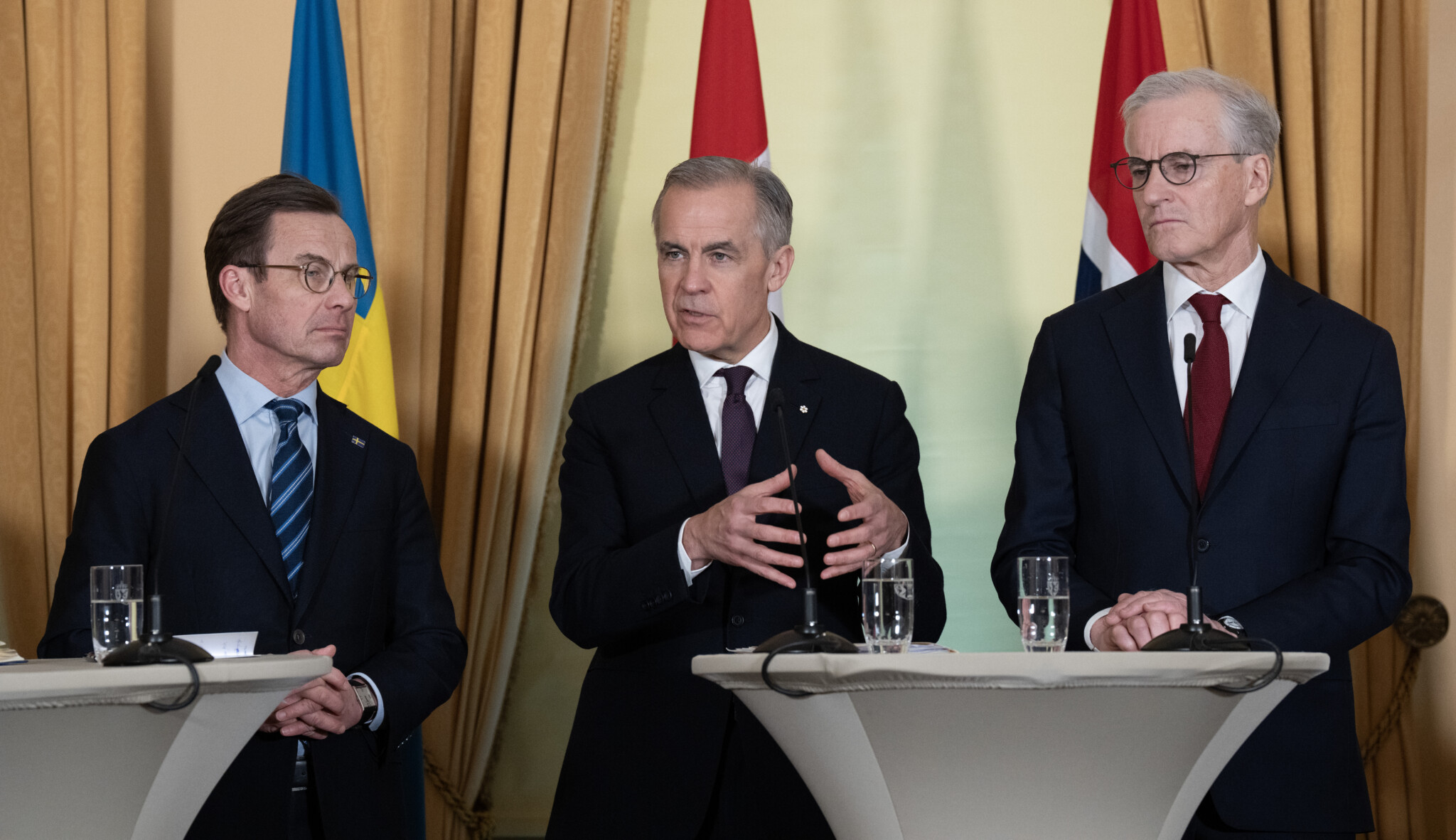
‘It’s about the moment’: Is Carney benefiting from geopolitical chaos?
You can listen to free versions of this episode on Amazon, Apple, and Spotify.
Episode Description
In this episode of Hub Politics, Amanda Galbraith, co-founder and president of Oyster Group, and David Coletto, founder and chair of Abacus Data, join Sean Speer to discuss the Liberals’ commanding polling lead and Pierre Poilievre’s strategic pivot to speak in the U.S. They also discuss how external threats, particularly from the Trump administration, have shifted the political landscape in Carney’s favour, creating a “rally around the flag” effect.
In the second half, they examine how Poilievre’s U.S. trip could neutralize his deficit on foreign policy, and explore how opposition leaders navigate politics when voters prioritize global over domestic concerns.
If you liked what you heard in the first half of the program and wish to subscribe to full-length editions of Hub Politics, please consider becoming a Hub Hero. Hub Heroes also get access to all our paid content on TheHub.ca. All these benefits are conferred for one year. Sign up now!

Episode Summary
The political landscape in Canada has undergone a remarkable shift, with Prime Minister Mark Carney’s Liberals opening up their most significant polling lead in nearly five years. According to new data from Abacus Data, the Liberals have established a clear advantage. This surge has fundamentally altered the dynamics of the opposition.
The discussion examined the roots of this Liberal ascendancy. Government approval stands at elevated levels, and Carney’s personal favourability has reached new heights. Crucially, the driving force behind this shift is no longer simply the Liberals cannibalizing the New Democratic Party vote. The party is drawing support from previously committed Conservatives. The reason is the changing nature of the ballot question.
External threats, particularly the actions of the Trump administration and global instability, have become the dominant concern for Canadians. This has created a sense of limited agency, where voters feel domestic issues like cost of living are now at the mercy of global events. In this environment, Carney’s perceived competence on the world stage—underscored by his frequent overseas travel—has become a powerful asset. The Conservatives retain an edge on affordability, but the Liberals now dominate the question of who is best equipped to handle the relationship with America.
This external focus has forced a strategic pivot from the Conservative leader, Pierre Poilievre. After spending much of the past year hammering on domestic failures, Poilievre is currently on a trip to the United States, meeting with sector leaders. The move is seen as politically astute, allowing him to appear as a credible alternative prime minister. Criticism that he avoided Washington is misplaced; meeting with high-profile Republicans would be a political liability, potentially tying him too closely to an unpopular administration.
However, there is skepticism that this trip alone can close the gap. Poilievre’s challenge is less about his own failings and more about Carney’s deeply entrenched brand as a competent statesman. The best the Conservatives can hope for is to neutralise the Trump issue, proving Poilievre can also handle the file, and then wait for the ballot question to shift back to domestic concerns like housing or the economy.
This summary was prepared by NewsBox AI. Please check against delivery.
This episode of Hub Politics discusses the Liberals’ growing polling lead and Pierre Poilievre’s strategic shift to international engagement. The Liberals’ surge is attributed to external threats, particularly from the Trump administration, creating a “rally around the flag” effect benefiting Prime Minister Carney’s perceived competence on the world stage. This shift has forced Poilievre to engage in foreign policy, including a U.S. trip, to neutralize his deficit in this area. While the Conservatives still hold an edge on affordability, the Liberals now lead on handling the relationship with America. The discussion explores the challenges opposition leaders face when global concerns outweigh domestic issues for voters.
How has the focus on global threats, like Trump's America, impacted Canadian voter priorities and the Liberal's polling lead?
What strategic pivot is Poilievre making to address his perceived weakness on foreign policy, and how effective might it be?
If global concerns are driving voter choices now, what needs to happen for domestic issues like affordability to regain prominence in Canadian politics?

Comments (1)
Can Carney walk on water, raise the dead, feed the 5000 or something?
This guy hasn’t done squat for Canada but spent 20% of his time out of Canada in foreign countries (for election purposes? https://thehub.ca/2026/03/11/mark-carneys-26-trips-abroad-a-breakdown-of-the-prime-ministers-trade-deals-after-1-year-in-office/) with various MOU meeting and plans about a plan. Yet not in our most relevant and largest trading partner the US, which he seems to clearly despise. Yet the fate of many Canadians relies on Canada having access to the US market, not some small European one we hardly do any trade with. Amazed the recent news of the worst jobs report in 4 years along with the shrinking Canadian economy and record deficits with rising debt is not more alarming to Canadians, who clearly are lost with a severe case of Carneymania. I’m certainly not duped.