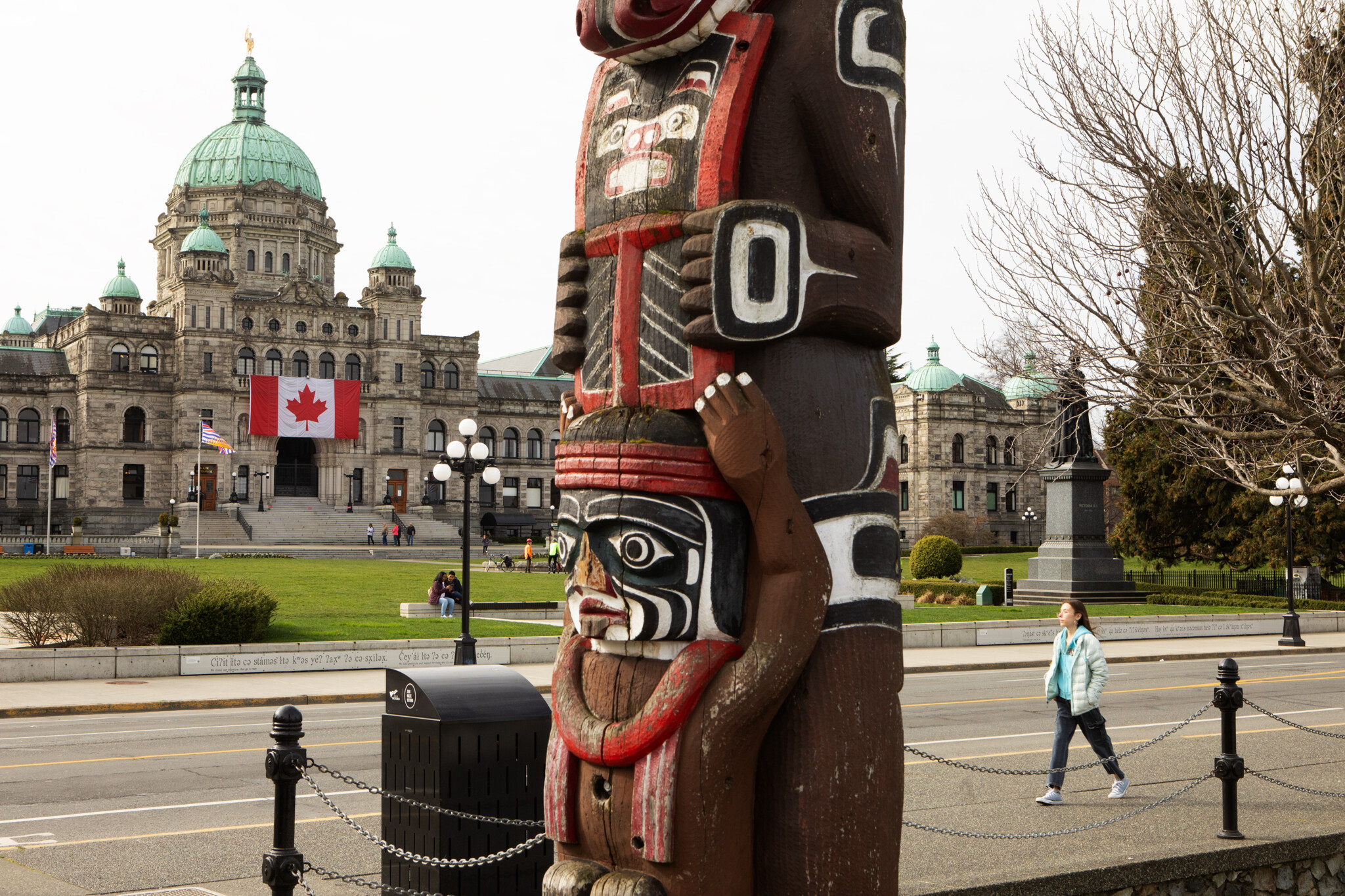
‘It’s inviting a backlash’: David Frum breaks down Canada’s approach to Indigenous reconciliation
Leading author, journalist, and thinker David Frum discusses his new article in The Atlantic on the growing questions about Canada’s approach to reconciliation, including a possibly precedent-setting court decision that could upend property rights in the country.
You can listen to free versions of this episode on Amazon, Apple, and Spotify.

Program Summary
This is an automated summary. Please check against delivery.
Canada finds itself at a critical juncture as questions surrounding Indigenous rights, property ownership, and national identity intensify across the country. Recent legal developments have brought these long-simmering issues to the forefront of Canadian political discourse, raising fundamental questions about the balance between historical recognition and contemporary governance.
The concept of Aboriginal title has emerged as a central point of contention in Canadian law. This legal framework attempts to reconcile traditional Indigenous land use with modern property rights systems inherited from British common law. The tension arises from converting what some view as metaphorical recognition of historical presence into concrete legal claims that can supersede established property titles. This transformation has created uncertainty in property law, particularly in British Columbia, where court decisions have called into question titles that property owners believed were secure and indefeasible.
The challenge extends beyond legal technicalities to broader questions of national reconciliation. Despite substantial increases in federal spending directed toward Indigenous communities over the past decade, outcomes have not matched expectations. Life expectancy has declined in some Indigenous populations, while overdose deaths have increased significantly. This disconnect between resource allocation and measurable improvements in well-being has prompted difficult questions about the effectiveness of current approaches.
The reconciliation framework itself faces scrutiny. Originally borrowed from post-apartheid South Africa, the term implied a mutual process of truth-seeking followed by forgiveness and forward movement. However, the Canadian application has evolved differently, with some observers noting an ongoing cycle of demands and concessions rather than a path toward mutual understanding and closure. The absence of rigorous fact-checking mechanisms and accountability measures in some reconciliation processes has further complicated efforts to establish shared historical understanding.
Property rights represent another flashpoint in these debates. The principle that legally registered titles provide secure ownership has been fundamental to Canadian economic development. Recent legal challenges to this principle, particularly cases where property holders were not represented in proceedings that affected their interests, have raised concerns about due process and the stability of property law. These developments carry implications not just for individual property owners but for the broader investment climate and economic development across the country.
The nation-to-nation approach to Indigenous relations presents its own complexities. While intended to recognize Indigenous sovereignty and self-determination, this framework creates questions about long-term integration and individual autonomy. Economic incentives tied to community membership may discourage individual Indigenous people from pursuing opportunities that require leaving their communities, potentially limiting personal development and economic mobility.
Looking forward, Canada faces difficult choices about balancing collective rights with individual freedoms, historical recognition with contemporary needs, and legal innovation with established property principles. The path ahead requires addressing not just legal frameworks but fundamental questions about national identity, the relationship between different levels of governance, and how to measure success in improving actual living conditions rather than simply transferring resources or recognizing rights in principle.

David Frum is a leading author, journalist, public intellectual, and staff writer at The Atlantic. He previously worked as a speechwriter for…
Is Canada's current reconciliation approach effectively improving Indigenous well-being, or is it creating unintended consequences?
How might recent legal challenges to Aboriginal title impact property rights and economic development in Canada?
Does the 'nation-to-nation' approach to Indigenous relations risk limiting individual Indigenous autonomy and economic mobility?

Comments (4)
I don’t think the public is going to stand for unelected judges yanking away our property rights or elected governments failing to defend our rights vigorously.