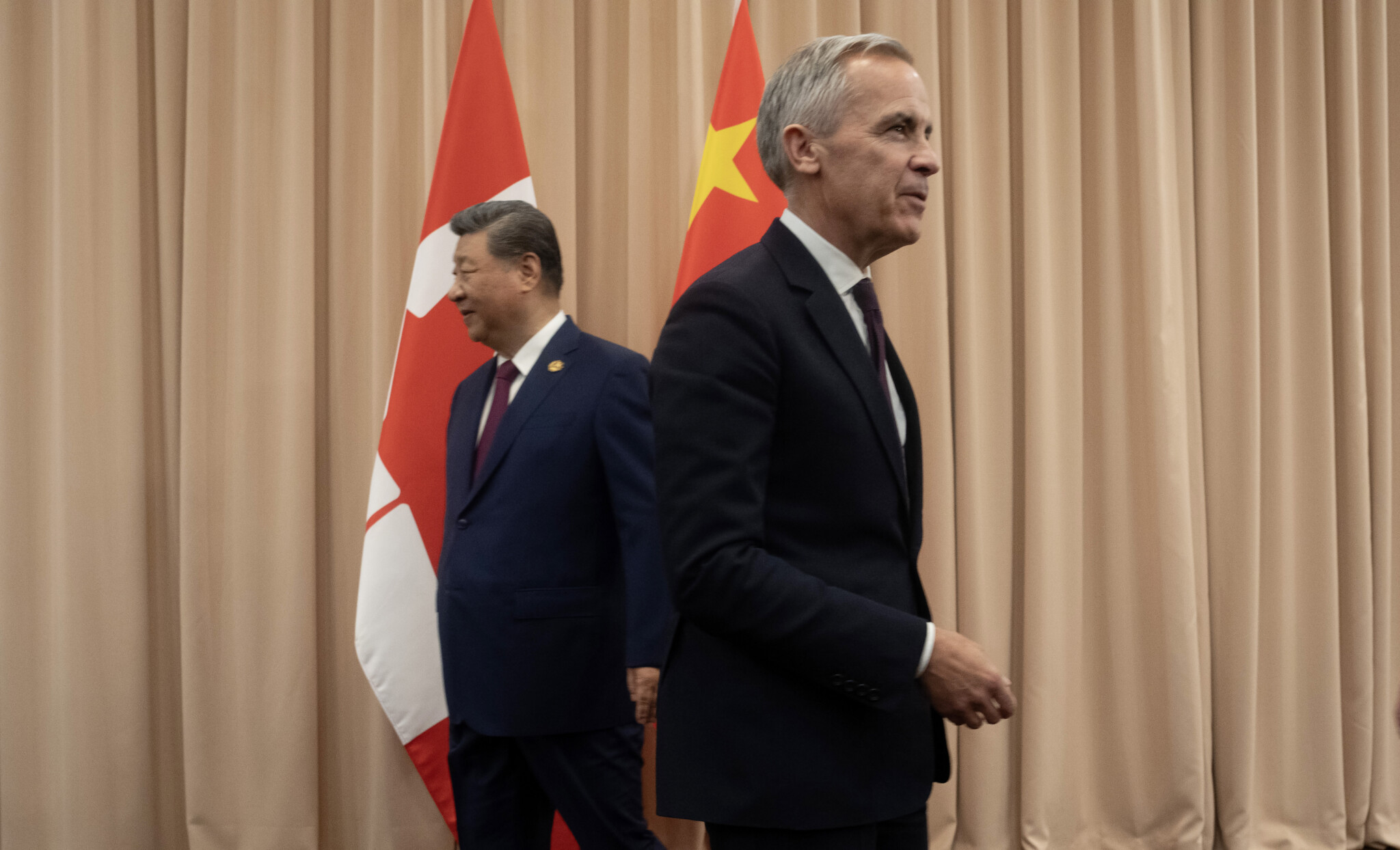
‘It’s suspicious’: Is Prime Minister Carney hiding the details of his conversation with Xi Jinping?
You can listen to this episode on Amazon, Apple, and Spotify.
Episode Description
Full Press asks whether the media is hounding Prime Minister enough over his soft stances on China, questions if Trump is the most media accessible president in history, and figures out how one Ottawa journalist went from being a bureau chief to an Uber driver.

Episode Summary
Questions about transparency in Canadian-Chinese diplomatic relations have emerged as a significant political issue, highlighting broader concerns about government accountability and media coverage of sensitive foreign policy matters. The controversy centers on discrepancies between public statements and official records regarding discussions of human rights during high-level meetings with Chinese officials.
The situation has drawn attention to the complex relationship between Canada and China, particularly as economic pressures mount and trade relationships shift. With ongoing tensions in North American trade relations, some observers note a potential pivot toward strengthening economic ties with China, even as human rights concerns remain unresolved.
There is also an unusual feature of Donald Trump’s presidency: his extraordinary accessibility to the media. Unlike previous administrations, in which access to the president was tightly controlled and required significant negotiation, Mr Trump’s personal mobile phone number has become widely circulated in Washington, described as the “worst kept secret”. Reporters are said to trade the number among themselves, and there are unsubstantiated rumours of CEOs offering money for it.
The result is a media environment in which interviews that once demanded formal scheduling and a sit-down discussion are now conducted informally, sometimes by text message, at any hour. One commentator notes that following a military engagement with Iran, the first interview was given at four in the morning. Journalists describe a pattern of consecutive calls with the president, publishing his remarks directly online without the filter of communications staff.
This is contrasted with past presidents. Barack Obama is noted to have committed to answering ten letters a day. George W. Bush’s administration is described as having erected significant hurdles even for family-member interviews. Mr Trump’s approach, by contrast, allows reporters to bypass handlers and obtain information without being controlled by official channels.
Commentators acknowledge both potential benefits and drawbacks. On one hand, direct access enables journalists to serve the public without manipulation. On the other hand, questions are raised about whether a head of state should be so readily available to private citizens and reporters throughout the day, and whether constant interruptions hinder effective governance.
Meanwhile, the Canadian journalism industry continues to grapple with severe economic challenges that are reshaping the profession. Thousands of journalists across North America have lost positions in recent years as traditional media business models collapse. The industry has seen dramatic workforce reductions, with some estimates suggesting the Canadian journalism workforce has declined by nearly forty percent over the past decade.
These economic pressures have created difficult circumstances for experienced journalists, some of whom have struggled to find comparable employment after losing positions at established news organizations. The situation has sparked broader conversations about the sustainability of journalism as a profession and whether traditional career paths remain viable. Some former journalists have successfully transitioned to communications roles in government and private sector, while others face significant financial hardship.
The transformation of the media landscape has also affected how political leaders interact with journalists. In contrast to traditional carefully managed press access, some political figures have adopted more direct communication approaches, bypassing traditional media gatekeepers. This shift has created new dynamics in political journalism, raising questions about security, message control, and the changing nature of presidential or prime ministerial accessibility.
Within Canadian media, concerns persist about editorial approaches that may prioritize predetermined narratives over balanced reporting. Critics point to coverage of urban safety issues as an example where public concerns may not receive adequate consideration when they conflict with data interpretations. The tension between statistical analysis and lived experience has become a recurring theme in discussions about journalistic methodology and public trust.
This summary was prepared by NewsBox AI. Please check against delivery.
The article raises questions about the transparency of Prime Minister Carney’s discussions with Xi Jinping, specifically regarding human rights concerns. It contrasts this with Donald Trump’s unusual media accessibility, where reporters have direct access, bypassing traditional channels. The piece also addresses the economic challenges facing the journalism industry, leading to workforce reductions and altered interactions between political figures and the media. Concerns are raised about potential biases in media coverage, particularly regarding urban safety issues, and the tension between statistical data and lived experiences. The article highlights the evolving landscape of journalism and its impact on political accountability and public trust.
How might a lack of transparency in Canadian-Chinese diplomatic talks affect Canada's foreign policy and trade relationships?
What are the potential benefits and drawbacks of President Trump's unusually high accessibility to the media, as described in the article?
How are economic challenges in the journalism industry impacting the way political leaders interact with the media and control their message?


Comments (0)