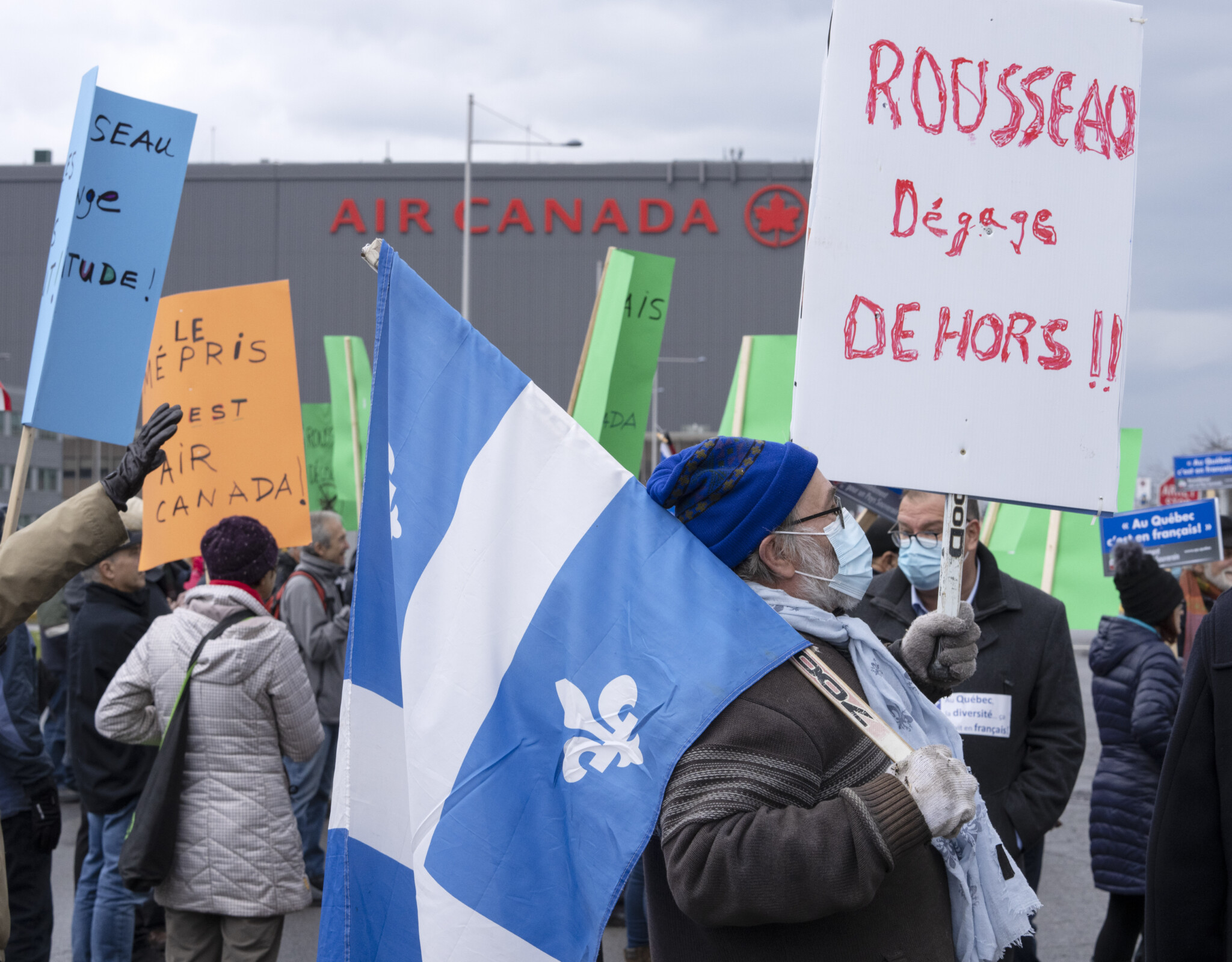
‘Nothing but politics’: Why the ousting of the Air Canada CEO over his failed French sets a dangerous precedent
You can listen to this episode on Amazon, Apple, and Spotify.
Episode Description
Rudyard Griffiths and Sean Speer discuss Air Canada CEO Michael Rousseau’s resignation later this year, following his English-only statement following the tragic death of two pilots at LaGuardia Airport. They explore whether this constitutes political overreach into corporate governance, discuss Air Canada’s legal obligations under bilingualism laws, and analyze the broader implications of Laurentian capitalism. They question where to draw the line between legitimate political accountability and excessive state interference in business decisions.

Episode Summary
Air Canada’s board of directors has removed the company’s chief executive officer, Michael Rousseau, following a political controversy over not speaking French when speaking about the deaths of two Canadian pilots. The dismissal came after Quebec’s National Assembly unanimously voted to express disapproval of the CEO, though the provincial body lacks formal authority to remove corporate executives. The incident highlights ongoing tensions surrounding bilingualism requirements in Canadian business and the complex relationship between government and major corporations.
The controversy originated from a statement issued by the airline following a recent aviation accident in New York. The CEO’s remarks, which acknowledged the heroism of pilots involved in the tragedy, were delivered exclusively in English despite French subtitles being included in the video. The communication sparked immediate political backlash, drawing criticism from Quebec’s provincial legislature and federal officials, ultimately leading to the executive’s departure.
The incident raises questions about the extent of political influence over corporate governance in Canada. Air Canada operates under specific legislative requirements regarding bilingualism, stemming from agreements made when the airline was privatized. These obligations mandate the use of both official languages in corporate communications, creating a legal framework that distinguishes the carrier from purely private enterprises.
The situation reflects broader patterns in Canadian economic policy, where certain industries operate under protected conditions with limited international competition. Foreign carriers cannot operate domestic routes within Canada, creating a sheltered market environment for the national airline. This protection comes with implicit expectations of cooperation with government priorities, including strict adherence to language policies.
Federal officials have taken an active role in responding to the leadership change, with the Transportation Minister publicly acknowledging the CEO’s departure and emphasizing the government’s ongoing relationship with the airline’s board. This level of ministerial involvement in corporate personnel decisions illustrates the blurred boundaries between public policy and private enterprise in key sectors of the Canadian economy.
The episode demonstrates how language politics continue to shape business operations in Canada. While federal cabinet ministers themselves may be unilingual and rely on translation services to meet official language requirements, corporations face different standards. The political response to the airline’s communication choices suggests that symbolic gestures around language carry significant weight, particularly when they involve Quebec-related matters.
The incident has prompted reflection on the nature of business-government relations in Canada. The model of protected industries operating with government oversight creates a dynamic where political considerations can directly influence corporate decision-making and leadership stability. This arrangement affects investment patterns, productivity, and the overall competitive environment for Canadian businesses.
This summary was prepared by NewsBox AI. Please check against delivery.
The removal of Air Canada’s CEO, Michael Rousseau, after delivering a statement about the LaGuardia plane crash solely in English has sparked debate about political overreach in corporate governance. The incident followed unanimous disapproval from Quebec’s National Assembly, highlighting tensions surrounding bilingualism requirements for Canadian businesses. Air Canada, operating under specific legislative requirements due to its privatization, faces obligations to use both official languages in communications. This situation reflects a broader pattern of protected Canadian industries operating with government oversight, where political considerations can influence corporate decisions. The controversy raises questions about the balance between political accountability and state interference in business.
Does the Air Canada CEO's ousting signal excessive political influence over Canadian corporations?
What are the economic implications of strict bilingualism requirements for Air Canada and other Canadian businesses?
How does this situation reflect broader tensions surrounding language politics and corporate governance in Canada?


Comments (0)