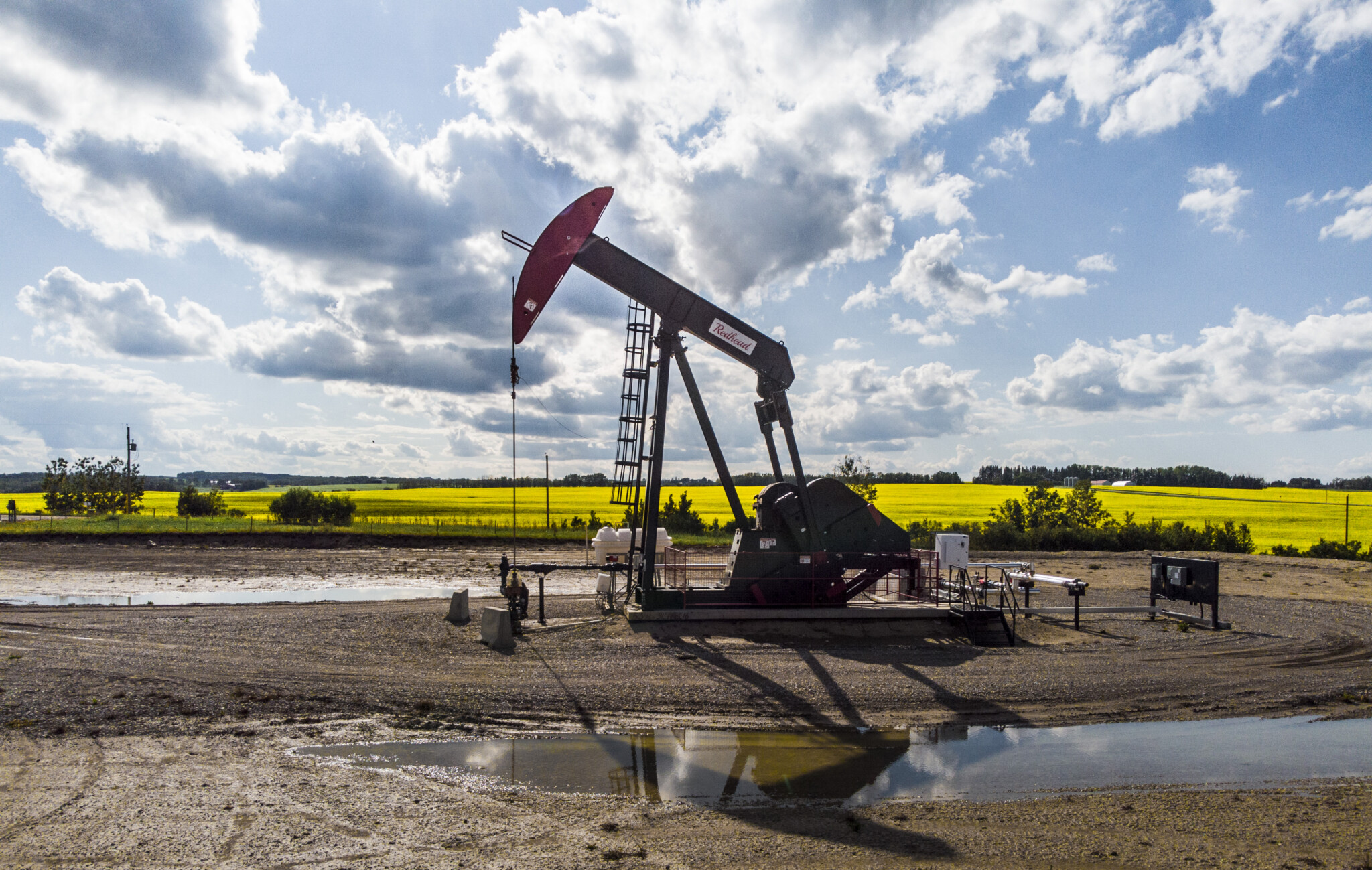
‘Riding the storm out’: Alberta’s budget reveals why oil revenue volatility makes fiscal planning impossible
You can listen to this episode on Amazon, Apple, and Spotify.
Episode Description
Mike Holden, chief economist at the Business Council of Alberta, discusses Alberta’s latest budget and the province’s significant deficit due to declining oil prices. He examines the challenges of budgeting with volatile resource revenues, the government’s economic priorities, and the disconnect between industry break-even prices and provincial fiscal needs. He explores potential solutions for achieving revenue stability, such as tax reform.

Episode Summary
Alberta’s latest provincial budget reflects the ongoing struggle to maintain fiscal stability in an economy heavily dependent on volatile oil revenues. The financial blueprint presents a sobering assessment of the province’s economic position while attempting to chart a course through uncertain global commodity markets.
The budget acknowledges Alberta’s challenging fiscal situation, driven primarily by declining oil prices that have fallen significantly from previous years. Global oversupply in energy markets has created downward pressure on prices, with few indicators suggesting a substantial recovery in the near term. This reality has forced provincial planners to adopt a cautious approach, essentially maintaining the status quo while weathering current economic headwinds.
Despite these challenges, Alberta’s economy continues to outperform other Canadian provinces in relative terms. The province maintains its position as a leader in national economic growth, even as it grapples with reduced resource revenues. This paradox highlights the fundamental tension in Alberta’s fiscal model: strong economic performance that nonetheless struggles to translate into stable government revenues.
The volatility of resource-based revenues creates significant challenges for provincial budget planning. Approximately one-fifth of annual provincial revenue derives from oil and gas royalties, which can swing dramatically from year to year. As production levels continue to increase, these fluctuations are expected to intensify, making long-term fiscal planning increasingly difficult. While energy companies have successfully reduced their operational break-even points, the provincial government faces greater challenges in adapting to price volatility.
The budget emphasizes several key priorities for economic development and diversification. These include reducing regulatory barriers to investment, expanding trade relationships to access new markets for Alberta products, and addressing workforce development needs. Particular attention focuses on skilled trades and labor shortages that have concerned business communities for years. The approach centers on using economic growth as the primary engine for generating future budget revenues.
However, the budget has drawn attention for its lack of a clear pathway to fiscal sustainability. While it maintains focus on core government services and economic competitiveness, questions remain about how the province plans to achieve long-term budget balance. The government has indicated plans to reevaluate Alberta’s overall fiscal framework, though specific details remain unclear.
The fundamental challenge facing Alberta involves achieving greater revenue stability in a system built on inherently unstable resource revenues. These revenues have historically enabled the province to maintain relatively low tax rates while providing high levels of public services, creating a unique fiscal environment compared to other Canadian provinces.
This summary was prepared by NewsBox AI. Please check against delivery.


Comments (1)
any mention of potential reforms to the federal fiscal stabilization program? from what I have read, Tombe and others have said this is the appropriate program to target for reform.