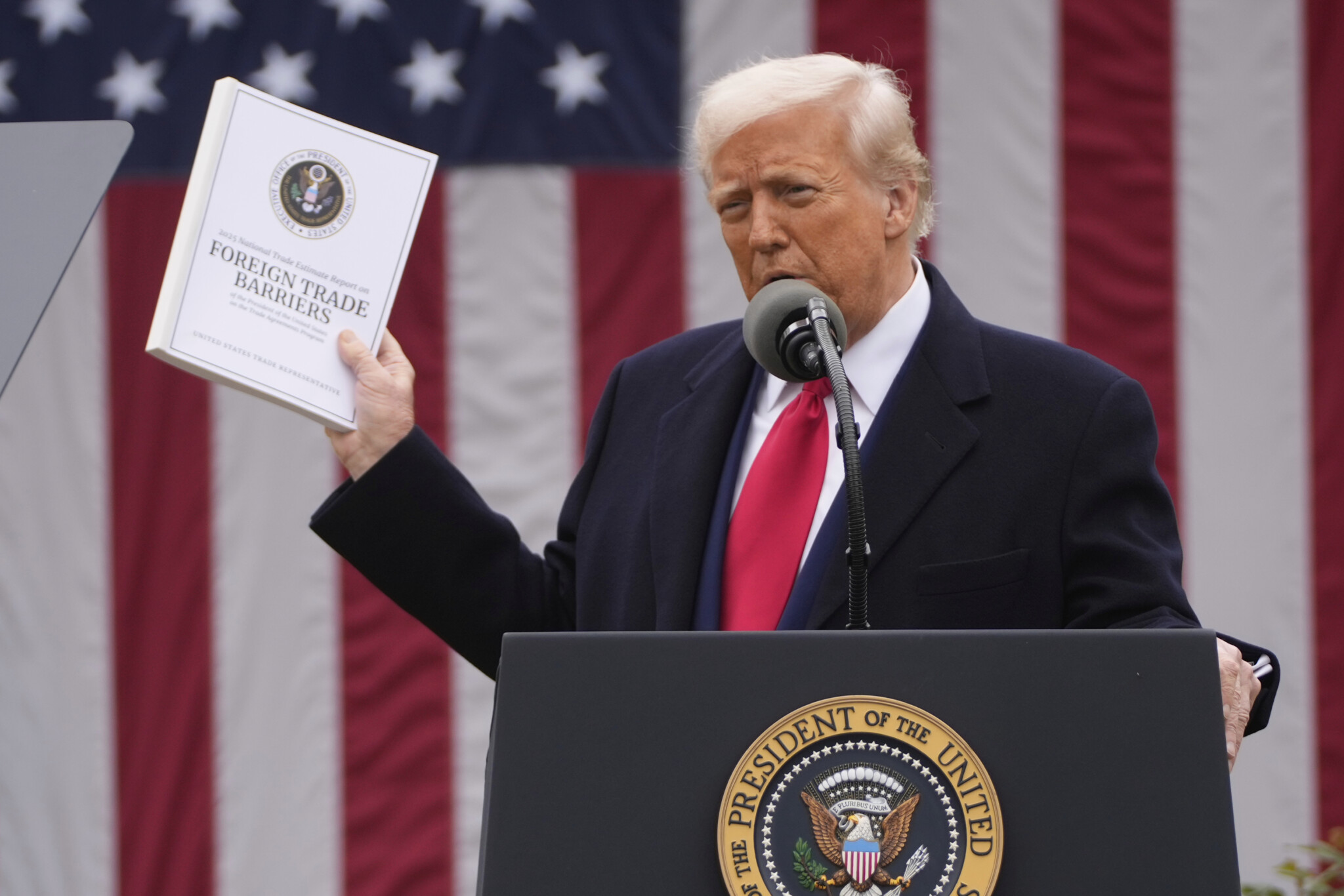
‘Self-defeating’: The Roundtable on Trump’s costly tariffs and lessons learned, one year since ‘Liberation Day’
You can listen to free versions of this episode on Amazon, Apple, and Spotify.
Episode Description
Rudyard Griffiths and Sean Speer discuss the one-year anniversary of President Trump’s “Liberation Day” tariffs and their impact on Canada-U.S. relations. They examine whether the tariff strategy achieved its stated goals of boosting U.S. manufacturing and reducing trade deficits. They also discuss the geopolitical implications of Trump’s approach, and debate Canada’s negotiation strategy for CUSMA. In the second half, they explore how new NDP leader Avi Lewis might reshape Canadian politics and affect Conservative electoral prospects.
If you liked what you heard in the first half of the program and wish to subscribe to full-length editions of The Roundtable, please consider becoming a Hub Hero. Hub Heroes also get access to all our paid content on TheHub.ca. All these benefits are conferred for one year. Sign up now!
Episode Summary
One year after the Trump administration’s sweeping tariff implementation, economic indicators suggest the policy has fallen short of its stated objectives, raising questions about the future of American trade strategy and its impact on international relationships.
The tariff regime, which reached historically high levels not seen since the early twentieth century, was designed to address trade imbalances, boost domestic manufacturing employment, and reshape America’s economic relationships with trading partners. However, analysis of economic data from the past twelve months reveals outcomes that diverge significantly from administration goals.
Manufacturing employment in the United States has declined rather than increased during the tariff period, contradicting promises of an industrial renaissance. This trend occurs despite tariff rates climbing to levels unprecedented in modern trade policy. The disconnect between policy implementation and desired outcomes highlights fundamental questions about whether trade policy alone can reverse long-term structural changes in the American economy.
The relationship between manufacturing employment and technological advancement presents a particular challenge. While production levels have remained stable or grown in recent decades, employment in the sector has steadily declined. The rise of artificial intelligence and automation may be working against tariff objectives, suggesting that technology rather than trade patterns drives employment trends in manufacturing.
Trade deficit figures have moved in unexpected directions as well. Rather than narrowing, the American trade deficit has widened during the tariff period. This counterintuitive result appears linked to businesses accelerating imports to avoid anticipated future tariffs, creating a temporary surge in foreign purchases that inflated the deficit.
The policy’s implementation has been marked by frequent changes and adjustments, creating uncertainty in business planning and investment decisions. This volatility may have undermined the policy’s effectiveness, as companies struggle to make long-term decisions in an unpredictable regulatory environment.
Different countries have experienced varying impacts from the tariff regime. Some nations have seen dramatic reductions in exports to the United States, while others have maintained or even increased their trade volumes. The uneven application of tariffs across sectors and countries has created winners and losers in international trade flows.
Canada has experienced significant disruption to its trade relationship with the United States, with particular sectors facing substantial challenges. The integrated nature of the North American economy makes these disruptions especially consequential, affecting industries from automotive manufacturing to energy exports. The situation has prompted discussions about whether traditional trade frameworks can be restored or whether new arrangements will be necessary.
From a geopolitical perspective, the tariff approach has strained relationships with traditional American allies while potentially strengthening the position of strategic competitors. The policy has complicated efforts to build coalitions addressing unfair trade practices, leaving the United States more isolated on the international stage.
This summary was prepared by NewsBox AI. Please check against delivery.
This episode of The Roundtable discusses the one-year anniversary of President Trump’s tariffs and their impact on Canada-U.S. relations. The discussion examines whether the tariffs achieved their goals of boosting U.S. manufacturing and reducing trade deficits. Economic indicators suggest the policy has fallen short of its objectives, with manufacturing employment declining and the trade deficit widening. The policy’s volatility has created uncertainty for businesses. The tariffs have strained relationships with allies and potentially strengthened strategic competitors. The discussion also touches on Canada’s negotiation strategy for USMCA and how new NDP leader Avi Lewis might reshape Canadian politics. The integrated nature of the North American economy makes these disruptions especially consequential.
Did Trump's tariffs achieve their stated goals of boosting US manufacturing and reducing trade deficits, according to the article?
How has the US tariff policy impacted Canada-US relations, as discussed in the article?
What geopolitical consequences have arisen from the US tariff approach, according to the article?


Comments (0)