‘Speed, scale, and certainty are the solutions’: Why modular construction is a game-changer for Canada’s housing crisis
You can listen to this episode on Amazon, Apple, and Spotify.
Episode Description
Adam Beattie, president of ATCO Structures—the world’s largest modular infrastructure provider—argues that modular construction can tackle the housing market’s three biggest challenges: speed, scale, and affordability.
He explains how ATCO’s facilities can produce homes much faster and at a far greater scale than traditional construction, and why this approach has the potential to significantly expand Canada’s housing supply.

Episode Summary
The modular construction industry is gaining attention as a possible component in addressing Canada’s ongoing housing shortage, with industry leaders advocating for greater government support and policy changes to expand its role in residential development. The sector, which has roots in Canadian innovation, has evolved from serving remote mining and resource industries to producing permanent housing solutions across multiple market segments.
Modular construction involves building structures in controlled factory environments rather than traditional on-site methods. The approach encompasses both transportable buildings designed for repeated relocation and permanent modular construction that delivers housing through off-site manufacturing techniques. While the concept has existed for decades, recent housing pressures have brought renewed focus to its potential advantages in speed, efficiency, and quality control.
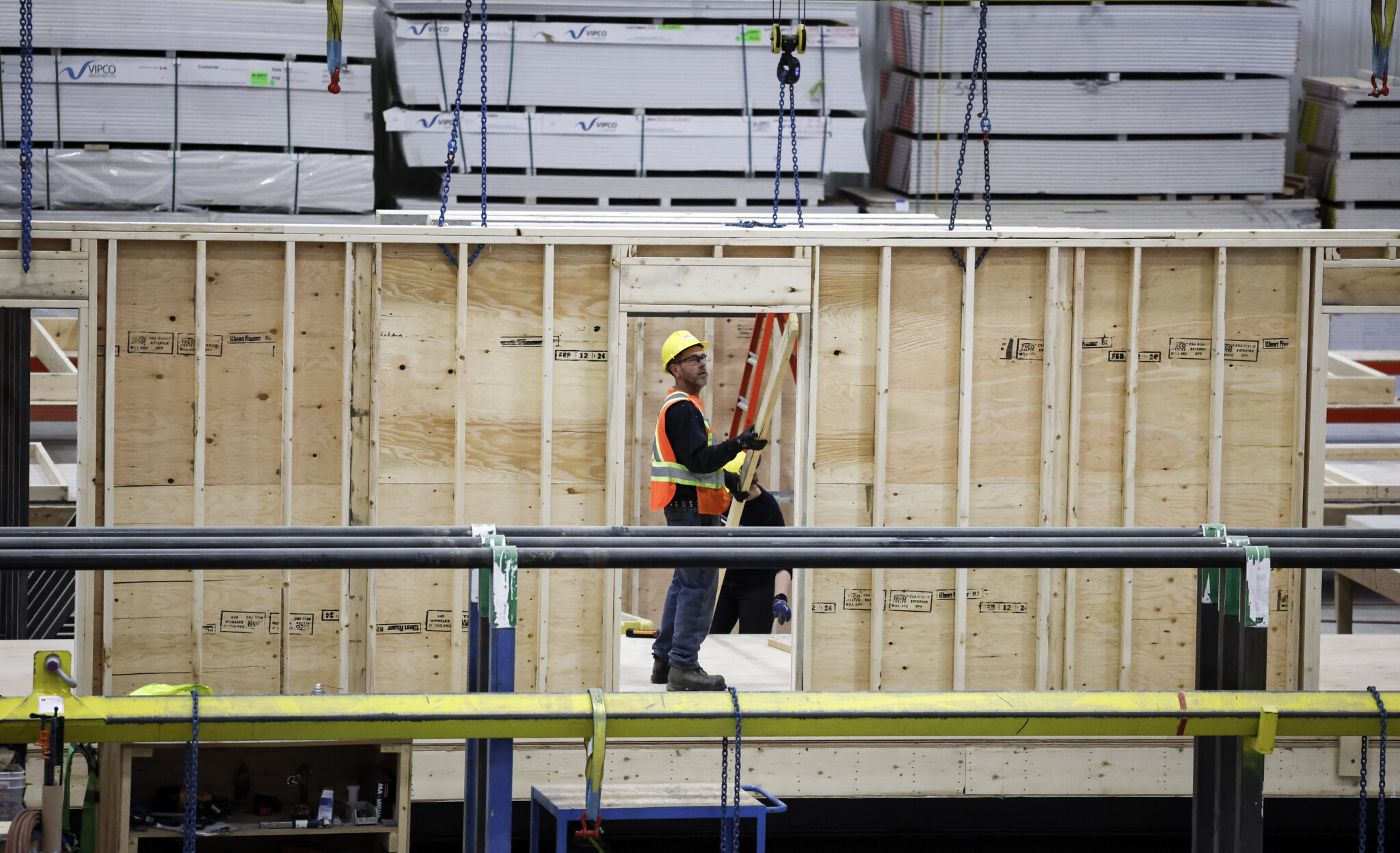
The manufacturing process differs significantly from conventional construction. Factory environments allow for controlled conditions that eliminate weather-related delays and enable sophisticated supply chain management. Production facilities operate with integrated networks of component suppliers, creating assembly processes similar to automotive or aerospace manufacturing. Workers remain at fixed stations while materials are delivered to them, maximizing productivity and reducing time spent locating supplies or managing logistics.
Quality control represents another area where factory-based construction may offer advantages. The controlled environment allows for systematic inspection of finishes, fixtures, and workmanship at each production stage. Structural elements often incorporate additional features such as double-wall construction with air gaps between units, potentially enhancing sound insulation and energy efficiency compared to traditional methods.
The industry faces challenges in scaling to meet housing demand. Currently representing a small fraction of overall housing production in Canada, modular construction requires continuous workflow to maintain efficiency and cost-effectiveness. Interruptions in production or one-off custom projects can undermine the economic advantages that come from repetitive manufacturing processes.
Workforce dynamics in modular construction differ from traditional building trades. Factory environments offer consistent working locations, controlled weather conditions, and enhanced safety protocols that eliminate working at heights. The setting also allows for accelerated skill development through constant supervision and standardized processes. Younger workers appear drawn to the combination of traditional trades with technology integration, including digital production boards and artificial intelligence systems that coordinate material delivery and workflow.
Industry advocates suggest policy changes could accelerate adoption of modular construction methods. Some jurisdictions internationally have implemented requirements that specific percentages of public infrastructure projects utilize modular approaches. Such mandates could provide the production continuity necessary for manufacturers to maintain efficient operations and competitive pricing.
The supply chain for modular construction relies heavily on domestic sourcing, with the majority of materials for Canadian facilities coming from within national borders. This localized approach may provide resilience against international trade disruptions while supporting regional economies.
Looking forward, expansion of modular construction’s market share would require alignment across multiple levels of government and regulatory frameworks. Stability in building codes and reduced frequency of regulatory changes could help control costs and improve predictability for manufacturers and developers alike.
This summary was prepared by NewsBox AI. Please check against delivery.
The guest in this episode discusses modular construction as a potential solution to Canada’s housing crisis, emphasizing its speed, scale, and affordability advantages. Adam Beattie of ATCO Structures highlights how modular construction can produce homes faster and on a larger scale than traditional methods. The industry, rooted in Canadian innovation, has evolved from serving remote industries to providing permanent housing. Modular construction’s factory-based approach allows for controlled conditions, efficient supply chain management, and enhanced quality control. However, scaling the industry requires continuous workflow, government support, and policy changes to ensure efficiency and cost-effectiveness. The article also notes the importance of domestic sourcing and stable regulatory frameworks for the industry’s growth.
How could government policies accelerate the adoption of modular construction in Canada, and what are some examples from other countries?
What are the key advantages of modular construction over traditional methods, and how do these advantages address Canada's housing crisis?
How does the modular construction industry's reliance on domestic sourcing impact Canada's economy and its resilience to global supply chain disruptions?


Comments (0)