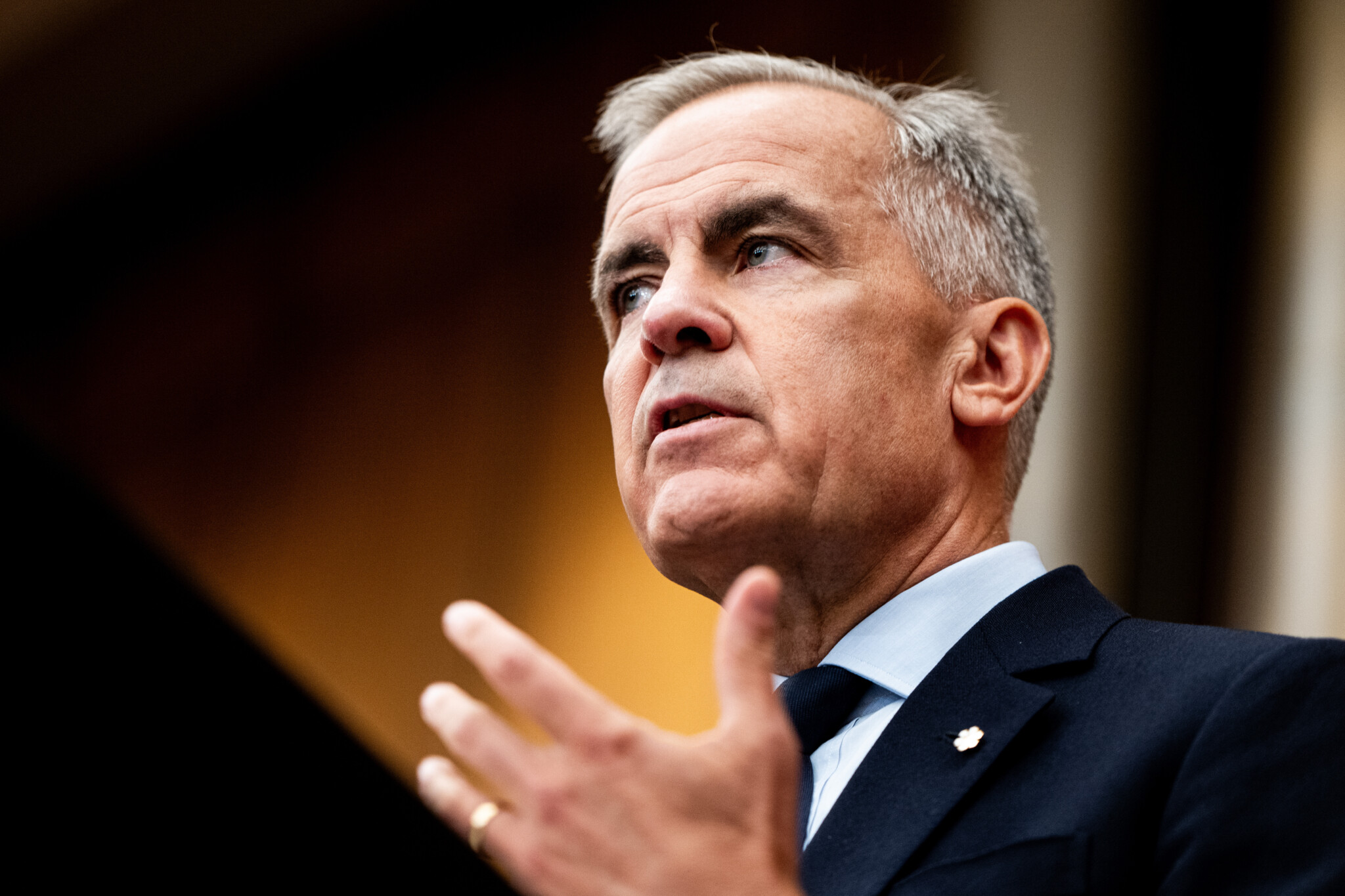
‘The execution was terrible’: Hub Politics on Carney’s economic address to the nation
In this episode of Hub Politics, host Sean Speer is joined by Amanda Galbraith, co-founder and president of Oyster Group, and David Coletto, founder and CEO of Abacus Data, to discuss Prime Minister Carney’s recent major speech at the University of Ottawa. Their general reaction is that his “rambly technocratic” presentation missed the mark: it failed to provide concrete plans to improve the lives of young Canadians in attendance.
They also discuss Premier Ford’s remarkable political staying power and polling numbers. They explore Ford’s populist retail politics and whether his political brand could translate nationally, as well as the overlap between Ford supporters and federal Liberal voters who voted for Prime Minister Carney.
You can listen to this episode on Amazon, Apple, and Spotify.

Program Summary
This is an automated summary. Please check against delivery.
A recent episode of Hub Politics dissected the state of the nation’s politics, focusing on a primetime economic address by the Prime Minister and the enduring popularity of Ontario’s premier. The conversation revealed a government struggling to communicate its vision and a provincial leader whose success defies conventional political wisdom.
The Prime Minister’s national address was characterized as a missed opportunity. Intended to pre-position his government’s upcoming budget and make a compelling case for his economic agenda, the speech was panned as a failure in execution. Critics described it as a long, rambling, and technocratic affair that failed to break new ground. It was perceived as a regurgitation of existing commitments, lacking a clear narrative hook or any substantive news. The setting—a university campus in the evening—was also questioned, as it was unlikely to reach the intended youth demographic and instead catered to an older audience tuning into traditional broadcasts.
The core critique centered on a persistent flaw in the government’s communication: a reliance on lofty aspirations and rhetorical flair without sufficient detail. The speech reiterated ambitious targets, such as diversifying Canada’s exports, but offered no explanation of the policy mechanisms to achieve them. The Prime Minister was seen as falling back on his persona of calm competence, which, while once an asset, now risked coming across as uninspiring and out of touch. The address was seen as an attempt to warn of coming challenges and the need for sacrifice, but it failed to provide a convincing, tangible pathway for how Canadians’ lives would ultimately improve. This has left a gap of skepticism that the government has yet to fill.
The discussion then pivoted to a political phenomenon in Ontario, where the premier continues to command remarkable support, with polling showing over half of decided voters backing his party. This strength persists despite a challenging economic environment and longstanding issues like healthcare. The premier’s success was attributed to a potent, populist political style. He maintains a direct, retail connection with constituents, famously providing a personal phone number for them to contact him. His approach is ideologically flexible and highly responsive to public opinion, guided by extensive polling and an intuition for the issues that resonate most with everyday people. He is not afraid to reverse course on policies or offer simplistic, crowd-pleasing solutions to immediate frustrations, such as musing about capping ticket prices for a popular sporting event.
This style has created a durable coalition. However, polling suggests a potential vulnerability: a significant portion of his supporters are motivated by a lack of a viable alternative rather than fervent enthusiasm. With opposition parties in disarray—one undergoing a leadership contest and the other led weakly—the premier’s position remains secure for the foreseeable future. His unique appeal was noted to extend into demographics, including racialized and new Canadian communities in urban areas, that have traditionally been difficult for conservatives to win over.
This provincial success sparked a question about its national potential. The premier’s brand of populism, which has found favour even in other provinces, was seen as a transferable model. While a language barrier in Quebec was noted as a potential obstacle, the current Prime Minister’s own victory was cited as proof that overwhelming personal popularity can overcome such hurdles. The speculation is that this style of politics could indeed work on the federal stage.


Comments (2)
I am a life long conservative voter, currently a retired “boomer”. Doug Ford is absolutely NOT a Conservative. If he became federal leader, I would have to tap out.