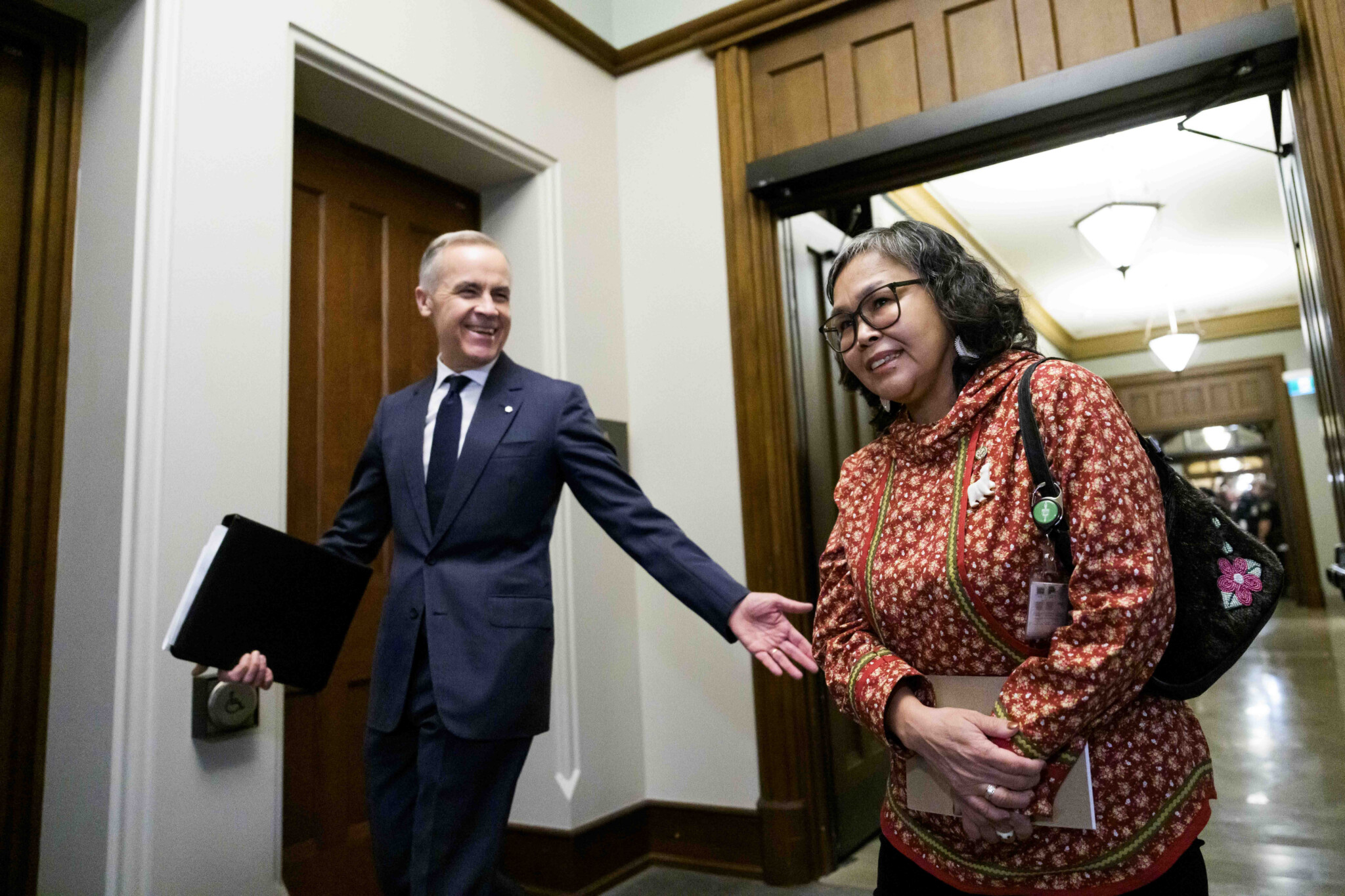
‘There’s nothing like a winner’: Can Carney keep his broad coalition together?
You can listen to free versions of this episode on Amazon, Apple, and Spotify.
Episode Description
Rudyard Griffiths and Sean Speer discuss Mark Carney’s first anniversary as prime minister, ranging from almost gaining a majority government to maintaining a broad coalition that includes former New Democrats and centrist Conservatives. They also discuss the implications of NDP MP Lori Idlout’s floor-crossing, and the possibility of a spring election.
In the second half, they explore Pierre Poilievre’s political future amid Carney potentially getting a majority government. They also explore Canada’s defence procurement challenges, highlighted by the Rangers’ defective rifle controversy, and question whether the country can effectively manage increased military spending.
If you liked what you heard in the first half of the program and wish to subscribe to full-length editions of The Roundtable, please consider becoming a Hub Hero. Hub Heroes also get access to all our paid content on TheHub.ca. All these benefits are conferred for one year. Sign up now!

Episode Summary
Canada’s political landscape has undergone a dramatic transformation in the year since Mark Carney assumed the role of prime minister, with developments this week underscoring the remarkable shift in the country’s governance and electoral prospects. The anniversary of Carney’s leadership coincided with another floor crossing from the opposition, highlighting the breadth of support the Liberal Party has managed to assemble across the political spectrum.
The Liberal government appears positioned to secure a majority through upcoming by-elections, a scenario that seemed improbable just over a year ago when the party faced widespread predictions of electoral defeat. Carney’s path to power represented an unlikely political journey, taking over a party that appeared destined for third-place status and transforming it into a dominant political force within months.
The current political moment reflects a fundamental realignment in Canadian politics. The Liberal Party has successfully attracted support from both traditional New Democratic Party voters and moderate conservatives, re-establishing itself as a centrist brokerage party. This coalition building has extended beyond electoral support to include members of parliament crossing the floor from both opposition parties, demonstrating the government’s expanding political reach.
Several factors have contributed to this political consolidation. The ongoing tensions with the United States have created a sense of national urgency that has suspended normal political assumptions. Many Canadians perceive existential risks from American policy directions, and the current government has benefited from positioning itself as a steady hand during uncertain times. Additionally, opposition parties have struggled to present compelling alternatives, with high negative ratings among progressive voters limiting their appeal.
The government’s policy approach has combined traditionally business-friendly measures with efforts to maintain progressive support. Changes to capital gains taxation and major infrastructure initiatives, including pipeline development, represent a return to centrist Liberal economic policies. Yet the administration has managed to retain support from left-leaning politicians and activists, suggesting a successful balancing act across ideological divides.
Questions remain about the durability of this political coalition. Recent parliamentary developments have revealed potential fault lines, with some Liberal members of parliament reportedly considering breaking with the party on certain motions. These tensions reflect the inherent challenges of maintaining such a broad political alliance across diverse policy areas.
The possibility of a spring election has generated considerable speculation. While recent by-election announcements may reduce the likelihood of an immediate general election, the temptation to seek a commanding parliamentary majority remains strong. Such an outcome could provide the government with significant latitude to pursue its agenda over an extended period while fundamentally reshaping the opposition landscape.
For the Conservative opposition, the current political environment presents significant challenges. The party faces the prospect of extended time in opposition, potentially lasting years, which creates pressures on leadership and caucus cohesion. The diminished role of opposition members in a majority parliament, particularly regarding committee work and legislative influence, may test party unity over time.
This summary was prepared by NewsBox AI. Please check against delivery.
This Roundtable episode analyzes Mark Carney’s first year as Prime Minister, focusing on his success in building a broad coalition government that includes former New Democrats and centrist Conservatives. The discussion covers the implications of NDP MP Lori Idlout’s floor-crossing and the potential for a spring election. The episode also explores Pierre Poilievre’s political future and Canada’s defence procurement challenges, specifically the Rangers’ defective rifle controversy. The panelists question Canada’s ability to manage increased military spending effectively. The article highlights the shift in Canadian politics, with the Liberal Party attracting support from across the political spectrum due to tensions with the U.S. and perceived weakness in opposition parties.
How has PM Carney managed to build such a broad coalition, and what are the potential risks to its stability?
Given the controversy surrounding the Rangers' rifles, what does this suggest about Canada's ability to handle increased military spending effectively?
If a spring election occurs and Carney secures a majority, how might this reshape the Canadian political landscape and impact the Conservative opposition?


Comments (0)