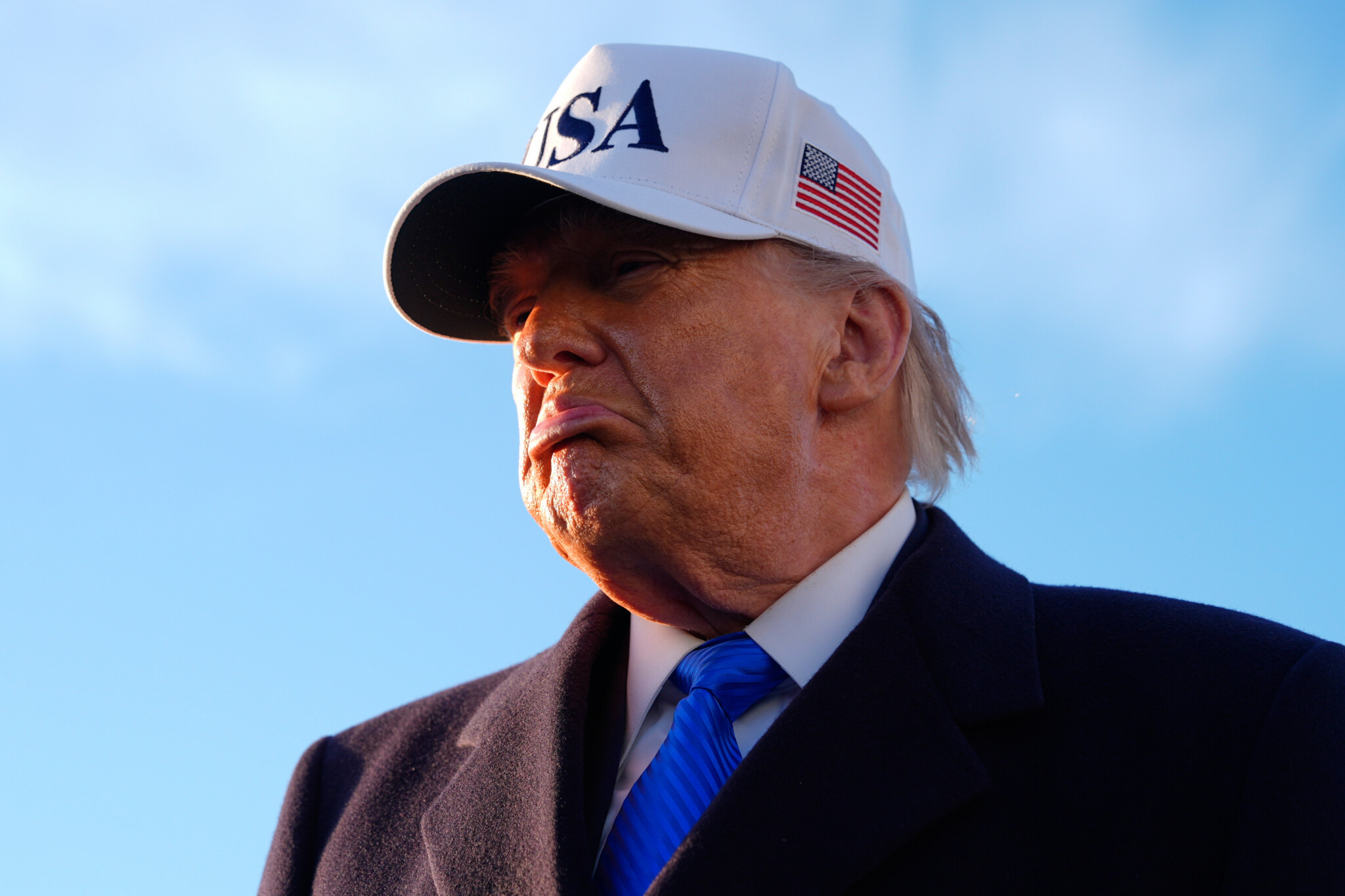
‘They are scrambling in real time’: The Roundtable on the spiralling Iran War and Trump’s erratic leadership
You can listen to free versions of this episode on Amazon, Apple, and Spotify.
Episode Description
Rudyard Griffiths and Sean Speer discuss the escalating Iran war, focusing on President Trump’s erratic leadership and its economic fallout for Canada. They examine how the war threatens Canada’s contracting economy while potentially creating long-term opportunities for Canadian energy exports.
In the second half, they explore AI’s transformative impact on policy-making, detailing how AI tools can now generate sophisticated government documents. They argue that this new development democratizes the policy development process and disrupts traditional think tanks and consulting firms.
If you liked what you heard in the first half of the program and wish to subscribe to full-length editions of The Roundtable, please consider becoming a Hub Hero. Hub Heroes also get access to all our paid content on TheHub.ca. All these benefits are conferred for one year. Sign up now!

Episode Summary
The Iran war has exposed a disconnect between American military capability and its political leadership. The administration’s offensive succeeded militarily, but post-conflict planning appears to have been lacking. The president’s shifting statements on strikes against Iranian energy infrastructure have contributed to uncertainty among allies. Reports of family members raising money from Gulf states during the war have raised questions about the separation of public and private interests.
For Canada, the war adds to existing economic pressures. Recent job losses, concentrated in the private sector, and a slowing housing market were already weighing on the economy. With the United States signalling that trade negotiations with Canada are less advanced than those with Mexico, and with the conflict putting upward pressure on energy prices, the risk of a recession has increased.
One effect of the conflict has been to raise the risk premium on energy exports from the Gulf. Attacks on energy infrastructure in the region have reinforced concerns about supply stability. For European countries, which remain dependent on liquefied natural gas from the region, this has revived memories of the energy crisis that followed the invasion of Ukraine.
This context has drawn renewed attention to Canadian energy. The price differential between Canadian oil and West Texas Intermediate has narrowed, and some industry executives have called on the government to match its stated ambitions for resource development with corresponding policy. The question of whether to build additional pipeline capacity, including to the Atlantic coast, has re-emerged in policy discussions. Critics of past decisions to limit pipeline development argue that those choices left Canada less able to respond to shifts in global supply patterns.
Separately, artificial intelligence is beginning to affect how policy is developed. Recent experiments using AI to draft memoranda to cabinet—the documents used to present policy proposals for government decision—have produced results that are comprehensive and efficient. The technology can generate policy analysis, assess trade-offs and produce economic and fiscal estimates. This suggests that the capacity to develop policy ideas is becoming more widely available, reducing the information advantage traditionally held by governments and established policy organisations.
For stakeholders, this creates an opportunity to move beyond identifying problems to proposing detailed solutions. For think tanks and government relations firms, the value of proprietary research may decline relative to the ability to convene people and manage relationships. The broader implications for the labour market, for government and for military affairs are still unfolding, but the technology is already in use and its adoption is likely to accelerate.
This summary was prepared by NewsBox AI. Please check against delivery.
This episode of The Roundtable discusses the escalating Iran war and its potential economic consequences for Canada, alongside the transformative impact of AI on policy-making. The discussion highlights President Trump’s leadership and the war’s effect on Canada’s economy, including job losses and energy price pressures. It also explores how AI tools can generate sophisticated government documents, potentially democratizing policy development and disrupting traditional think tanks. The episode further examines the implications of the conflict on Canadian energy exports and the renewed focus on pipeline capacity. Finally, it considers the broader implications of AI on the labor market, government, and military affairs.
How might the Iran conflict and potential recession in Canada impact the country's energy sector and pipeline development?
What are the potential benefits and drawbacks of using AI in policy-making, as highlighted in the article?
How does President Trump's leadership style, as described, affect Canada's economic outlook in the context of the Iran conflict and trade negotiations?

Comments (4)
Canada’s shattered economy wasn’t caused by the war in Iran or the election of Donald Trump. It started when Canadians chose Sunny Ways over pragmatism. Things will improve when Canadians stop blaming others for our problems.