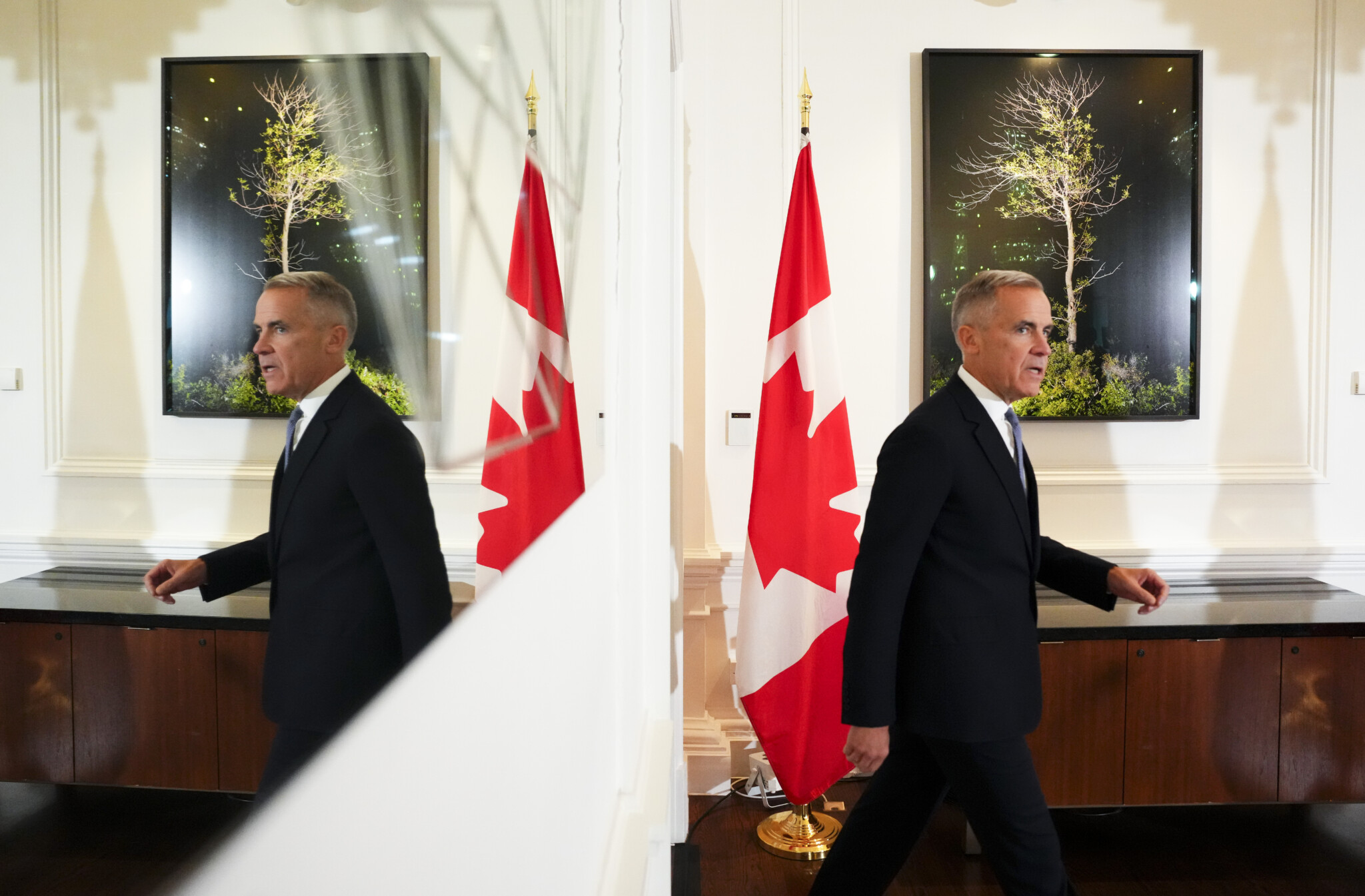
‘This is a mess’: Why is Mark Carney flip-flopping on the Iran war?
You can listen to this episode on Amazon, Apple, and Spotify.
Episode Description
Rudyard Griffiths and Sean Speer discuss the Canadian government’s confusing messaging on the U.S.-Israel war with Iran. They examine how Prime Minister Carney’s initial support for American military action was subsequently walked back by Foreign Affairs Minister Anita Anand and Defence Minister David McGuinty, creating diplomatic confusion, and what this means for Canada’s role in the conflict moving forward.

Episode Summary
Canada’s response to recent military action against Iran has exposed significant tensions within the government’s foreign policy approach, raising questions about the country’s ability to navigate complex international crises while managing domestic political pressures.
The confusion began when the Prime Minister initially issued a statement supporting military operations against Iran, taking a notably hawkish stance that aligned closely with American and Israeli positions. This initial response stood in stark contrast to the more measured reactions from European leaders, marking Canada as an outlier among traditional Western allies. The statement emphasized preventing Iran from obtaining nuclear weapons and addressing threats to international peace and security.
Within hours, however, senior cabinet ministers began issuing statements that appeared to contradict or soften the Prime Minister’s position. The Foreign Affairs Minister called for protecting civilians and pursuing diplomatic solutions, while the Defense Minister expressed hope for de-escalation. These subsequent statements notably omitted any explicit support for military action, instead emphasizing traditional Canadian values of negotiation and peacekeeping.
The apparent policy reversal triggered immediate backlash from within the governing party itself. Former senior government officials and current caucus members publicly criticized the hawkish stance, creating visible internal discord. This domestic pressure appears to have contributed to the government’s subsequent attempts to recalibrate its messaging, though these efforts have only added to the confusion surrounding Canada’s actual position.
The Prime Minister later issued another statement describing the government’s position as being held “with regret” and questioning the legality of military action without proper international authorization. References to the failure of international order and the importance of United Nations processes suggested a significant shift from the initial supportive stance. This evolution in messaging has left observers uncertain about Canada’s true position on one of the most significant geopolitical events in recent years.
The episode highlights broader challenges facing the government in managing foreign policy during a period of global instability. The situation represents a critical test of leadership capability during international crises, particularly for a government that has emphasized its competence in navigating complex global affairs. The inability to maintain a consistent message on such a significant issue raises concerns about internal coordination and decision-making processes.
The confusion also carries potential diplomatic consequences. Mixed signals to both American and European allies complicate Canada’s position in ongoing international negotiations and could undermine the country’s credibility on the global stage. The situation is particularly sensitive given concurrent trade discussions and the need to maintain productive relationships with multiple international partners who hold divergent views on the conflict.
The incident reveals tensions between domestic political considerations and international positioning. The government appears caught between maintaining alignment with a key ally while managing internal party dynamics and public opinion. This balancing act has resulted in contradictory messaging that satisfies neither constituency fully.
This summary was prepared by NewsBox AI. Please check against delivery.
This episode analyzes the Canadian government’s inconsistent messaging regarding the U.S.-Iran conflict. Prime Minister Carney initially expressed hawkish support for American military action, aligning with the U.S. and Israel. This stance was quickly contradicted by Foreign Affairs Minister Anand and Defence Minister McGuinty, who emphasized diplomacy and de-escalation. This policy reversal caused internal discord and public criticism, leading to further attempts to recalibrate the government’s position. The shifting narrative has created confusion about Canada’s true stance and raised concerns about the government’s ability to manage foreign policy during international crises. The situation highlights tensions between domestic politics and international relations, potentially undermining Canada’s credibility.
How might Canada's inconsistent messaging on the Iran conflict impact its relationships with key allies like the US and Europe?
What domestic political pressures might be influencing Prime Minister Carney's shifting stance on military action against Iran?
Beyond this specific instance, what broader challenges does this situation highlight regarding Canada's foreign policy decision-making?

Comments (5)
It is interesting to note that the critical “support” sentence in Mr Carney’s initial statement is word for word identical to the critical “support” sentence in the statement of the Government of Australia. This cannot be accidental!