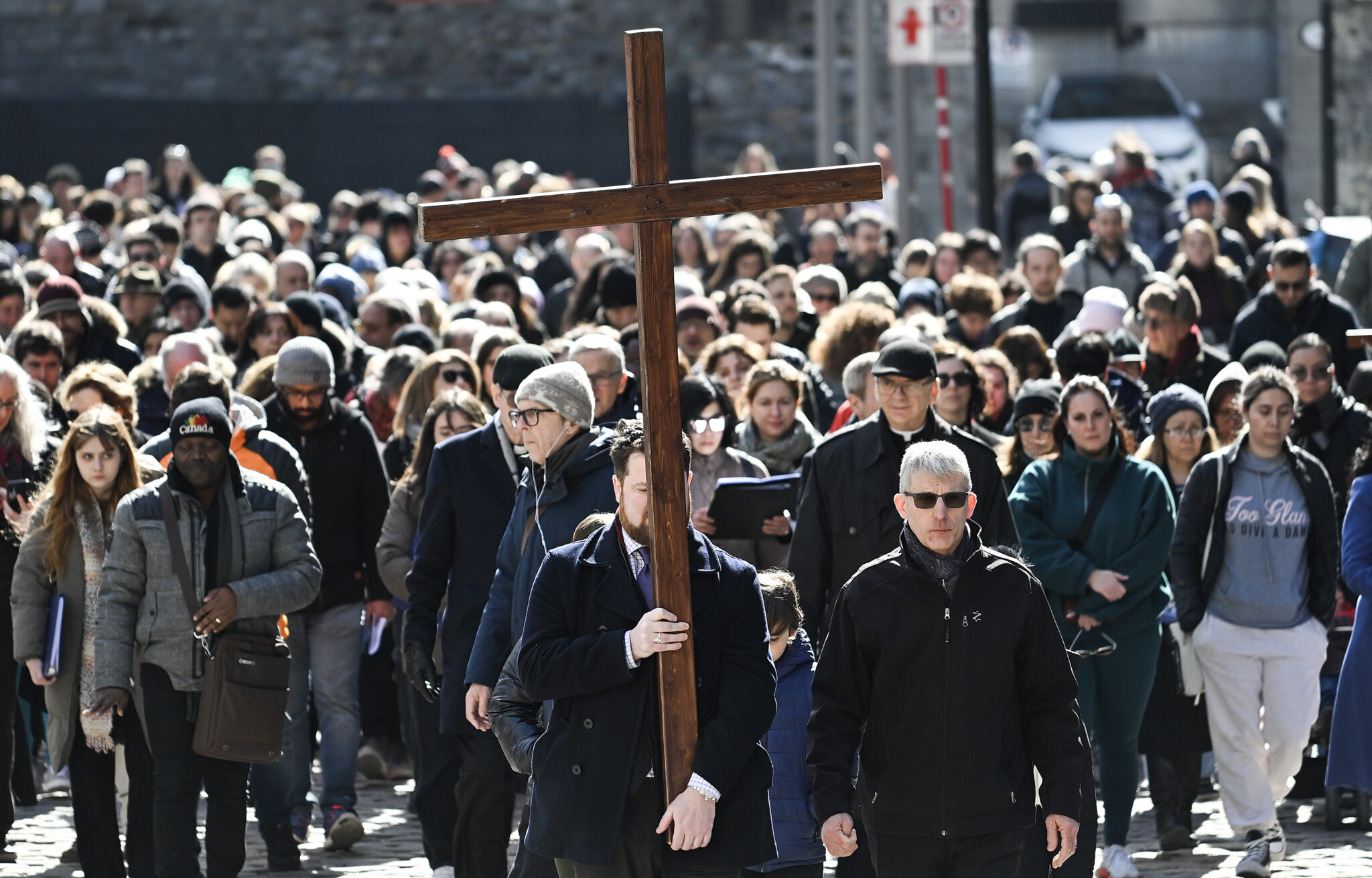
‘This is going to get very messy’: Will Canada drop religious protections from its hate speech laws?
Canada could soon drop its religious-belief exemption from its hate speech laws, as part of a Liberal–Bloc deal to pass the government’s anti-hate bill. Joanna Baron, executive director of the Canadian Constitution Foundation, discusses what the change could mean and why critics insist it threatens freedom of expression and protections for people simply expressing their beliefs.
You can listen to this episode on Amazon, Apple, and Spotify.

Program Summary
This is an automated summary. Please check against delivery.
Canada’s hate speech laws are facing renewed scrutiny as political negotiations threaten to reshape protections for religious expression. The debate centers on a longstanding exemption in the Criminal Code that shields good faith religious speech from hate speech prosecutions, a provision now under pressure from political parties seeking to eliminate it.
The religious exemption has existed alongside hate speech prohibitions since their inception, reflecting a distinctly Canadian approach to balancing free expression with social cohesion. This provision was designed to prevent courts from adjudicating the content of ancient religious texts, recognizing that major world religions contain passages that might conflict with contemporary liberal democratic values. The exemption acknowledges the complexity of religious discourse, which often involves metaphor, allegory, and texts written thousands of years ago.
However, this compromise has always generated tension. Courts have grappled with distinguishing between genuine religious expression and hateful speech disguised in religious language. Legal precedents have established that individuals cannot simply claim religious motivation to shield discriminatory rhetoric from prosecution. This creates an inherently difficult line for judges to draw, requiring them to assess both the content of speech and the sincerity of religious claims.
The push to eliminate the exemption stems from concerns about consistency in applying hate speech laws. Critics of the current system argue that identical harmful speech receives different legal treatment depending on whether it references religious texts or original content. This perceived inconsistency has gained political traction, particularly in the context of recent public demonstrations where religious rhetoric intersected with controversial political speech.
Removing the exemption would create significant practical challenges. One possibility involves prosecutors exercising informal discretion, effectively maintaining the status quo through selective enforcement. This approach would create legal uncertainty and potentially chill religious expression, as faith leaders would face ambiguous boundaries around traditional teachings and sermons.
Alternatively, rigorous enforcement without the exemption would thrust courts into unprecedented territory, requiring judges to interpret religious texts and determine whether passages constitute criminal hate speech. This scenario would involve parsing ancient scriptures in criminal proceedings, a prospect many legal observers view as fundamentally inappropriate for the justice system.
The constitutional implications are substantial. Previous Supreme Court decisions upholding hate speech laws relied partly on the existence of the religious exemption to justify restrictions on free expression. Without this safeguard, the entire framework of hate speech legislation could face constitutional challenges, potentially requiring courts to reconsider the balance between protecting vulnerable groups and preserving expressive freedoms.
Canada’s approach differs markedly from other democracies. Some nations maintain strict secular public spheres with limited accommodation for religious expression, while others, including the United States, reject hate speech laws entirely in favor of protecting nearly all non-violent speech. Canada has traditionally occupied middle ground, embracing pluralism while attempting to limit harmful expression.
Additional proposals to criminalize blocking access to religious spaces and displaying hateful symbols further complicate the landscape. These measures raise questions about whether they expand criminal liability beyond existing prohibitions or merely duplicate protections already in place. The potential scope of symbol-based restrictions remains unclear, with debates emerging about which historical or political symbols might fall under such laws.
Should Canada remove the religious exemption from hate speech laws, and what are the potential consequences for religious expression?
How does Canada's approach to hate speech laws, particularly regarding religious exemptions, differ from other democracies?
What are the constitutional implications of potentially removing the religious exemption from Canada's hate speech laws?


Comments (0)