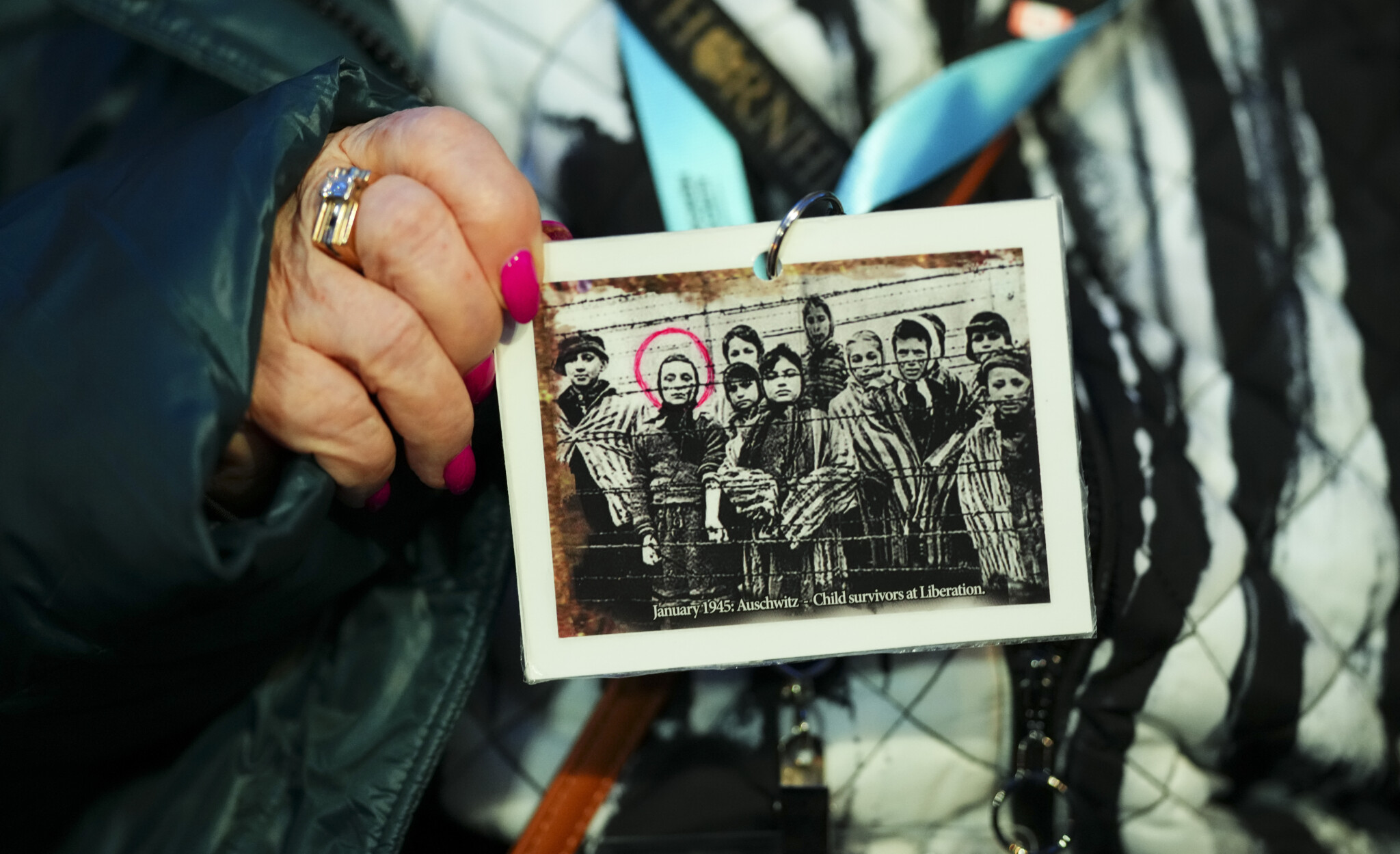
‘This is not a Jewish problem, it’s a Canada problem’: Holocaust remembrance demands action, not slogans

Fault Lines examines the pressures pulling Canadian society apart and the principles that can hold it together. We look beyond headlines to understand how institutions, communities, and democratic norms are fraying. Our mission is to show how better choices can repair what is broken.
You can listen to this episode on Amazon, Apple, and Spotify.
Episode Description
As the world marks the 81st anniversary of the liberation of Auschwitz-Birkenau on January 27, 1945, Holocaust Remembrance Day has taken on renewed urgency amid a global resurgence of antisemitism. The annual commemoration, which honors the six million Jews murdered during the Holocaust, serves as a reminder that the lessons of history remain critically relevant in contemporary society.
The Holocaust represents one of humanity’s darkest chapters, a systematic genocide enabled by widespread indifference, moral cowardice, and societal collapse. The industrial scale of the atrocities committed at death camps across Europe stands as a testament to what can occur when hatred goes unchecked and when societies fail to defend vulnerable populations. For those who have visited these sites of mass murder or memorial institutions dedicated to preserving Holocaust memory, the experience creates an indelible connection between remembrance and moral responsibility.
The phrase “never again” has long served as both a promise and a warning, yet recent years have witnessed a troubling increase in antisemitic incidents and violence against Jewish communities worldwide. This resurgence has prompted concern that the commitment to preventing such atrocities has weakened, transforming what should be an active pledge into mere rhetoric. The normalization of anti-Jewish sentiment and the rationalization of violence against Jewish people echo historical patterns that preceded the Holocaust.
Historical analysis reveals that the Holocaust did not begin with mass violence but rather with incremental steps: dehumanizing language, social ostracism, and gradual moral compromises that desensitized populations to escalating persecution. These early warning signs demonstrate how societies can slide toward catastrophe when citizens and leaders fail to confront hatred in its nascent stages. The progression from words to violence underscores the importance of addressing antisemitism before it metastasizes into physical threats.
Contemporary political discourse has raised concerns about leaders who may be tempted to exploit antisemitic sentiment for political advantage, whether to appeal to vocal constituencies or to avoid confronting uncomfortable truths. When political figures prioritize narrow interests over the protection of vulnerable communities, they risk undermining social cohesion and enabling the very conditions that allow hatred to flourish. This dynamic poses fundamental questions about leadership responsibility and the long-term consequences of moral expediency.
The survivors of the Holocaust and their descendants have made remarkable contributions to society across multiple fields, demonstrating resilience in the face of unimaginable trauma. Their achievements in science, medicine, and public service stand as testament to human perseverance. Recent events have also highlighted acts of courage by individuals who risked their lives to protect others during moments of crisis, continuing a legacy of moral bravery in the face of violence.
Jewish community leaders have emphasized the need for broader societal support and solidarity during this challenging period. Effective allyship requires more than symbolic gestures; it demands active engagement, willingness to speak out against antisemitism, and sustained commitment to protecting Jewish communities from harassment and violence. As antisemitic incidents continue to rise globally, the call for meaningful action becomes increasingly urgent, reminding all citizens that the responsibility to prevent hatred belongs to society as a whole, not solely to those targeted by it.
This is an automated summary. Please check against delivery.
Ezra Shanken, CEO of the Jewish Federation of Greater Vancouver, joins The Hub to mark Holocaust Remembrance Day. He discusses how the Holocaust began with moral compromises, drawing parallels to rising antisemitism occurring today. He further addresses the dangerous trend of excluding Jews, the failure of political leaders to set clear boundaries against hate, and the Jewish community’s continued commitment to Canada despite facing unprecedented threats and insecurity.


Comments (0)