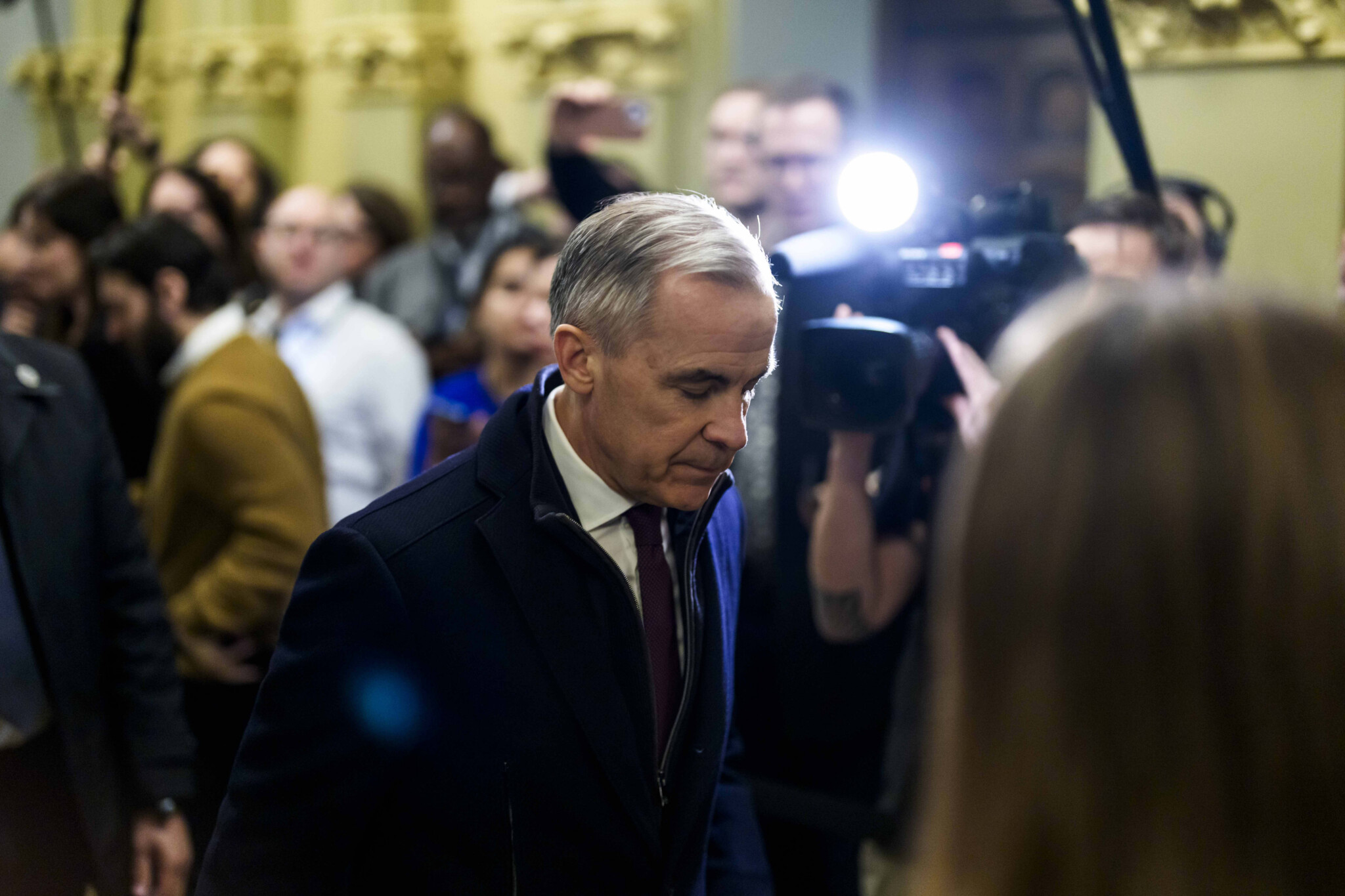
‘We are getting whiplash’: Can the government clarify its confusing Iran messaging?
You can listen to this episode on Amazon, Apple, and Spotify.
Episode Description
Rudyard Griffiths and Sean Speer discuss Prime Minister Mark Carney’s statement on potential Canadian military involvement in the U.S.-Israel conflict with Iran. They analyze Carney’s shift from support to qualified backing and his refusal to rule out deploying Canadian troops.
They also explore whether this is a political misstep or a response to Trump administration pressure, question the war’s legal basis, and debate Canadian participation in what can be characterized as a war of choice with unclear objectives.

Episode Summary
Prime Minister Mark Carney’s recent comments regarding potential Canadian military participation in the ongoing United States-Israel conflict with Iran have sparked significant debate across Canada’s political landscape. The remarks, made during an international trip to Australia, represent a notable shift in messaging that has created confusion about Canada’s position on the escalating Middle East crisis.
The controversy centers on statements suggesting that Canadian military involvement cannot be categorically ruled out under certain circumstances. This position marks a departure from earlier government messaging and has raised questions about the clarity and consistency of Canada’s foreign policy approach to the conflict. The evolving nature of these statements has created uncertainty among both domestic and international audiences about Canada’s intentions.
The situation has become particularly complicated given the integrated nature of Canadian and American military operations, as well as broader NATO commitments. These existing military relationships create ongoing conversations through various defense channels that influence how political leaders frame their public positions. The challenge lies in balancing military strategic considerations with domestic political realities and international legal frameworks.
Questions about the legal basis for the conflict have emerged as a central theme in the debate. The military action against Iran lacks explicit United Nations Security Council authorization, raising concerns about its standing under international law. Unlike conflicts driven by immediate existential threats, this operation appears to represent a deliberate strategic choice rather than a response to urgent danger. Iran’s nuclear program, regional activities, and support for proxy groups have existed for years without triggering such a response.
Public opinion polling indicates substantial opposition among Canadians to military involvement in the conflict. This domestic resistance creates political pressure on the government to clarify its position and establish clear boundaries around potential participation. The disconnect between public sentiment and the possibility of troop deployment has intensified calls for transparency about what discussions may be occurring behind closed doors.
The timing of these developments has proven particularly challenging, occurring during a prime ministerial trip intended to focus on economic opportunities and relationship-building in the Pacific region. Instead, the Iran conflict has dominated media coverage and overshadowed other diplomatic objectives. International journalists traveling with the delegation have pressed for clarity on Canada’s position, keeping the issue at the forefront of public attention.
Concerns about the Trump administration’s approach to foreign policy have added another layer of complexity to the debate. Questions about consistency, follow-through, and the reliability of commitments from Washington have influenced Canadian perspectives on potential military cooperation. The administration’s track record on international agreements and its approach to allied relationships factor into assessments of whether deeper involvement would serve Canadian interests.
This summary was prepared by NewsBox AI. Please check against delivery.
The episode discusses Prime Minister Mark Carney’s statements regarding potential Canadian military involvement in the U.S.-Israel conflict with Iran, sparking debate about Canada’s foreign policy. Carney’s shift from unequivocal support to qualified backing has created confusion and raised questions about the consistency of Canada’s position. The lack of explicit UN Security Council authorization for the conflict raises legal concerns. Public opinion polling indicates substantial opposition among Canadians to military involvement, creating political pressure on the government. The timing of these developments has overshadowed other diplomatic objectives. Concerns about the Trump administration’s approach to foreign policy have added complexity to the debate.
Why is PM Carney's shift on Iran involvement creating confusion about Canada's foreign policy?
Given public opposition, what political pressures does the Canadian government face regarding potential Iran involvement?
How does the Trump administration's foreign policy influence Canada's perspective on potential military cooperation in Iran?

Comments (2)
Carney got elected on the sales pitch “elbows up”. He backs another castrophy pitch called global warming. He has recently gone on to pitch “The Rupture”. He signed the “Canada-China Economic and Trade Cooperation Roadmap” with the government of China.
USA congressional committees studying Chinese influence cite Canada as a key vulnerability point in North America due to open political and business environments. Basically they view Chinese influence activities in Canada as a security concern. Because of deep intelligence sharing with Canada and economic integration, the U.S. treats interference in Canada as something that can affect North American security as a whole.
The war in Iran, apart from the devastating local effects, is a strike at China.
Trump has been working to strengthen the USA’s position, particularly in the Western Hemisphere. Venezuela, Central America (Panama canal for example) and Mexico.
It is therefore no wonder that Carney blithers and stumbles with his comments on the war. He was counting on “the Rupture” to stay elected. He has to decide whether or not Canada is aligning with China or with the USA.