
On the face of it, Ozempic is a medical marvel: a weekly injection that helps people with type‑2 diabetes regulate their blood sugar and, as a side effect, melt away pounds. Ozempic (also known under the brand name Wegovy) is also now indicated in Canada for the management of obesity and to reduce the risks of heart attacks. Dig a little deeper and you begin to see that drugs in the GLP‑1 class do more than change waistlines; they alter appetites, budgets and even business strategies. The result is an economic ripple effect that is just starting to be felt across the food system. In a country like Canada, where our health and our economy are deeply intertwined, those ripples could become waves.
Appetite suppression meets consumer spending
The basic science behind GLP‑1 receptor agonists is straightforward. By imitating the hormone glucagon‑like peptide‑1, drugs such as Ozempic, Wegovy, and Zepbound slow gastric emptying and signal satiety to the brain. Patients feel full longer, eat less, and lose weight. In clinical trials, the weight‑loss benefits are undeniable; some participants shed 15 to 20 percent of their body mass. But what happens when millions of people, over a period of months and years, start consuming fewer calories?
Early evidence suggests that they buy less food, particularly processed snacks and sugary treats. A survey of U.S. consumers reported by the University of Illinois found that GLP‑1 users are shifting their grocery purchases away from snacks, alcohol, and high‑carbohydrate staples and toward protein‑rich, nutrient‑dense foods. Another study by Cornell University and the data firm Numerator, cited in the Washington Post, noted that households with a GLP‑1 user spend about 6 percent less on groceries within six months of starting the medication. That reduction equates to roughly $416 a year per household and is even larger for higher‑income families. Spending on chips and savoury snacks drops by 11 percent, while sweet bakery items decline by 9 percent.
Those numbers may sound small, but scale them up. If even a modest share of Canada’s adult population adopts GLP‑1 drugs, grocery retailers could see noticeable declines in revenue. Restaurants and bars might also feel the pinch, especially those that depend on indulgence spending. In the University of Illinois survey, consumers with firsthand experience using these medications overwhelmingly believed that GLP‑1s would have a “significant” impact on grocery stores, restaurants and food manufacturers. Remarkably, 43.1 percent of users expected major changes in Americans’ dietary preferences and purchasing habits, compared with 14.3 percent of non‑users. When almost half of those using the drugs foresee disruption, it’s prudent for the rest of us to take notice.

Winners and losers in a post‑Ozempic world
The most obvious losers in a world of suppressed appetites are the companies that sell the very foods patients now shun. Snack makers, confectioners, and beverage producers may need to reformulate products or diversify into healthier categories. Some brands have already begun labelling products “GLP‑1 friendly,” highlighting protein content or sugar‑free formulations. That’s more than marketing; it’s an attempt to capture a shrinking share of stomach space.
Restaurants face a similar challenge. Chains built around large portions and indulgent dishes might see fewer reservations, smaller orders, and more leftovers. Conversely, establishments that emphasize high‑quality ingredients, smaller plates, and balanced nutrition could thrive. Even the Canadian packaging industry may adapt, with smaller portion sizes and resealable containers becoming more common.
On the supply side, farmers who grow crops destined for snack foods and processed grains could experience reduced demand, while producers of lean meats, dairy, and produce might benefit. Nutrition scientists have long advocated for diets rich in lean protein and vegetables; GLP‑1 drugs appear to nudge consumers in that direction. The agricultural sector may have to pivot from volume to value, focusing on nutrient density rather than sheer calories. Such a shift could align well with Canada’s climate goals and sustainability commitments, encouraging farmers to adopt regenerative practices and diversify their crop portfolios.
There are also unexpected winners. Clothing retailers have already seen a surge in demand for smaller sizes. Rent‑the‑Runway, the clothing rental service, reported a record number of customers switching to smaller garments. Fitness studios, outdoor gear companies, and leisure travel operators may benefit from people who suddenly have the energy—and confidence—to try new activities. And life insurers, always attuned to mortality risk, might view a slimmer population as an underwriting boon.
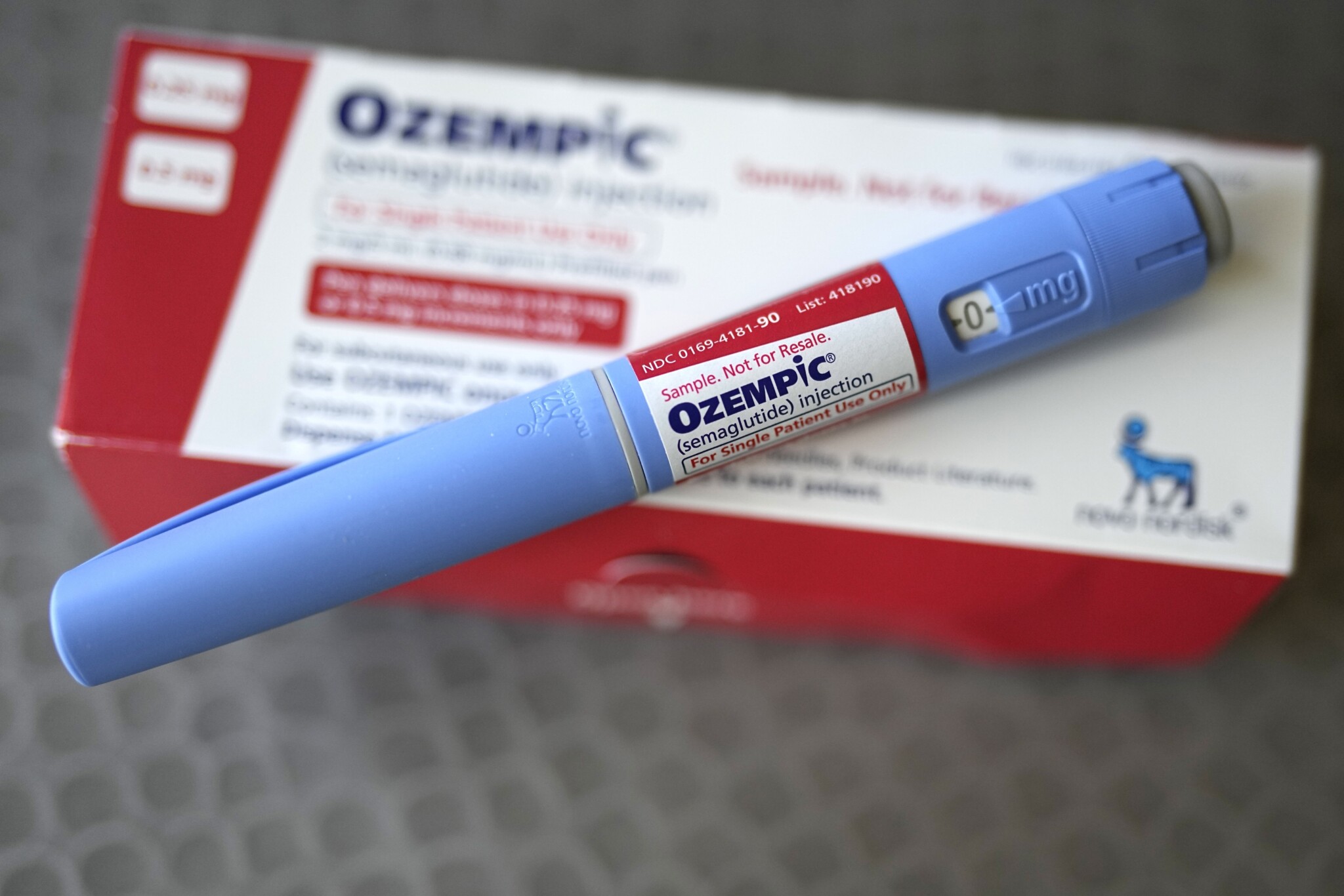
The injectable drug Ozempic is shown on Saturday, July 1, 2023, in Houston. David J. Phillip/AP Photo.
Health-care savings and productivity gains
Reduced food spending is only part of the economic equation. The health benefits of weight‑loss drugs carry their own financial implications. Obesity is associated with a host of chronic conditions—from cardiovascular disease and diabetes to sleep apnea and certain cancers—that burden the health-care system and diminish workforce productivity. If GLP‑1 medications help people maintain healthier weights, Canada could see a decline in obesity‑related hospitalizations, surgeries, and disability claims. Employers may benefit from fewer sick days and higher on‑the‑job productivity. Overcrowded ERs may begin to see fewer patients admitted for heart attacks as weight loss improves the cardiovascular risk profile of millions of Canadians.
The potential savings are substantial. The Canadian Institute for Health Information (CIHI) estimates that chronic diseases account for roughly 70 percent of total health‑care spending. A meaningful reduction in obesity prevalence would relieve some of that pressure. While medications like Ozempic are expensive—brand‑name versions cost more than $400 a month in Canada and over $1,000 USD in the United States for a month’s supply—future generic versions, expected to enter the Canadian market in early 2026, will likely reduce costs. As generics become available, more provincial drug plans may cover them for obesity and reducing heart attacks (GLP-1 drugs are currently covered under most provincial health care plans for patients living with diabetes). That said, the high price of GLP‑1 drugs has already prompted some U.S. insurers to restrict coverage; Canadian payers will need to balance costs against long‑term savings.

Will Canada join the GLP‑1 revolution?
Although most of the data on shifting consumer habits comes from the United States, Canada is not far behind. Our population is less than one‑tenth of the American market, but obesity rates are similar, and interest in GLP‑1 medications is growing. An important caveat here is that GLP‑1 drugs are not a panacea. They come with side effects, and patients often regain weight after discontinuing treatment. The drugs also require careful supervision by a health-care professional. Cognitive behaviour therapy is also highly recommended by physicians who are experts in treating obesity.
A Canadian perspective on innovation and investment
As we contemplate how Ozempic and other GLP-1 drugs like Zepbound might reshape the economy, we should also reflect on the Canadian science that made them possible. Toronto endocrinologist Dr. Dan Drucker was instrumental in discovering GLP‑1 and understanding its metabolic effects. His work, along with that of colleagues in Denmark and the United States, laid the foundation for the modern GLP‑1 agonists. Dr. Drucker has also been a vocal advocate for increased funding of basic research, arguing that Canada risks losing its scientific edge if it fails to invest. The pharmaceutical industry’s willingness to pour billions into drug development is part of that equation; so too is public funding for university laboratories. A robust research ecosystem ensures that the next breakthrough happens here at home.
Looking ahead
So, where does all this leave the average Canadian? If you’re on or considering a weight‑loss drug, you may find yourself spending less at the grocery store and possibly reallocating funds toward other pursuits—new clothes, hobbies, travel. If you work in food retail, you might see subtle shifts in customer behaviour: smaller baskets, fewer impulse snacks, more interest in protein. If you’re a farmer or food manufacturer, it’s time to think about how to meet demand for nutrient‑dense products.
As a communicator in the health‑care space, I often remind my colleagues that medicine doesn’t happen in a vacuum. A therapy that changes our bodies will inevitably change our wallets, our shopping carts and our supply chains. The GLP‑1 revolution is no exception. The question isn’t whether weight‑loss drugs will reshape our economy—it’s how and how quickly. We can either be surprised by the consequences or prepare for them.