It’s becoming increasingly difficult to find places of refuge from the stridently certain politics of our era and the evangelical zeal with which they are peddled.
In a climate where all things are political, simple acts demand fealty to one tribe or another.
Standing for the national anthem at a football game, an NHL pre-game skate, or a championship team’s White House visit—each becomes an opportunity to make a statement about an alleged epidemic of police violence against Black Americans, allyship with LGBTQ+ people, or opposition to the current president.
Liberal norms have traditionally encouraged lively debate and assumed both the right to speak and the right to ignore. But when allegations of racism, fascism, transphobia, etc. are tossed around cavalierly, it becomes a moral imperative to silence “aberrant” ideas.
For those who might ask, “What about a break?” the Jacobin killjoys have a ready answer: silence is violence.
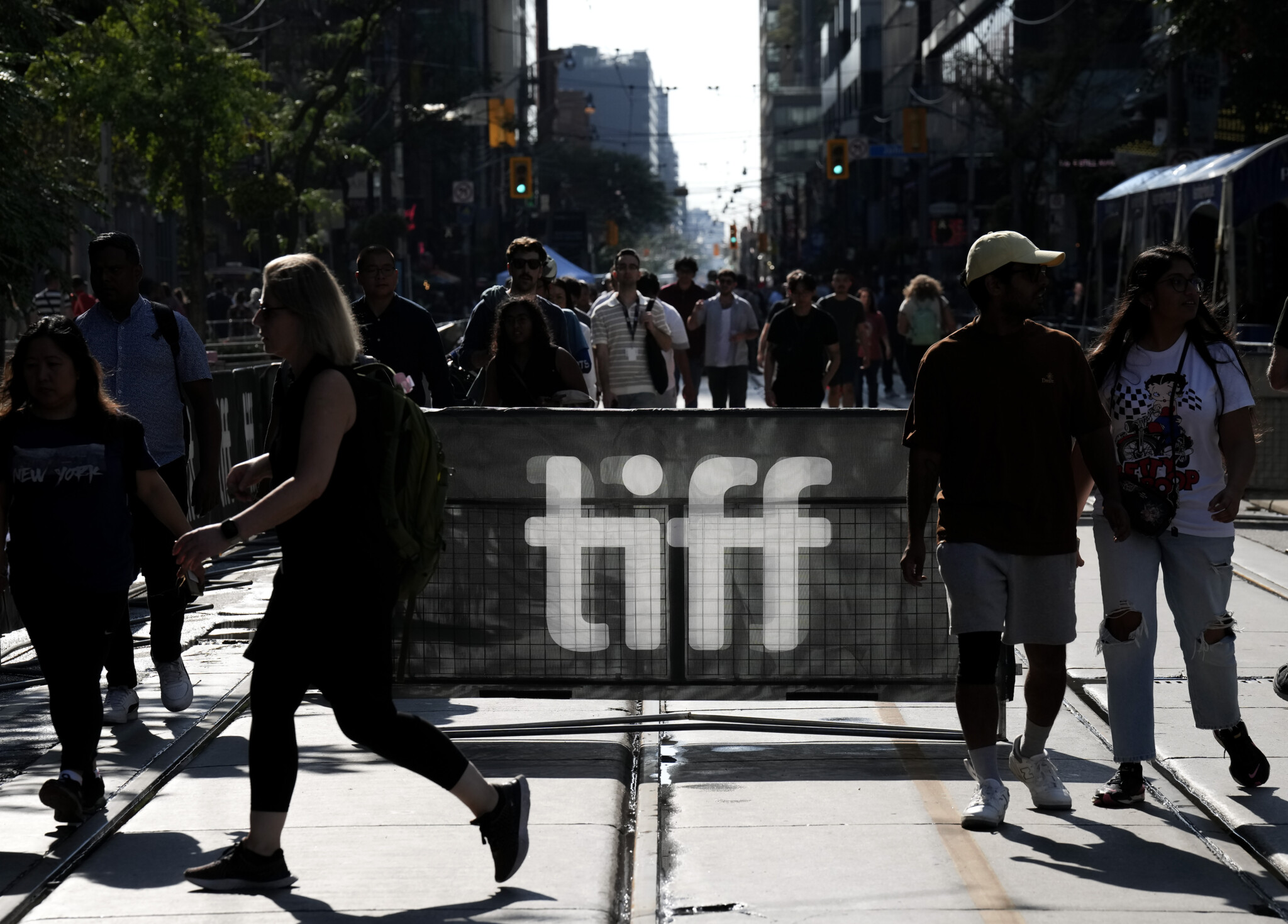
It should come as no surprise, then, that those steering the Toronto International Film Festival (TIFF), whose principal stock in trade ought to be entertainment, have run aground on the shoals of politics for a second consecutive year.
Ask The Hub
Last year, I walked out of Scotiabank Theatre after the screening of Thom Zimny’s excellent film Road Diary: Bruce Springsteen and the E Street Band. I was puzzled to be greeted by loud protestors shouting “Shame, TIFF!” The objections were not to The Boss. The protesters wanted to disrupt screenings of a Canada-France co-production called Russians at War. Apparently, the documentary had the audacity to portray Russian soldiers fighting in Ukraine as actual human beings caught in a conflict they barely understood. TIFF initially stood by the film, but they changed course as allegations that the film was “Russian propaganda” became louder. Then-finance minister Chrystia Freeland likely tilted the scales by musing, “It’s not right for Canadian public money to be supporting the screening and production of a film like this.” It’s unclear if Freeland actually saw the movie, but her message was unapologetically chilling: the government of the day holds the purse strings, and if you want your film to be made and seen, make things the government likes. Which is to say that Freeland didn’t find propaganda objectionable per se. She just wanted it to validate her point of view. This year’s problem child is another Canadian documentary, The Road Between Us: The Ultimate Rescue. The film tells the story of a retired Israeli general who travelled from Tel Aviv to Kibbutz Nahal Oz to rescue his son and grandchildren from the Hamas terrorist attack on October 7, 2023. The film was good enough to earn an invitation from the festival’s programmers. But it told an inconvenient truth, namely that Israeli civilians were murdered, tortured, raped, and kidnapped on October 7, 2023. These facts don’t fit the narrative in the so-called progressive monoculture, which insists that Israelis are part of a settler/colonizer oppressor class and on the wrong side of the Intersectional Bingo scorecard. It’s one thing to hand-wave away reports of Hamas barbarity by claiming “context.” It’s not so easy to be sure that being Israeli is a capital offence if one actually sees those images. Facing a mutiny among its employees and the threat of public protests, TIFF took the patently ludicrous position that GoPro footage taken by Hamas terrorists couldn’t be included in the film without a license from those terrorists. It’s the kind of bureaucratic pretext a foreigner might expect to happen in Vladimir Putin’s Russia: “I’m sorry, your visa doesn’t appear to be in order. Come with me…” After a couple of days of bad publicity, TIFF reversed course and decided that the film could be screened after all. The whole episode was shameful and embarrassing for the festival, but it offers a teaching moment. As a private organization, TIFF is free to screen whichever films it likes. It’s not subject to the Charter of Rights and Freedoms, nor should it be. But as an outfit that’s heavily subsidized by multiple levels of government, it does carry a heavier ethical burden and ought to see itself as a sort of public trust. While the right decision was made in this particular case, as long as the variable of public funding is present, these political battles will take on an outsized importance, year after year. Art, like education, is not a TikTok algorithm. It’s not there to cheerlead your pre-existing biases. If you don’t like something, nobody’s forcing you to watch it. If you find yourself groping for an excuse to silence opposing voices, you should probably find some other line of work. A partially publicly funded arts organization ought to apply principles of institutional neutrality, and its staff ought to prioritize ideological diversity at least as much as visual diversity. The film festival offers a platform. It should not pick a side. Just as academic institutions have been forced to reinvent themselves along these lines or else descend into endless shouting matches, so too will artistic ones. It’s hard to know whether TIFF CEO Cameron Bailey, or the festival’s board, donors, and government funders, are willing to deliver that kind of blunt message. To do so would require the kind of restraint that seems to be in short supply in our polarized culture. If they can’t do that, they should give up their public funding altogether. Canadian taxpayers should not have to pay for anybody’s political soapbox.