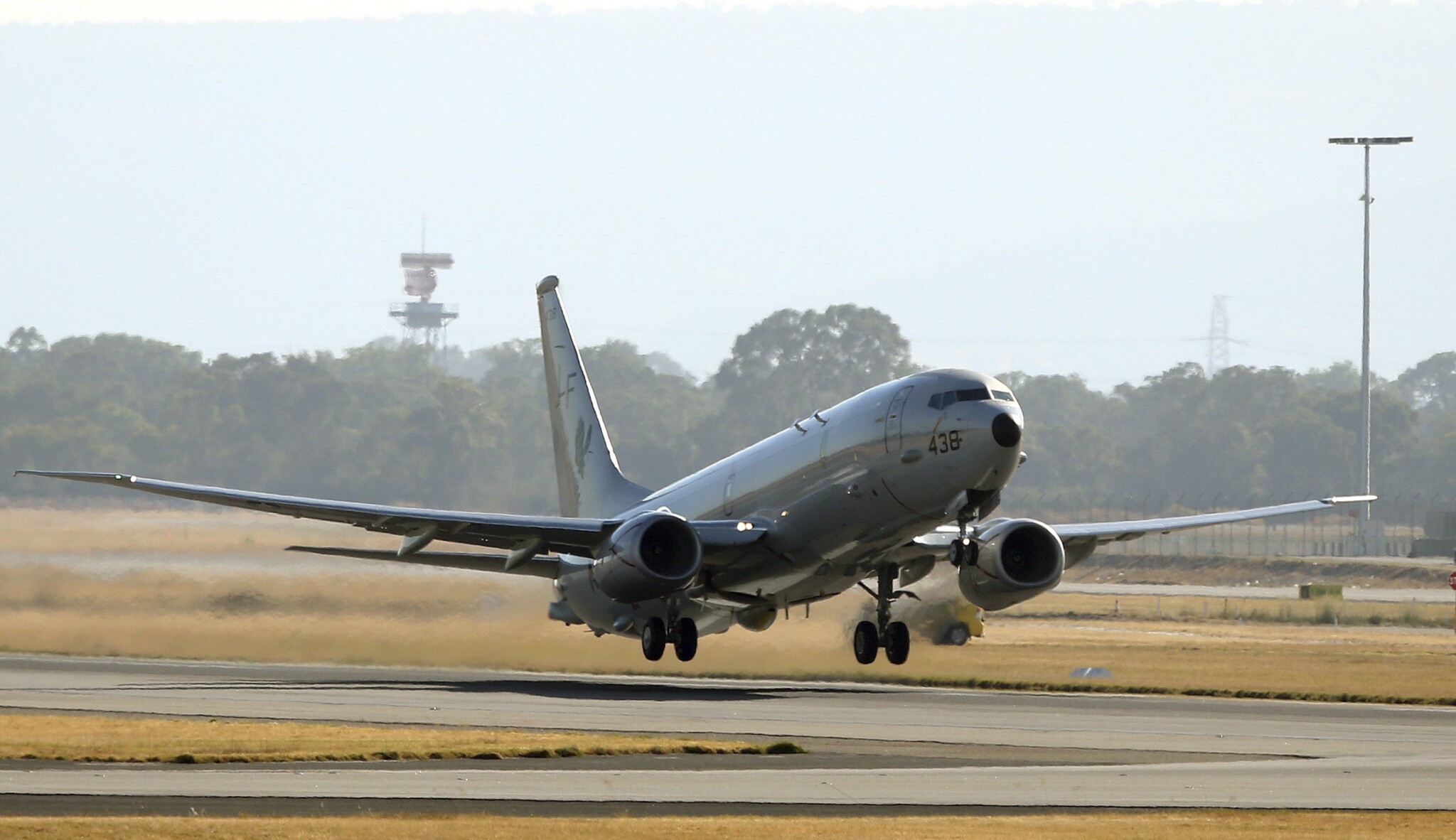
Ottawa was abuzz this week with reports that Canada is being pressured by Washington into buying additional American-made F-35 fighter jets to supplement its initial order of the planes. While the merits of increasing this order or opting for a European-made alternative is up for debateI’ve argued before that going with the F-35s is the best option for Canada, this argument should not overshadow that Canada has an additional decision to make when it comes to procuring planes for its air force: whether or not to increase its order of Poseidon P-8As. These planes, while often overlooked in these discussions, can play a critical role in curtailing the adverse actions of one of Canada’s chief geopolitical rivals: the People’s Republic of China (PRC).
A few weeks ago, many Canadians were given one of the clearest displays of how poorly the PRC continues to treat its neighbours. That the incident ended in embarrassment does not diminish the seriousness of the actions—though some schadenfreude is certainly warranted if you are one of the Southeast Asian nations China is attempting to keep under its thumb.
The incident in question was a viral video showing two Chinese navy vessels accidentally ramming into each other while attempting to harass a Philippine Coast Guard vessel in the South China Sea. Such activities have become common over the past year, with Beijing engaging in increasingly aggressive behaviour over a number of shoals, islands, and other features in the South China Sea, many of which are clearly within Manila’s exclusive economic zone as affirmed by the International Court of Justice.
Many states in Southeast Asia are starting to increase the size of their militaries and modernize their capabilities in light of China’s belligerence. But while understandable, these efforts are clearly insufficient considering the threat arrayed against them. Many Western military and intelligence officials have warned that the United States and its Asian allies and Pacific partners are entering into a period of extreme vulnerability where China’s military capabilities are able to potentially overwhelm their collective military capabilities in the region.
However, unlike Europe, where NATO or the European Union offer a strong, interwoven architecture for like-minded states, Canada’s Asian partners face China’s aggression without such a blanket to backstop their security.
Hub AI
Previously, the bedrock of many states’ sovereignty—including key partners in Japan, South Korea, the Philippines, and Australia—was an alliance with the United States, whose unrivaled navy and globally stationed military all but guaranteed their security. Yet the Trump administration’s recent moves, particularly surrounding trade, have severely undermined the trust that had previously existed between these states and the U.S. Many others, like Vietnam, Indonesia, and Malaysia, have no such guarantee to speak of in the first place, and are in an even more tenuous position. Canada, as a Pacific nation prone to sweeping rhetoric about protecting the rules-based international order, could potentially play an important role in shoring up these states’ security—if it had any military capabilities to offer. Currently, the Canadian Armed Forces undertakes regular deployments of frigates to the region, as well as a rotation of CP-140 Aurora aircraft in support of UN Security Council resolutions that attempt to curb North Korean sanctions-avoidance on the high seas. Yet while these aircraft provide a political signal of Canada’s commitment to these partners’ security and sovereignty, they have virtually no deterrent or military value whatsoever. And while ably staffed by highly competent personnel, the survivability and capability in a major confrontation of the Royal Canadian Navy’s major seapower platforms, like the Halifax and Victoria classes, is negligible. Rectifying these deficiencies will take time. The lack of institutional capacity to execute programs, as well as a long production queue for many systems, means that it could take over a decade before Canada could field new systems. Further complicating matters is that the CAF’s personnel situation is dire, and units do not have a surplus of personnel that can transition to a new capability while maintaining readiness on the legacy platform. One of the more realistic suggestions has been to increase purchases of existing programs. This has several benefits. First, it doesn’t require the Department of National Defence to stand up a new program office, and can rely on some existing authorities to expedite the purchase. The other advantage is that these programs likely have established training, doctrinal, and logistical pipelines, which means monies spent on them can deliver capabilities rather than on completely new programs. With the need to increase its presence in the Indo-Pacific and the constraints in mind, one of the ideal programs for this approach is Canada’s multi-mission aircraft program, or the Boeing P-8A Poseidon. Selected two years ago, the initial deliveries of the 16 aircraft will occur late next year, with the final delivery completed by 2030. This is five years before the expected entry into service of the River Class Destroyer and the Canadian Patrol Submarine Program. While 16 aircraft is the current program of record, adding to the order would significantly improve Canada’s ability to shore up security in the Indo-Pacific. Additional airframes would allow the Royal Canadian Air Force to undertake more foreign detachments, assisting weaker states in the region to protect their sovereignty and security and undergirding the very rules-based order that successive Canadian governments have professed to defend. These states often do not have the resources to acquire comparable capabilities. They include Malaysia, the Philippines, and Indonesia, the latter a country for which Canada just signed a memorandum of understanding for military cooperation. As Jonathan Berkshire Miller argues in The Hill Times, for such arrangements to have value, they need to actually demonstrate sustained political and military commitments. Currently, major allies such as the U.S. and Australia use their own P-8As in this fashion. For example, the U.S. Navy’s Poseidons regularly operate out of Clark Air Base in the Philippines, and are employed in a wide spectrum of missions in support of Manila’s security and interests. This ranges from its core roles of anti-submarine and maritime patrol, to search and rescue, and even fisheries monitoring. These sorts of activities are greatly welcomed by the host governments, binding them closer to Western states and helping to stabilize the security environment. As noted above, Canada already uses the CP-140 in this role, and acquiring additional P-8As would return immense benefits to its defence diplomacy and the overall stability in the region. Moreover, the P-8A is a cutting-edge military capability—it has real deterrent capability and can play an immensely important role if Canada were ever engaged in a serious conflict. Similarly, another option would also be to purchase additional F-35s. Already in wide service among Canada’s major Asian partners, Australia, Japan, and South Korea, going beyond 88 airframes that is the current program of record would provide similar benefits as growing the P-8A fleet. However, the transition to both fleets faces significant personnel challenges, which will also need to be resolved in order to get these aircraft into service. It would be preferable for Canada’s defence engagement in the Indo-Pacific to be based on an overarching and strategically determined policy, backed by a robust set of defence capabilities. But given the capacity constraints currently faced by Ottawa, there are exceedingly few good options available at this time to enact such a vision. Acquiring additional P-8As is one of them, as are F-35s. Considering the deteriorating stability in the region, these sorts of solutions are essential if Canada has any hope of playing a meaningful role in arresting a slide towards conflict with or capitulation to China.