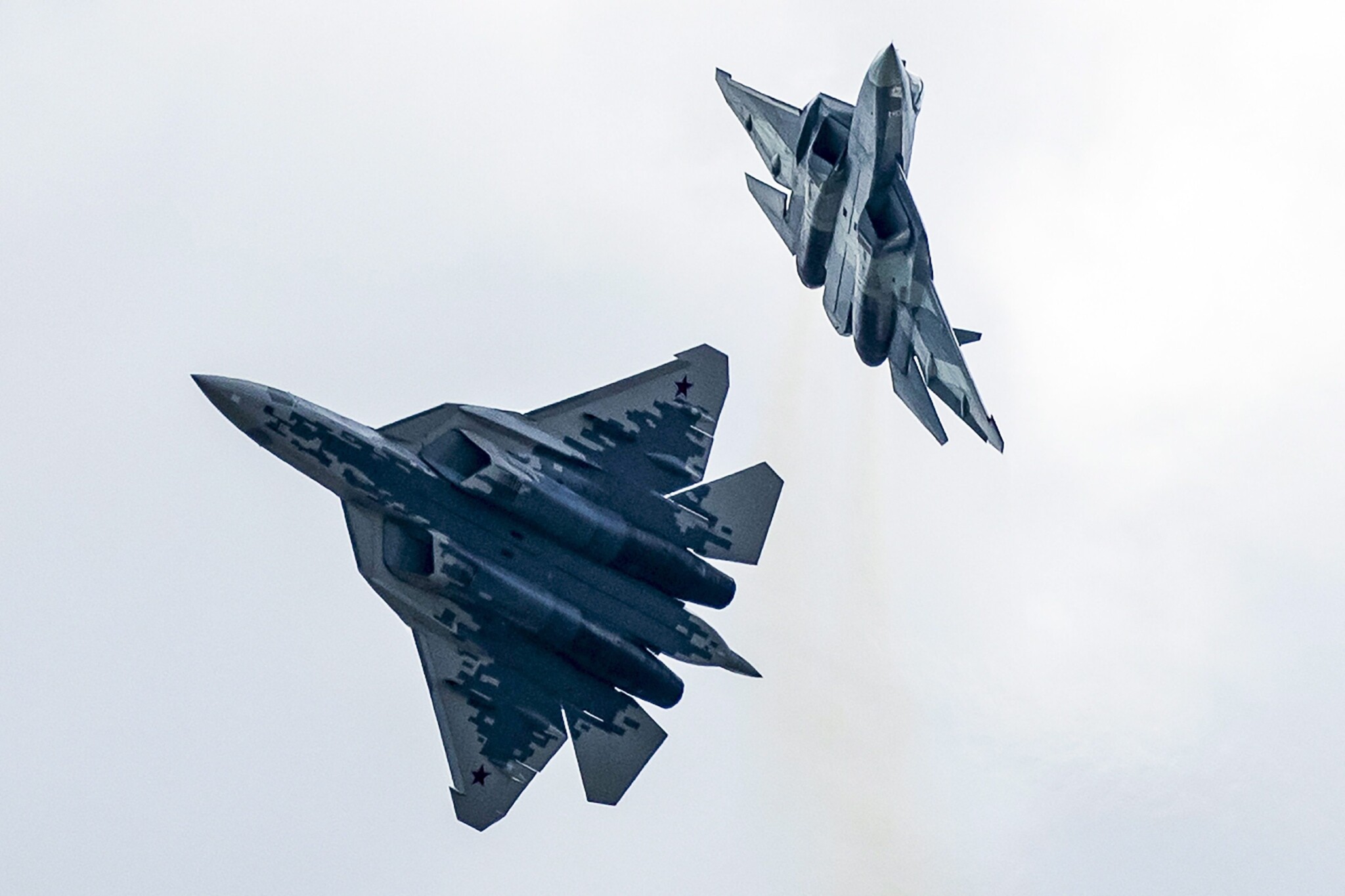

Over the past several weeks, Russian aerial assets have undertaken several incursions over the territory of several NATO allies, including three fighters violating Estonian airspace. There have also been a number of suspected incidents that have disrupted airports in Denmark and Poland, which are all but certain to be the work of Moscow as well.
The incursions have sparked a furious round of analysis and debate on the intent of the Russian Federation as well as what the appropriate response should be. Denmark has found the incidents serious enough to call up hundreds of reservists, and NATO has promised a “robust response.” President Donald Trump even endorsed the idea of NATO allies shooting down any Russian fighter jets that enter their airspace, while Russia countered that any aggression against Moscow will be met in turn with its own “decisive response.”
Three and a half years on since the invasion of Ukraine, the West should be roundly familiar with Putin’s playbook. This includes clandestine sabotage operations in Europe, like the bombing of arms production and storage facilities and a deliberate campaign to cut undersea cables, not to mention its much longer-term effort to undermine political stability in Europe and the West.
Because while these particular incursions are an escalation over its recent behaviour, they should be seen as another iteration of the same strategy that Russia has pursued for essentially the past two decades. This is not a comprehensive and overt campaign to attack Ukraine’s Western allies’ ability to produce munitions for the war; rather, it is an insidious effort to undermine the country’s international support. By sowing divisions, raising fears, and suborning spoilers within these states’ political systems, Russia hopes to eventually choke off the pipeline of military and economic support that sustains Ukraine’s war effort.
This illustrates the asymmetry of Putin’s war strategy, vis-à-vis that of the West. Many of the proposed political responses, including setting aggressive red lines or establishing no-fly zones over Ukrainian or Belarusian territory, will be tested by the Kremlin, and any equivocation or internal dissension amongst NATO will be exploited for the greatest political effect as Russia attempts to sow further doubt among the Western allies. Each of these repeated incursions represents a taunt; each uncertain or weak response is a propaganda victory for Putin, while each aggressive reaction simply plays into his hands as he seeks to escalate conflict.