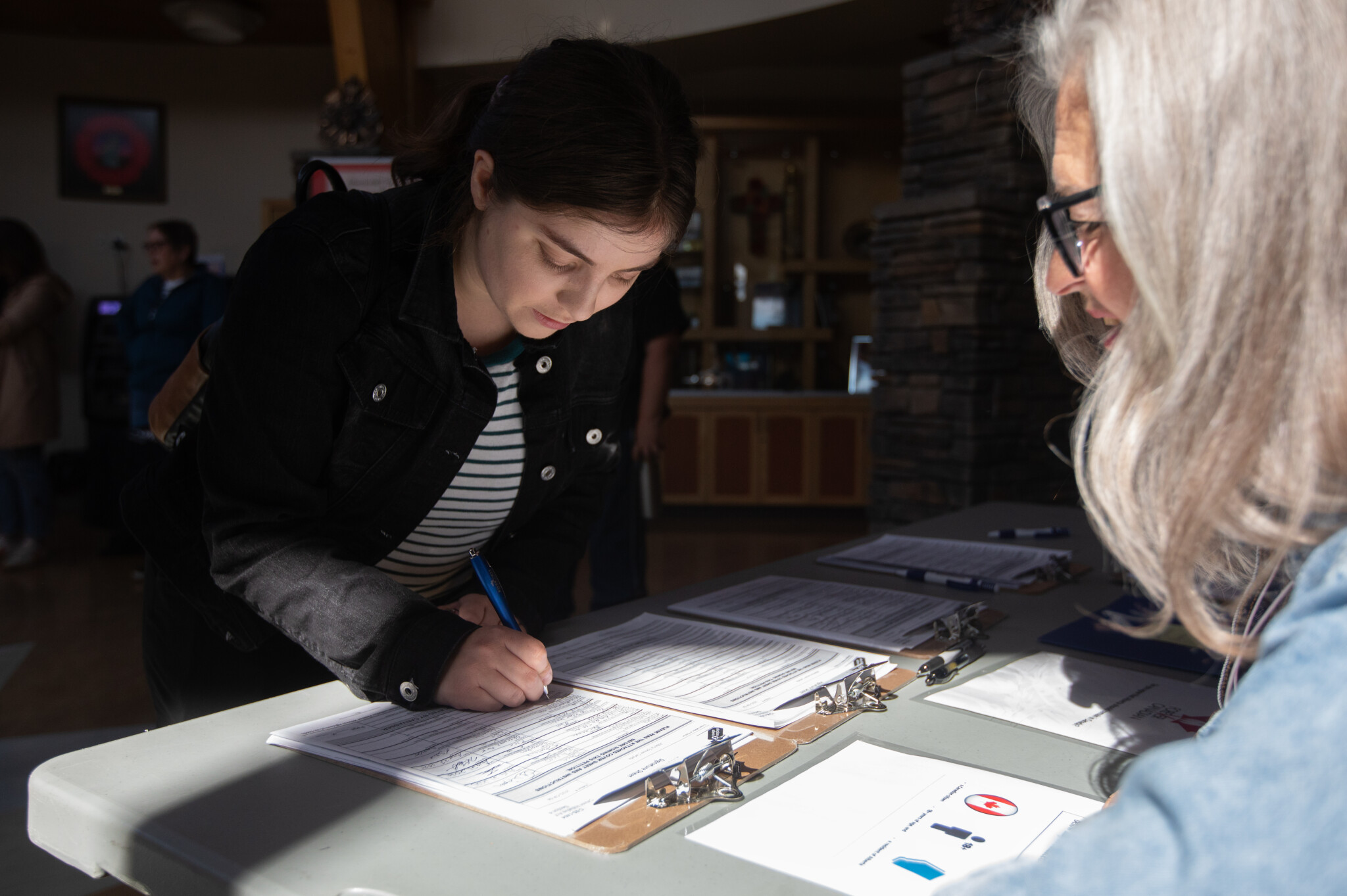
Alberta MLAs will soon have a first detailed look at what it costs to administer a provincial recall petition—and the early numbers show just how resource-intensive the process could be, including the apparent need to hire more than 100 temporary staff to verify signatures in each campaign.
Elections Alberta’s chief electoral officer, Gordon McClure, first claimed in early November that processing the petition to remove an MLA from office would cost about $1 million a pop. At the time, he had requested $14.5 million in additional funding to deal with a handful of new applications. The government approved a fraction of that.
Since then, interest in recall has exploded.
There are now 44 UCP MLAs being targeted, with two petitions officially underway and another 15 in the early stages of paperwork.
Organizers behind the so-called “Operation Total Recall” claim they’re responding to the Smith government’s use of the notwithstanding clause to end the teachers’ strike last month.

In response to The Hub’s questions, Elections Alberta confirmed the cost is estimated at around $1.1 million per petition. The agency also provided a breakdown of the major cost drivers:
- Canvasser badges and ID production
- Official petition signature sheets
- Fielding calls and inquiries
- Processing petition materials
- Hiring 106 temporary staff to meet the legislated 21-day verification deadline
A more complete breakdown is expected in Elections Alberta’s budget submissions to the Standing Committee on Legislative Offices next month. That’s when the agency will brief elected officials on the full cost estimates for not just recall petitions, but also citizen initiatives.
View reader comments (4)
Elections Alberta noted that the early rough estimates were provided separately from its review of the “Forever Canadian” anti-separation citizen initiative, which is also undergoing verification.
The administrative machinery behind both processes is similar, though the two tools differ in scope, timeline, and purpose. A recall petition seeks to remove a sitting MLA, while a citizen initiative is a province-wide mechanism used to propose new laws or force a referendum (for example, “Do you agree Alberta should remain in Canada?”)
The signature threshold for a recall campaign is tied to the number of ballots cast in a single riding in the last election, while the other initiative is tied to the total provincial electorate.
Recall petitions trigger a 21-day verification period. That timeline is shorter than for a citizen initiative, but both processes follow similar stages.
As a result, Elections Alberta says the costs are similar.

Calgary’s 2024 mayoral recall cost significantly less
The provincial figures stand in stark contrast to the 2024 petition to remove Calgary’s then-mayor Jyoti Gondek.
That failed campaign cost the city $30,559 to receive, organize, and verify, or just 3 percent of what Elections Alberta is projecting for the MLA version.
But the mayoral process unfolded very differently, making direct cost comparison difficult.
For one, it fell under the Municipal Government Act, which carries different requirements and safeguards. Generally, the rules are more lax, but the bar for signatures was actually higher at a whopping 514,284 autographs, or 40 percent of Calgary’s 2019 population.
The city received only 69,344 signatures. A random sample of 369 signatures found that all were missing the required petition sheets. Even so, the city had to shift resources, including hiring temporary clerks, to do the job.

By comparison, those now trying to remove education minister Demetrios Nicolaides in Calgary-Bow must collect 16,006 signatures, while the petition against Angela Pitt in Airdrie-East requires 14,813—equal to 60 percent of votes cast in their respective ridings in 2023.
Unlike the municipal process, the provincial system is centralized under Elections Alberta.
Applicants must register their canvassers, who need to swear an affidavit. The submission must be packaged and labeled a certain way, along with an expense report. During verification, the rules require Elections Alberta to meet a 95-percent confidence level.
That level of scrutiny is why Elections Alberta says each MLA recall process will cost more than $1 million to administer. Whether that figure is reasonable or sustainable will be a question MLAs are sure to press the chief electoral officer when he delivers the full brief in December.

Falice Chin is The Hub’s Alberta Bureau Chief. She has worked as a reporter, editor, podcast producer, and newsroom leader across Canada…
Why does processing a single recall petition cost more than $1 million?
Are recall petitions and citizen initiatives ultimately going to strain Elections Alberta?
What is the difference between a recall campaign and a citizen initiative?






Comments (4)
This is an effort by the unions to dictate policy, we may as well have it out and Smith should call an election to decide this.
The use of the NWC in the the case of a labor negotiation is exactly why it was put in there, to prevent activist judges from creating rights. It was used properly.
If the unions and their NDP proxy want to run everything let’s settle it properly.