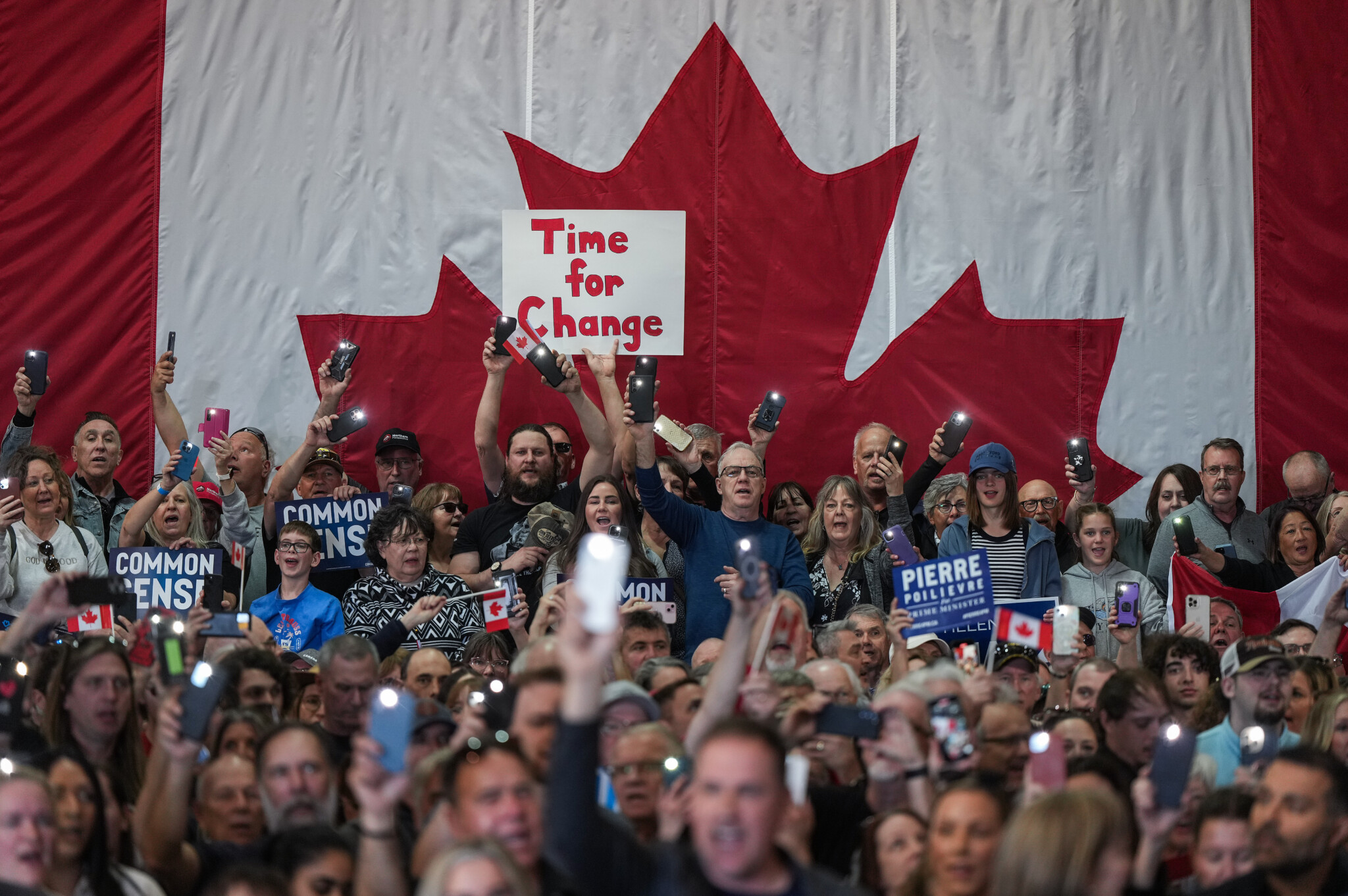
The Canadian Right has reembraced open debate about first principles. For example, what role does culture play in government, if any? Should government promote a Canadian national identity?
It must make some older conservatives wince. Open debate recalls the 1990s, a political wilderness of conservative defeat. Reformers, PCs, and prairie populists fought in public to the delight of left-wing media and the Liberal Party.
Demoralized and divided, the political Right grew desperate. David Frum and Ezra Levant came up with a plan to corral the tribes at the Winds of Change Conference, in Calgary, May 26, 1996. Libertarians, classical liberals, neoconservatives, prairie populists, Tories, traditionalists, social conservatives, and every other flavour of right-wing pundit met in one room.
“It was tense,” the late William Gairdner, author and Canadian Olympic Silver medalist, told me. “There we were,” he said, “looking over our shoulders at those other guys we’d been debating in op eds and elsewhere.”
Bill said tension evaporated when the program started. Everyone found more in common than they realized. The Right stood united, for the moment, and left the room energized.
View reader comments (3)
Gairdner leveraged the high to launch Civitas Canada that year, a “society where ideas meet.” Non-Left leaders and public intellectuals agreed to debate big ideas behind closed doors, under the Chatham House rule. Stephen Harper spoke at Civitas in 2003 and called for a coalition of economic libertarians and social conservatives. Eventually, Harper found a way to unite the Right under the new Conservative Party of Canada.
One of Bill’s last major books was The Great Divide: Why Liberals and Conservatives Will Never, Ever Agree. He uncovered the permanent gap between liberal and conservative ideas about first principles: what it means to be a human (anthropology), our source of knowledge (epistemology), the basis of our moral understanding, and much more.
Is open debate within conservatism a strength or a weakness?
What is the 'sectarian temptation' conservatives must avoid?
How does the article define the 'center' for a conservative coalition?







Comments (3)
Great article, Shawn. The internal rifts within the Conservative party have consistently put them into the Opposition side of the House of Commons. We need to focus on the things that bring us together (fiscal restraint) and not the things that divide us (social liberalism).