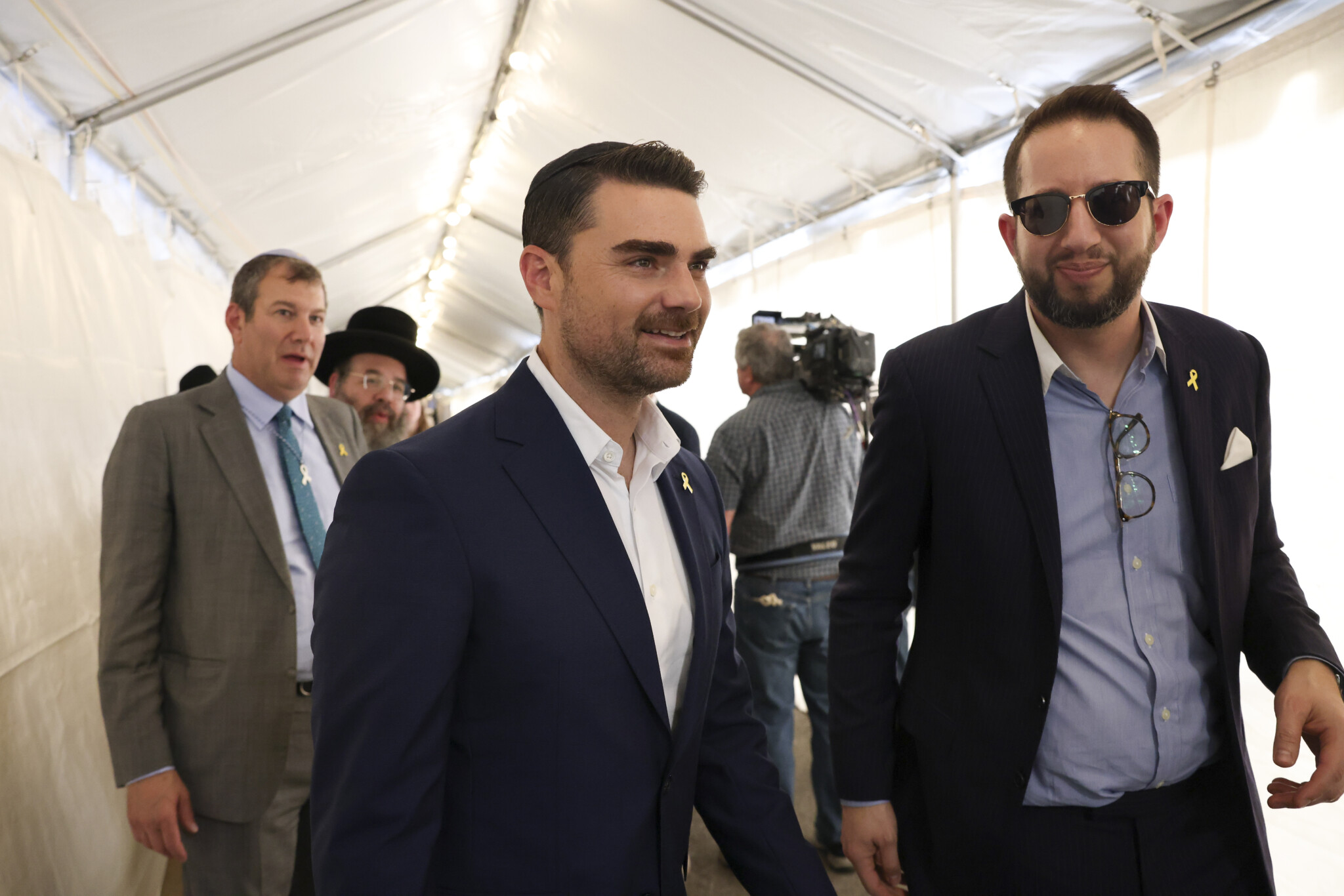
The American conservative movement is grappling with internal divisions that have become increasingly apparent in recent months over issues concerning Israel, immigration, culture, and the future of conservatism itself.
In today’s fragmented media and information market, there have been fewer guardrails and gatekeepers protecting against the rise of conspiracy theories, racism, and other radical ideas.
This week, conservative thought-leader and The Daily Wire co-founder Ben Shapiro delivered two major speeches–one at the Heritage Foundation and one at Turning Point USA’s (TPUSA) AmericaFest 2025–which called out these political developments and those like popular podcasters Candace Owens and Tucker Carlson who’ve given them oxygen.
Shapiro’s decision to specifically target these figures (whom he referred to as “frauds and grifters”) and their corrosive influence on American conservatism is a big development. It’s one of the first times that a high-profile conservative insider has attempted to gatekeep growing Right-wing radicalism.
Here are five key takeaways from Shapiro’s AmericaFest 2025 speech:
1. Protect truth by combating vague generalizations: Conservative commentators must speak with precision and clarity, avoiding purposefully ambiguous language that enables conspiracies and falsehoods.
2. Stay principled above personal loyalty: Political commentary should be grounded in moral principles rather than personal relationships. Friendship cannot excuse silence when public figures engage in harmful behaviour.
3. Gatekeep platforms and guests: Media hosts are accountable for whom they choose to elevate and must either challenge problematic views or own their decision to mainstream extremist figures.
4. Evidence over speculation: Commentators have a duty to back claims with actual evidence rather than saying they are “just asking questions” or promoting conspiracies that manipulate and disenfranchise audiences.
5. Give solutions, not grievances: Those with platforms must propose actionable solutions instead of simply cataloguing problems or encouraging despair about circumstances beyond individual control.

Commit to truth over vague generalizations
Shapiro’s primary argument centered on the duty to speak with clarity and precision rather than trafficking in ambiguity. He said political commentators had a duty to be truthful to their audiences.
“We should not say things like ‘they’ shot Charlie without specifying what we mean by ‘they,'” Shapiro stated. “When people say ‘they shot Charlie,’ however, they are instead trafficking in vagary that results in increased hatred without proposing any effective response.”
Using Kirk’s murder as an example, Shapiro noted that the alleged shooter was described as having specific ideological affiliations. He argued that if conservatives want to address ideological threats, they should name them specifically—whether that means critiquing the radical trans movement or discussing how the Democratic Party accommodates inflammatory rhetoric.
Vague accusations, he suggested, foster hatred without effectiveness and represent a betrayal of the truth-telling obligation that commentators owe their audiences.
Prioritize principle over personal loyalty
Shapiro challenged the notion that personal relationships should prevent public figures from calling out wrongdoing and harmful behaviour.
“Politics isn’t The Sisterhood of the Traveling Pants,” Shapiro declared. “Politics is about principle. And if you are willing to sacrifice basic truth and simple principle in favor of emotional solidarity, you have betrayed your fundamental duty to the American people.”
Breaking what he called the “omerta” of the commentator class, Shapiro dismissed the idea that media figures are close personal friends who vacation together.
He called out Tucker Carlson and Megyn Kelly by name for what he characterized as their failure to denounce Owens’ attacks on Kirk’s widow and TPUSA staff, arguing that political commentary must be grounded in principle rather than emotional solidarity.
Take responsibility for platforms and guests
The third obligation Shapiro outlined was accountability for whom commentators choose to elevate. He argued that hosting guests amounts to an endorsement unless hosts actively challenge problematic views. He added that claiming neutrality while platforming extremists represents moral abdication.
“[Tucker] built Nick Fuentes up. He ought to take responsibility for that, just as he ought to take responsibility for glazing pornographer and alleged sex trafficker Andrew Tate, or for mainstreaming fake historian and Nazi apologist Daryl Cooper as ‘America’s best and most honest popular historian.’” Shapiro said.
Shapiro did not mince his words about Fuentes, calling the streamer a “Hitler apologist, Nazi-loving, anti-American piece of shit.”
Provide evidence, not just speculation
Shapiro reserved pointed criticism for what he called the “just asking questions” approach to commentary, arguing this tactic manipulates audiences rather than informing them.
“When grown men and women spend their days “just asking questions” without seeking answers, they’re lying to you,” Shapiro argued. “In fact, they’re doing something worse: They’re seeding distrust in the world around you, and enervating you in the process.”
He pointed to Carlson’s unsubstantiated claims about Jeffrey Epstein running a Mossad operation as an example of empty speculation that implicates real people—including Trump administration officials—without providing proof.
While acknowledging that genuine conspiracies exist, citing Russiagate and COVID-19 lab leak theories as examples, Shapiro argued these were backed by named individuals and documented actions.
Offer solutions, not just grievances
Shapiro’s final point emphasized that commentators have an obligation to propose actionable solutions rather than simply cataloguing problems or encouraging despair.
“‘Just asking questions,’ positing vague conspiracies, raving like Alex Jones about secret confederacies that control your life—none of it makes your life better,” Shapiro said. “That’s because if you truly come to believe that nothing in your life is in your control, you won’t take control of your life.”
The underlying message was one of American optimism grounded in conservative principles: limited government, property rights, equality under law, and individual agency.
Shapiro argued the country remains exceptional and that its constitutional framework provides the tools for citizens to shape their own destinies. Commentators who suggest otherwise, he concluded, actively harm their audiences while potentially damaging the country itself.
Shapiro ended his speech by laying out the duties he feels political commentators have to uphold.
“Far more important duties, to God and to yourself: to do the best for yourself and your family and your country with the abilities God gave you; to be grateful for this extraordinary country; to celebrate what we have all been given; and to fight to preserve it.”
Shapiro urges commentators to 'gatekeep platforms and guests.' What does this mean for media responsibility?
The article mentions Shapiro's call for 'evidence over speculation.' How does this impact political discourse?
Shapiro emphasizes 'solutions, not grievances.' What is the proposed shift for conservative commentators?






Comments (2)
I’m no fan of Ben Shapiro and I’m certain have many disagreements with him; most notably on the role of religion in society. But I believe in finding common cause where it exists. Or to put it another way – When you’re right, you’re right. These are all valid points which are important to reducing polarization and having a productive debate about issues.