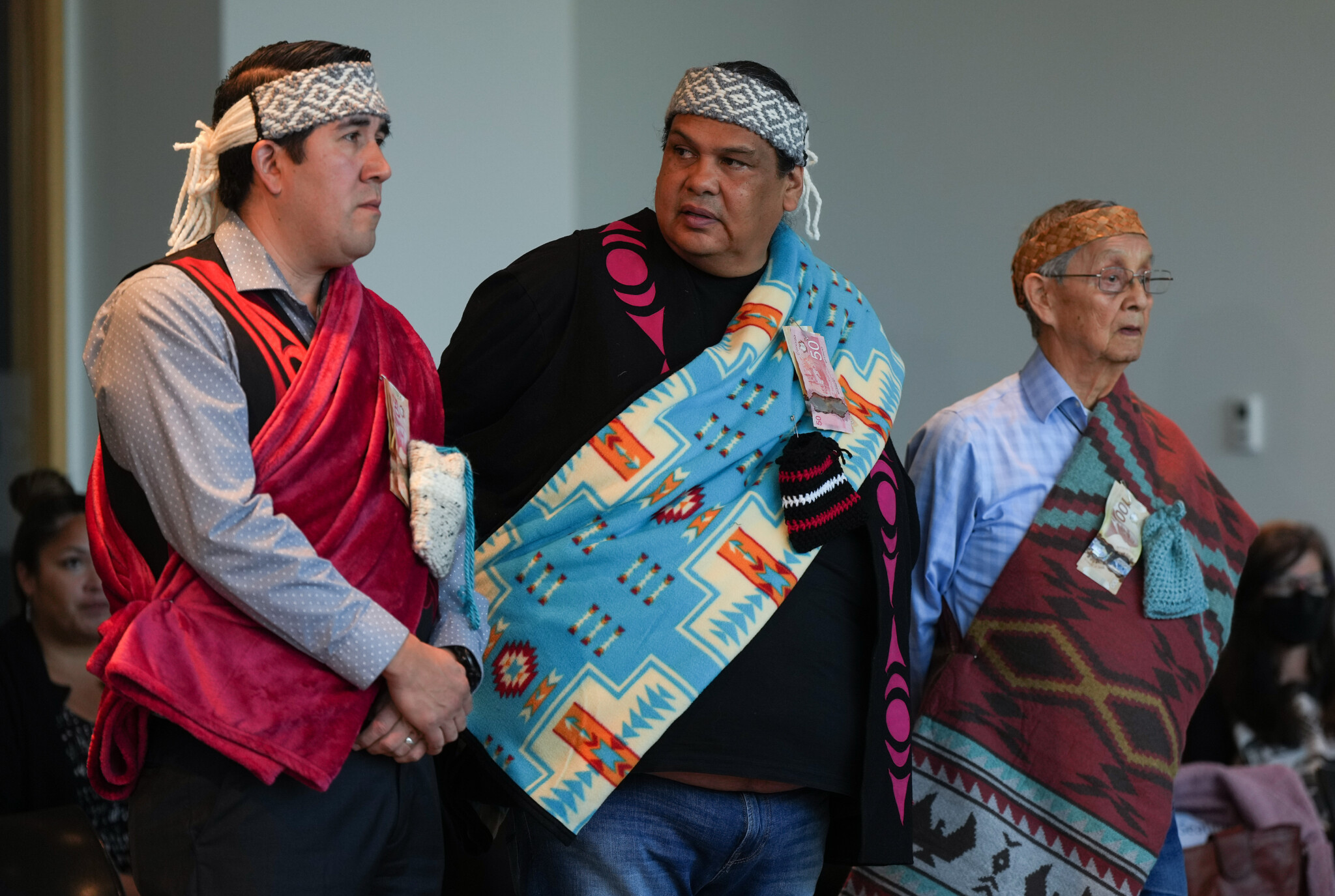
At our inaugural Indigenous Partnerships Success Showcase in 2020, the mood was constructive and hopeful. British Columbia had just passed the Declaration on the Rights of Indigenous Peoples Act (DRIPA), and it was widely understood by governments, businesses, and many Indigenous leaders as a framework statute. A guide for alignment, rather than a transfer of governing authority.
That understanding mattered.
Supporters in our camp—a loose coalition of companies, professionals, skilled workers, Indigenous leaders, and communities—took the Truth and Reconciliation Commission’s Call to Action 92 seriously. It asked the corporate sector to adopt the United Nations Declaration on the Rights of Indigenous Peoples (UNDRIP) as a reconciliation framework, linking moral purpose to practical action: meaningful consultation, equitable access to jobs and training, and durable economic partnerships.
DRIPA was passed unanimously in 2019 in a moment of striking political convergence. Remarkably, it committed the province, in sweeping and open-ended terms, to remake its entire body of law, stating: “In consultation and cooperation with the Indigenous peoples in British Columbia, the government must take all measures necessary to ensure the laws of British Columbia are consistent with the Declaration.”
Outside the legislature, much of the work was already well underway. Mining, forestry, energy, aquaculture, and infrastructure developers had spent decades building impact-benefit agreements, training programs, revenue-sharing models, and Indigenous-owned service companies. Economic reconciliation was imperfect, but it was happening.
Investing in that approach made sense for those who believed that shared prosperity is reconciliation’s strongest foundation.
At the time, we were repeatedly assured that DRIPA would create no new rights, no vetoes, and no parallel legal order. It would guide how decisions were made, but not who ultimately governed.
Five years later, that assurance no longer holds.
Comments (15)
Kim Morton
20 Dec 2025 @ 11:59 am
Leaving aside past wrongs, which most of were not even around when they happened, we cannot have laws based on ancestry. This is about as undemocratic as it is possible to get. Crown land belongs to all Canadians equally.
Has BC's DRIPA shifted from a framework statute to a source of legal uncertainty?
What are the economic implications of DRIPA's evolving legal interpretation?
How does the author propose reconciling Indigenous rights with democratic governance and economic development?
Introducing uncertainty The rupture became unavoidable on Dec. 5, when the B.C. Court of Appeal released its decision in Gitxaała v. British Columbia. The Court confirmed that DRIPA is binding law and that UNDRIP carries enforceable obligations. It held that B.C.’s mineral-claims regime is unlawful because tenure is granted without prior consultation—a finding with wide-reaching consequences that extend well beyond mining. This was not merely an adjustment at the margins. It marked a substantial shift in the legal starting point. Where Crown authority was once presumed and constrained by duties to consult and accommodate, the presumption now tilted toward Aboriginal ownership and consent as a precondition. This shift followed close on the heels of the Cowichan Tribes ruling, which legal experts warn could allow Aboriginal title to invalidate fee simple interests, in certain circumstances. Even when the ultimate legal outcome remains uncertain, the effect on investment confidence is immediate. These types of decisions are made based on risk, not reassurance. Together, these rulings did not abolish provincial authority—but they did substantially narrow it. They introduced a level of uncertainty that British Columbia’s economy cannot absorb indefinitely. It’s not just business people and non-Indigenous observers who should be concerned. One of the clearest warnings has come from BC Conservative MLA Á’a:líya Warbus, a member of the Stó:lō Nation, who has argued that the province failed to appreciate the implications of its own legislation. “This race to retrofit British Columbia’s long-standing democratic authority imposes waves of sweeping uncertainty,” she wrote, calling for repeal and replacement. “Economic reconciliation deserves integrity, certainty, honesty, and real partnership—not the overreach the NDP forced onto British Columbia.” Her argument goes to the heart of the problem. B.C. is now attempting to operate under two overlapping legal frameworks—one rooted in parliamentary democracy and common law, the other in an international human rights instrument that was never designed to function as domestic land-use law. Even Premier David Eby has acknowledged the instability, conceding that the ruling “potentially puts courts in the driver’s seat.” That is not a minor admission. It signals that the legislature has ceded interpretive control to litigation, with outcomes shaped case by case rather than through democratic deliberation. This is the core failure of DRIPA as implemented: not reconciliation itself, but the absence of democratic clarity and consent. A transformation of this magnitude—affecting land tenure, permitting, housing, infrastructure, and investment—was never put clearly before voters, nor debated with full transparency. Reconciliation cannot endure if it depends on legal ambiguity, closed-door implementation, and governance by court order. Nor is the solution to abandon Indigenous rights or roll back recognition of title. Most British Columbians, including many conservatives, accept that Aboriginal title exists, that historic wrongs must be addressed, and that Indigenous nations deserve a meaningful role in decisions affecting their lands. The question is not whether Indigenous rights are recognized, but how they are reconciled with democratic governance, economic development, and the rights of all citizens. What is required now is legislative repair. DRIPA should be amended to clarify that UNDRIP guides consultation and partnership, not unilateral veto; that elected legislatures retain ultimate authority over land-use decisions; and that consultation obligations are rigorous, enforceable, and predictable rather than open-ended and judicially improvised. This would strengthen reconciliation by restoring certainty, accountability, and trust. B.C.cannot build affordable housing, information highways, pipelines, critical minerals projects, sustainable forestry, or major infrastructure under a cloud of unresolved jurisdictional conflict. First Nations communities need economic opportunity as urgently as anyone else—and uncertainty delays opportunity. Looking back, I accept that many of us who initially supported DRIPA focused too heavily on intent and not enough on structure. We assumed good faith would be matched by careful implementation. Our assumption was misplaced. I am reminded of remarks made on our stage in 2020 by lawyer Merle Alexander, one of DRIPA’s architects, who told our audience: “UNDRIP is not an economic or resource treaty. It’s an international human rights treaty. You have to realize it’s not about you.” At the time, I believed reconciliation had to be about all of us. I still do. But if reconciliation becomes something done to people rather than done with them—if it is framed as exclusion rather than partnership—it will fail. Not morally, but practically. The choice now is not between reconciliation or prosperity. It is between clarity and drift. Nor is this merely a B.C. problem. With the federal government now embedding UNDRIP into Canadian law, B.C. has become the proving ground for an approach that could soon shape decision-making nationwide. If Parliament follows the same path—adopting aspiration as enforceable law without democratic clarification—many are wondering if today’s provincial uncertainty becomes tomorrow’s national governance crisis. B.C. still has the opportunity to fix what it has broken by restoring democratic accountability, respecting Indigenous rights, and re-establishing a single, coherent legal framework under which shared prosperity can grow. That work cannot be postponed. The ground is already shifting beneath us.
Stewart Muir is president and CEO of the Resource Works Society and the founder of the Indigenous Partnerships Success Showcase, which returned for its sixth annual edition in November.







Comments (15)
Leaving aside past wrongs, which most of were not even around when they happened, we cannot have laws based on ancestry. This is about as undemocratic as it is possible to get. Crown land belongs to all Canadians equally.