Polish off your crystal balls, consult the stars, call up the scryer in your life—2025 is creeping to a close, and it’s time to turn our attention to what’s to come in 2026. But if the future still feels fuzzy, don’t panic: The Hub has you covered. Once again, our best prognosticators are here to provide some foolproof predictions for the headlines and happenings ahead.
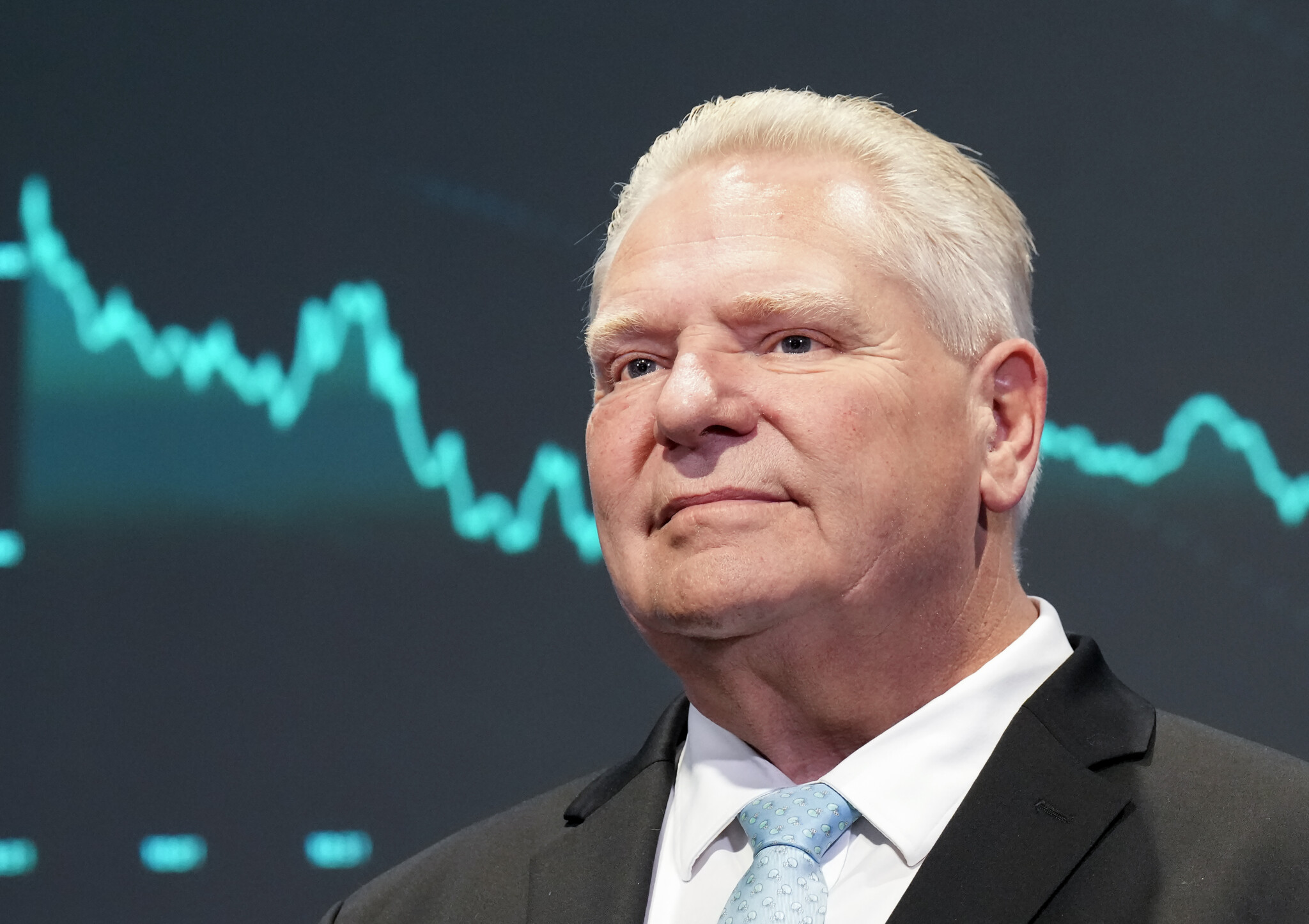
There’s trouble ahead for Ford’s Ontario
By Matt Spoke, a contributor to Project Ontario, a grassroots political initiative focused on renewing and strengthening conservative leadership in Ontario.
With Mark Carney settling into his first full year as prime minister, Ottawa will continue to project a sense of stability and competence. But beneath that perception, the real issues facing Canada will remain largely unresolved. Because of that dynamic, we will see increased political pressure hitting the provinces, and Ontario in particular.
First, a Carney government may look steady, but it will not fix the affordability crisis or the stagnant growth facing our economy. Those failures will land squarely on the desks of premiers. Ontario, already buckling under population pressures and economic stagnation, will feel this most intensely.
View reader comments (1)
Second, Premier Doug Ford will face the beginning of a real slide in his personal popularity. Part of this will come from a modest rebound in the Ontario Liberal Party, but the primary driver will be frustration with a provincial economy that continues to deteriorate. For the first time since 2018, Ford will no longer feel insulated from public anger.
Third, manufacturing job losses in Ontario will be staggering, especially in communities tied to the auto sector. Cities built on manufacturing will see rising unemployment, worsening addiction and homelessness, and mounting pressure on local services. The social consequences of these economic shifts will meaningfully impact the political reality in Ontario ahead of the next election, whenever that happens.
Fourth, Ontario will continue to lag the rest of the country in housing starts. Taxes and municipal approval bottlenecks will keep housing supply far below Ontario’s organic demand. Affordability will worsen, and Ontario will remain the most challenging place in Canada for young families to build a future.
Trump’s tariffs will wreak havoc on the wine world
By Malcolm Jolley, The Hub’s wine columnist
The coming economic reckoning in the United States won’t be good for wine, at least not in the first half of 2026. Trump tariffs will begin to cause true havoc in the wine trade, as old stock is depleted and new stock is subject to tariffs. European wines are subject to a 15 percent tariff. A common way to deal with the duty is to split the increased cost: the producer takes 5 percent, the importer or distributor another 5 percent, and finally the consumer pays 5 percent more. Everything costs more, and yet everyone will make less money. The effect on the world wine trade will be bad.
A possible silver lining to the Trump economic reckoning is that, as bad as it gets, people will have no time for wine-shaming new-prohibitionists. Just as the Great Depression ended actual prohibition, the affordability crisis will remind us to take small pleasures when we can, like a glass of wine at dinner.
Canadian journalist, academic and author Christine Sismondo writes about how the tavern has always been a place to meet to foment resistance in America Walks into a Bar (2014). Perhaps the coming impoverishment will encourage real-life socialization and a plan to restore some civility and good cheer to the world.
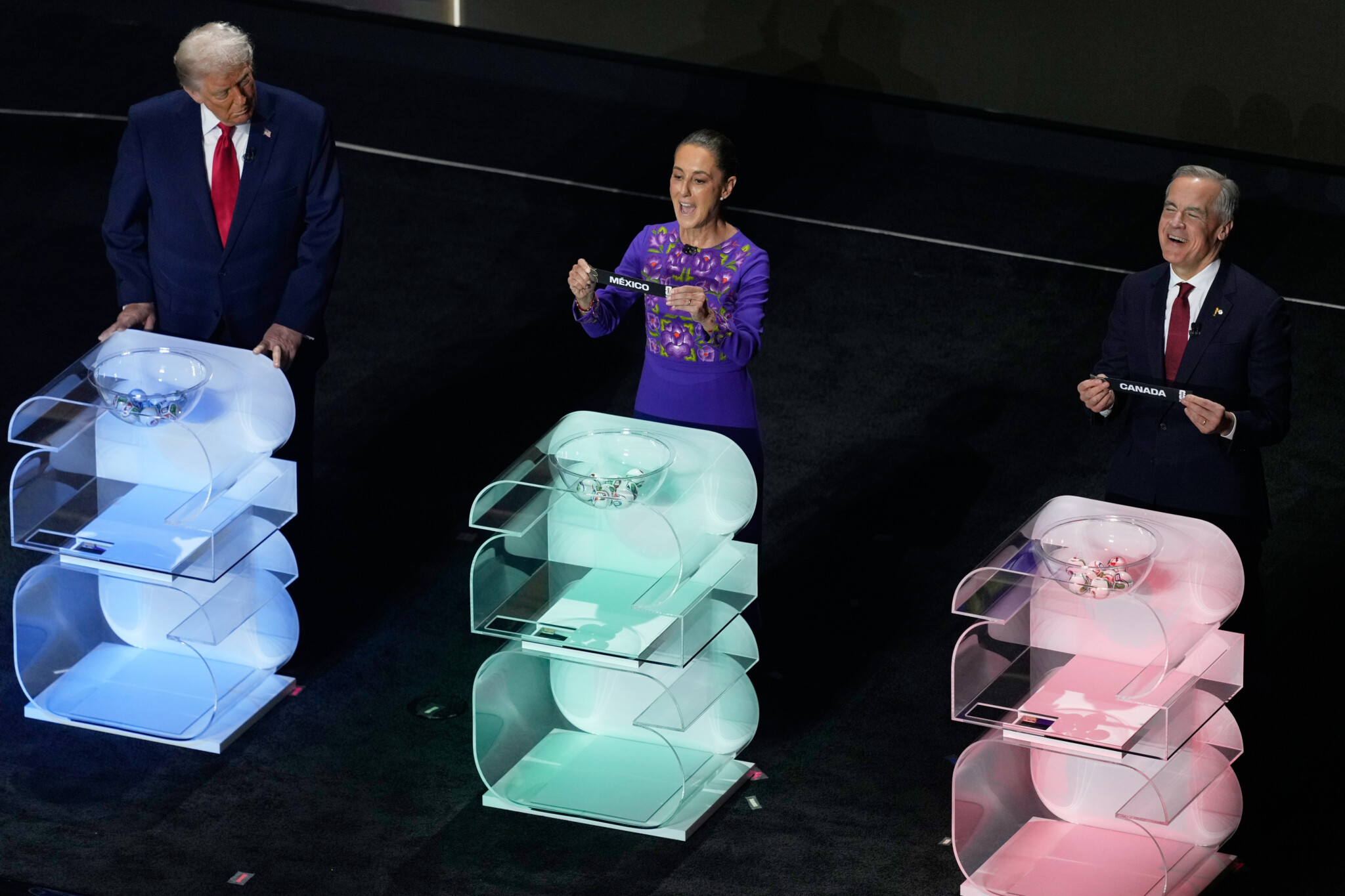
President Donald Trump, Mexican President Claudia Sheinbaum and Canadian Prime Minister Mark Carney, from left, on the stage before the draw for the 2026 soccer World Cup at the Kennedy Center in Washington, Friday, Dec. 5, 2025. Julia Demaree Nikhinson/AP Photo.
Pipelines, fighter jets, and playing for keeps
By Livio Di Matteo, professor of economics at Lakehead University
1. A solution to the pipeline problem
In a rapid change of heart, all opposition to new pipeline projects in Canada will melt away as plans are unveiled for an environmentally neutral national pipeline that will include an urban light rail line, an all-season skating track, and a bicycle path atop the new pipeline viaduct. However, the circuitous path and enormous expense now required to link together all the numerous willing participants will result in a proposed new national government bond program known as Pipeline Canada Bonds (PCBs). This will be debated in the House of Commons the weeks of May 8th-June 6th, 2026, in honour of the 70th anniversary of the 1956 TransCanada Pipeline debate.
2. A fighter jet compromise will be reached
In a classic demonstration that there is no problem or dilemma that a larger federal deficit cannot solve, the government fighter jet acquisition program will finally generate a decision that will consist of the original number of 88 American F-35 jets, as well as an equal number of Swedish Gripen jets. To ensure that both providers are on a level playing field, the requirement for final delivery will be that both aircraft suppliers must have all their manuals and operating procedures translated into French and three Indigenous languages of their choice, reflecting a distribution of Canadian physiographic regions.
3. A FIFA World Cup showdown will determine the fate of CUSMA
The international community will flock from far and wide to the 2026 FIFA World Cup hosted by the United States, Canada, and Mexico. The audiences will be thrilled by the announcement that a special match will be held at the opening ceremonies of the new soccer plex in Thunder Bay, Ontario, between Canada, Mexico, and the United States, with President Trump in goal and Prime Minister Carney and President Sheinbaum each getting three shots on net. The outcome will decide who sets the CUSMA/USMCA/T-MEC renewal terms as well as the final acronym. Whatever the outcome, FIFA will award President Trump a special medal announcing him as player of the year.
How might Ontario's economic struggles under Premier Ford impact his popularity and the province's future?
What is the predicted impact of potential Trump tariffs on the wine trade and Canadian consumers?
What unconventional solutions are proposed for Canada's pipeline and fighter jet issues?





Comments (1)
Brilliant ha ha ha…