Polish off your crystal balls, consult the stars, call up the scryer in your life—2025 is creeping to a close, and it’s time to turn our attention to what’s to come in 2026. But if the future still feels fuzzy, don’t panic: The Hub has you covered. Once again, our best prognosticators are here to provide some foolproof predictions for the headlines and happenings ahead.
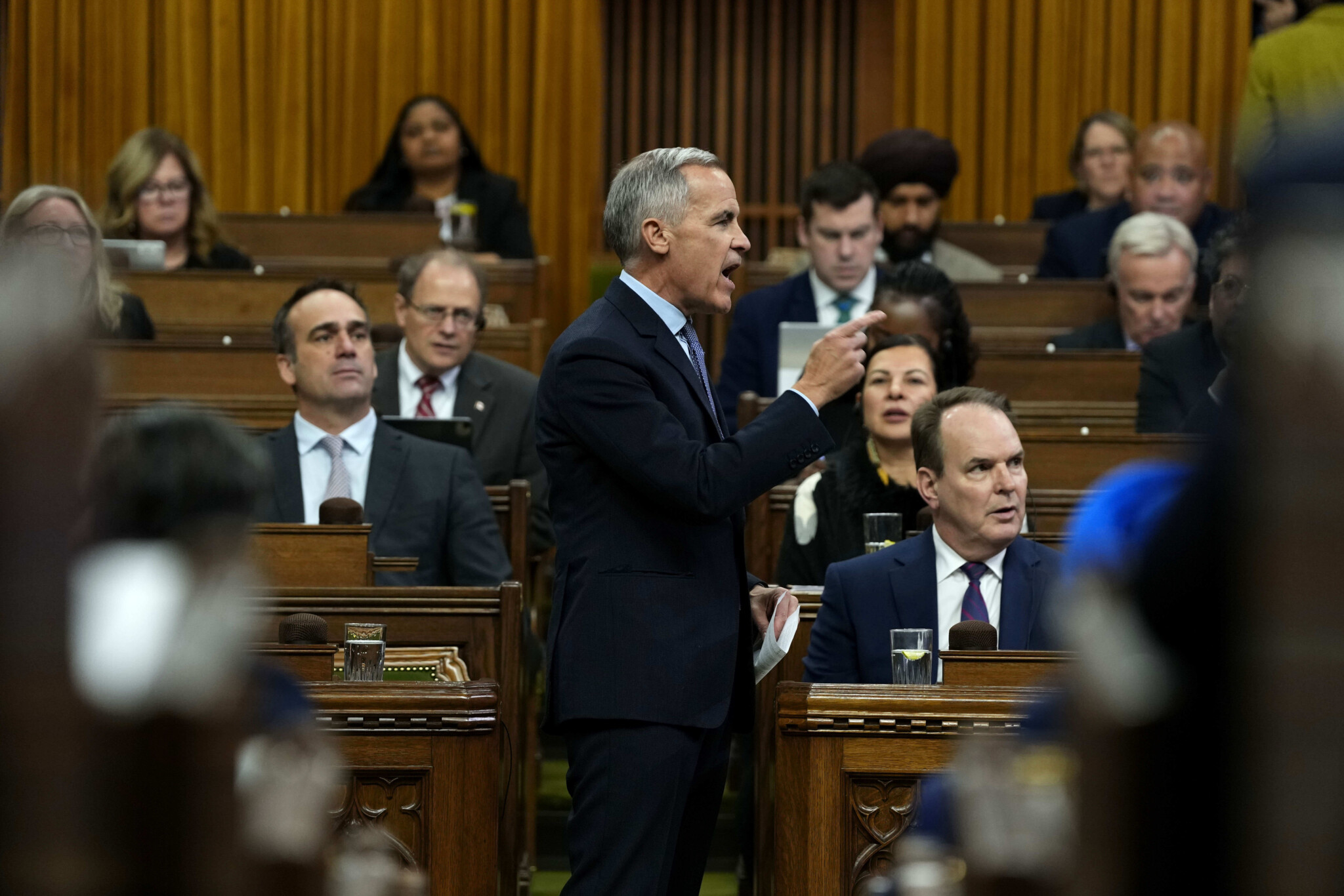
Prime Minister Mark Carney is in an especially cheery mood during this holiday season after floor crossings from two Conservative MPs have swelled the ranks of his party to 171 seats in the House. Paired with the resignation of another CPC MP, he’s now one seat away from a much-coveted Liberal majority.
But it will not last.
A January hangover for many Canadians still facing a cost-of-living crisis, led by rising food prices and a persistent lack of affordable housing, will start to wear away at Carney and the Liberals’ popularity throughout the new year, leading to a federal election in late 2026.
The path to an election
The temptation to join the ruling party will become too much for another wayward MP or two. The safe bet is on another one or two Conservative turncoats, but a lone Bloc Québécois MP from a closely-contested riding jumping on the Carney bandwagon is also likely in the cards. One way or another, Carney gets two more floor crossers, giving him a little breathing room. But in the end, his four freshly minted Liberal MPs will not be enough to stop an early federal election in 2026.
The manufactured Liberal majority will be short-lived. With Chrystia Freeland leading the way for high-profile Liberals exiting politics back in the fall of 2025, other longtime Justin-Trudeau-era holdover ministers will follow suit in 2026. The rumours of Bill Blair, Stephen Guilbeault, Mélanie Joly, and Jonathan Wilkinson will be confirmed true for three, although which three my crystal ball does not spell out. Those three empty seats, alongside Freeland’s, will subtract four votes from the Liberals’ 174-seat majority in Parliament, putting them in an effective minority situation during votes in the House.
The empty seat of now-resigned Conservative MP Matt Jeneroux means the Liberals will technically only need 171 votes to avoid a snap election. Down to 170 votes by the middle of 2026, Carney made sure he brokered a deal with the NDP for the period, before byelections could replenish the retiring Liberal stalwart MPs and rejuvenate the PM’s majority.
While in this vulnerable transition, however, gale-force political headwinds will hit the Liberals. Canada, although not technically falling into a recession yet, will suffer terrible job numbers as thousands more autoworkers are laid off across Southern Ontario. Carney, failing to ink a deal with U.S. President Donald Trump—due in large part to bull-headedness protecting Canadian dairy supply management—will further exacerbate Canada’s fragile economy, compounded by lower oil prices hurting the federal revenues from Alberta’s oilsands and the overall fiscal outlook of the country.
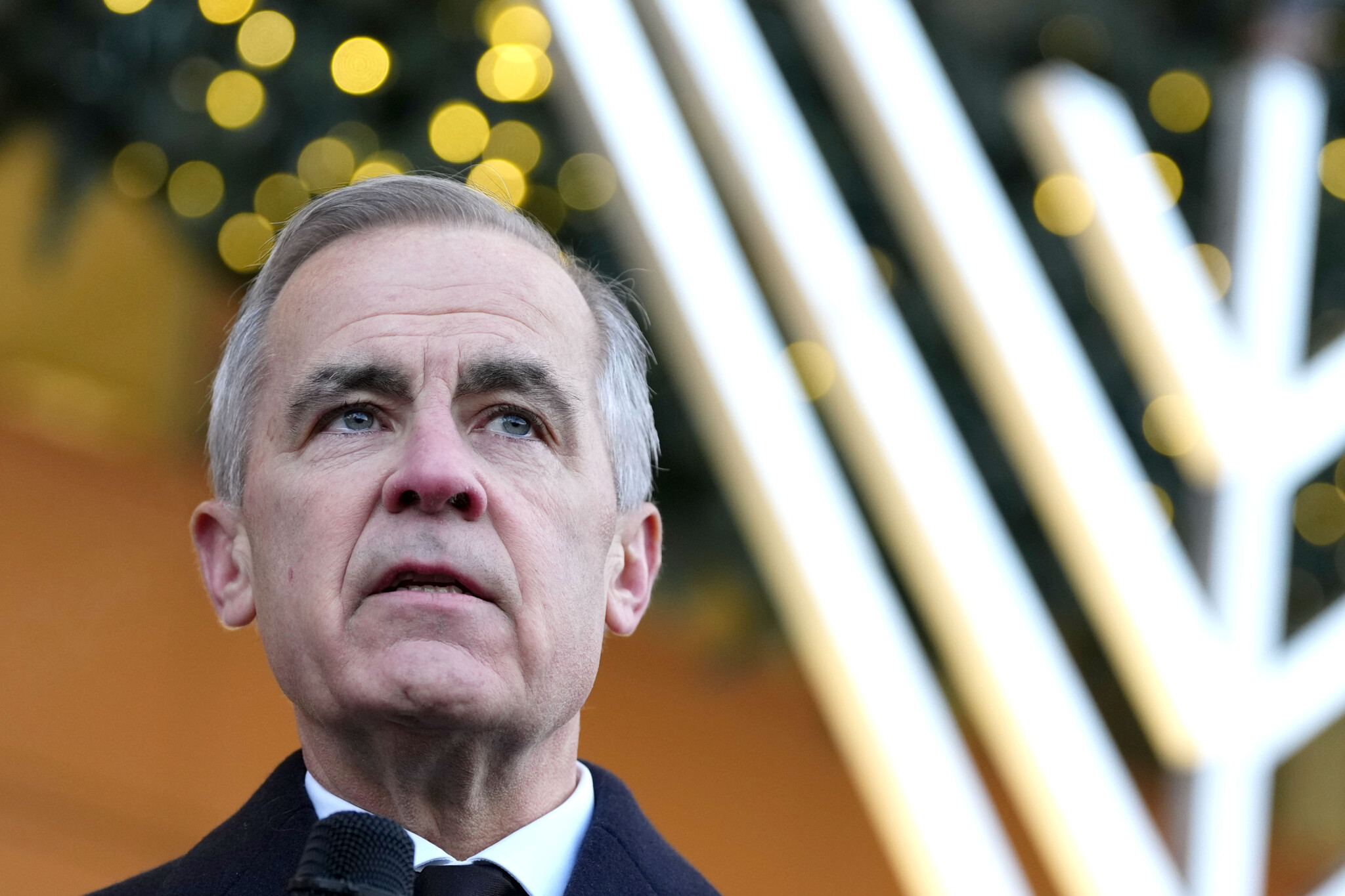
Prime Minister Mark Carney speaks at City Hall in Ottawa, Dec. 14, 2025. Justin Tang/The Canadian Press.
These issues end up in a surging confluence of Canadians leaning towards supporting the Conservatives in national polling, with late 2026 summer polls showing the official Opposition leader Pierre Poilievre’s party up 11 points on the Liberals, who will also see quantitative easing of their support on their Left flank, too, with a resurgent NDP.
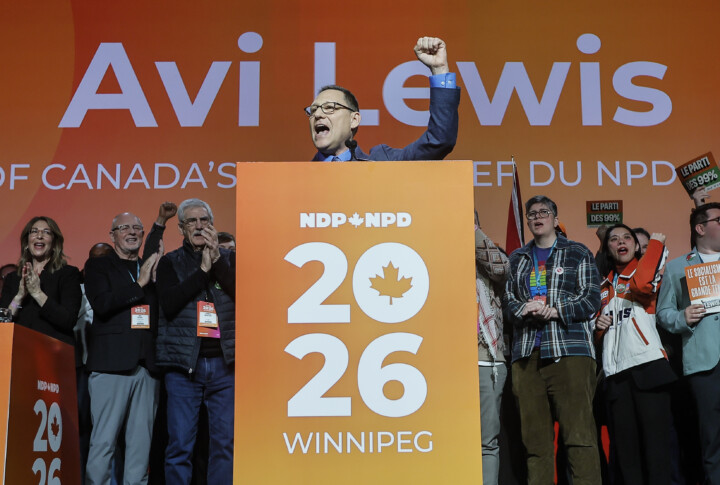
New NDP leader Avi Lewis will prove to be a much savvier and less obsequious coalition partner than his predecessor, Jagmeet Singh. Duplicitous as the floor-crossers joining the Liberals, Lewis will see the Liberals’ tanking poll numbers by the middle of 2026 and make a plan to strike while convincing the Liberals his party will still support them.
View reader comments (14)
Following Carney’s lead, Lewis will court B.C. Liberal MPs disaffected by Carney’s support for a new pipeline and succeed in convincing two of them to abandon the Liberals’ ship that’s sinking in the polls.
The Grits, now down to 168 seats in September, will lose a vote in Parliament by the slimmest of margins when the remaining 169 opposition MPs (with six empty seats in the House from resignations) trigger a snap election.
Despite Carney changing his Order of Canada pin to that of the Canadian flag and putting his elbows back up, Canadians won’t buy that same strategy again, especially after he has failed to deliver a new trade deal with the U.S. In the mid-November federal election, the Conservatives will manage to eke out a slim majority, winning an ironic 174 seats outright.
Prime Minister Poilievre will then go on to lead an austerity government where not a single MP crosses the floor in his first four-year term.

Graeme Gordon is The Hub's Senior Editor and Podcast Producer. He has worked as a journalist contributing to a variety of publications, including CBC,…
What economic factors are predicted to erode Liberal popularity by late 2026?
How might the predicted NDP leadership under Avi Lewis influence the political landscape?
What are the key reasons cited for the predicted Conservative victory in late 2026?



Comments (14)
I’m not placing a bet. The Liberal minority is so close that every party must want an election at the same time to bring them down. In this scenario even Lonely Elizabeth’s vote is relevant. Who saw that day coming?
Will a new NDP leader want an election in 2026? That is a hard one. They are broke and I’m not sure what they have left to take to the pawn shop. But the alternative is continuing to support the Liberals. Damned if you do, damned if you don’t. It will be interesting to watch the rhetoric in their upcoming leadership campaign.
Early this year my priorities for a new CPC government (it was a reasonable assumption at the time!) was to drastically reduce the PS. But it was politically dangerous for Poilievre whose riding was Carleton. I do wonder how Mark Carney’s supporters in Nepean will react to the cuts he has announced and the return to work policy at the federal level.