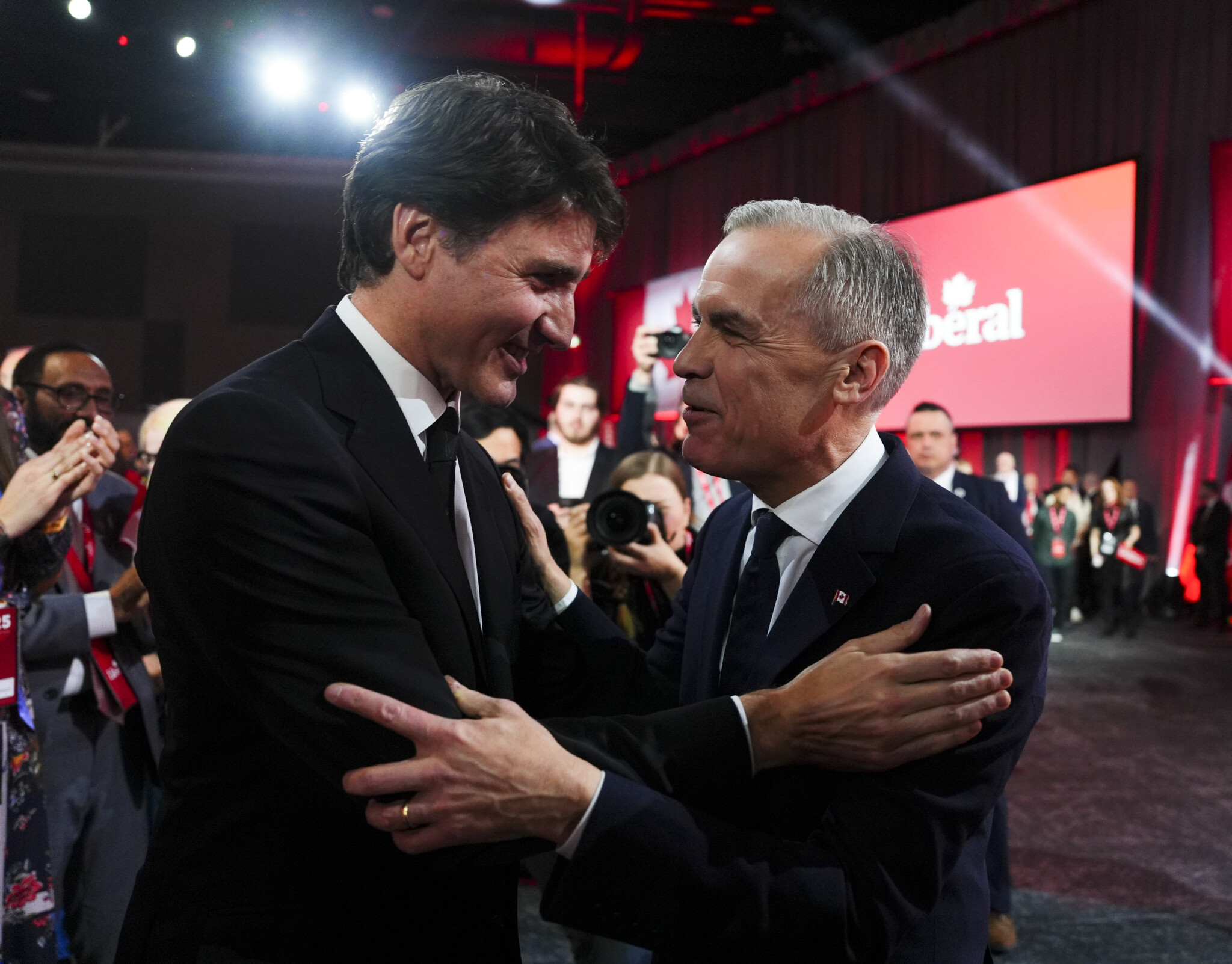
Canadians who did not have confidence in the country’s parliament shot up near the end of Prime Minister Justin Trudeau’s tenure in office, when 40 percent of Canadians gave it a confidence rating of one or two out of five in the last quarter of 2024, according to new Statistics Canada data.
This represented a 6.7 percent rise from the 33.3 percent of respondents in 2022 who gave it the same failing grade. An additional 31.8 percent of Canadians polled in the survey didn’t give a ringing endorsement of Parliament either, giving the federal legislature a rating of three out of five. Meanwhile, 28.3 said Parliament deserved a five out of five ranking.
Some provinces were more disillusioned by Parliament than others, after the then-nearly 10-year-old Liberal government.
Ontario respondents who had overall strong confidence in Parliament (five or four out of five) dropped from 34 percent in early 2022 to just 27 percent by the fourth quarter of 2024.
Alberta saw its citizens’ confidence wane even further, from 26 percent in 2022 to 22.8 percent in the fourth quarter of 2024.
Saskatchewanites’ confidence in Parliament over the same time period dropped the most, at over 10 percentage points, from 31.1 percent to 21 percent.
In contrast, Quebecers—despite separatist support hovering north of 30 percent in the last several years—responded to the Statistics Canada poll with the greatest confidence in Parliament. 38.4 percent of Quebecers had a high confidence in Parliament, four or five out of five, in late 2024, and another 34.1 percent of Quebec respondents gave Parliament a three out of five.
Ipsos Public Affairs CEO Darrell Bricker believes Statistics Canada’s polling question focusing on confidence in Parliament was likely viewed by Canadian respondents as a form of synecdoche, where the word Parliament was interpreted as a symbolic catchall word representing the ruling government of the day.
“I don’t know that people so much differentiate federal Parliament from the government. But if you go back to 2015 to 2017, you would see Trudeau’s [approval] numbers were up where Carney’s numbers are now, if not higher,” he told The Hub in an interview. “After the SNC Lavalin [scandal], it collapsed, and it never came back. It was probably at its nadir [in late 2024].”
Bricker believes Canadians became especially disillusioned during the latter half of Prime Minister Justin Trudeau’s leadership for three primary reasons.
“State of the nation, state of personal credibility, and alignment with the issues that people thought were most important,” the pollster explained.
“Harper was never that low. You probably have to go back to Brian Mulroney to find a lower [approval rating in that] range.”
Amid repeated caucus revolts and flatlining approval numbers, Trudeau announced his resignation on January 6, 2025, exactly a year ago this week, and one quarter after Statistics Canada surveyed Canadians.
The Statistics Canada survey also polled Canadians on their confidence in other pillars of Canadian democracy, including the media, police, the justice system, and school system.
The media didn’t fare much better than Parliament, with only 36.2 percent of respondents giving four or five out of five for confidence in the press.
Meanwhile, Canadians’ trust in the school system declined from 50.8 percent of respondents having strong confidence in the education system in 2022 to 45 percent by the end of 2024.
The police and justice system fared better in the 2024 poll, receiving 63.4 percent confidence and 48.2 percent of Canadian respondents respectively.

Canadians faith in Parliament may be broken
Although Canadians are tentatively trusting Carney to captain the ship, it’s too early to tell if they are regaining confidence in Parliament or the federal government.
“I don’t know that there’s a renewed faith in the government. I don’t know that there’s a renewed faith in the Liberal Party,” Bricker said, referencing Ipsos subsequent polling throughout 2025. “What I think that we’re seeing is a very specific faith in one person, which is Mark Carney. So if you ask now…what your approval is of the Carney government I think it’s 55 percent now,” Bricker said.
Bricker believes if Carney doesn’t address the top issues facing Canadians the confidence he enjoys from the majority of Canadians could quickly dissipate. These include affordability (housing and inflation),securing a trade deal, steadying the stagnant economy, and curbing immigration.
“It’s a very specific type of recovery that’s taken place, and it’s really around hope associated with Mark Carney, that he’s the right person to do this,” Bricker added. “Is there any evidence that [his leadership has] actually paid off, like a new agreement with the United States, or in trade relationships in other places, or whatever? No, but people are still hopeful.”

Graeme Gordon is The Hub's Senior Editor and Podcast Producer. He has worked as a journalist contributing to a variety of publications, including CBC,…
New Statistics Canada data reveal a significant decline in Canadian confidence in Parliament towards the end of Justin Trudeau’s time as prime minister. In the last quarter of 2024, 40 percent of Canadians rated Parliament poorly (one or two out of five), a 6.7 percent increase from 2022.
This disillusionment varied by province, with Saskatchewan showing the largest drop in confidence. Experts suggest “Parliament” was perceived as a proxy for the ruling government. Confidence in other democratic institutions like the media also dipped, while trust in the school system declined. The police and justice system, however, maintained higher confidence levels.
Why might Canadians have conflated 'Parliament' with the 'ruling government' when answering the poll?
Which provinces showed the most significant decline in confidence in Parliament, and what might this suggest?
Beyond Parliament, which other democratic institutions saw a decline in Canadian confidence, and how did they compare?



Comments (0)