Ontario should be doing much better than it is.
If we had simply maintained the per-person growth rate we achieved from 1980 to 2000, the average Ontarian could be earning $20,000 or more every year. Nobody in charge seems to really care. But I do, because we’d have far fewer problems today if it were true.
We have talented people, world-class universities, deep capital markets, abundant natural resources, and cities that should be even greater magnets for opportunity. Ontario should not be struggling. It should feel like a place where work pays, services work, and young people can build a future. It should be the jewel of 21st-century civilization.
Instead, we are stuck.
Not because decline is inevitable, and not because Ontarians lack ambition. We are stuck because our politics has settled into managing scarcity rather than building capacity. Governments change. The rhetoric changes. The results do not.
This is where managed decline has left Ontario.
In health care, we have normalized waiting. We argue about who gets an MRI first, how long people should wait in emergency rooms, how many patients a family doctor can roster, and how to punish them if their patient goes to a walk-in clinic. That is scarcity governance.

Let’s go all-in on growth
Growth thinking starts somewhere else. If we don’t have enough doctors, train more doctors. If we don’t have enough MRI machines, buy more MRI machines. If operating rooms are overbooked, expand surgical capacity.
These are not radical ideas. Yet in Ontario, every time we say, “Just train more doctors,” we are told it is complicated, impossible, or financially irresponsible. We always find reasons not to do the obvious thing. That is not a capacity problem. It is a mindset problem.
Housing tells the same story. We’ve turned a supply problem into a permanent allocation debate. We argue about subsidies, public housing eligibility, and whether we should accept becoming a renter society. But homeownership didn’t disappear because people stopped wanting it. It disappeared because governments made it increasingly difficult and expensive to build, layering on absurd processes, heavy restrictions, and taxes that are borderline criminal in their effect on supply.
View reader comments (7)
The solutions to our housing issues are not complex. Build more homes. Approve more quickly. Relax restrictions on land use. Stop letting secondary and tertiary objectives override the primary goal of building housing for families at prices they can afford. Build infrastructure before the fact, not after. Invest in young people so they can achieve normal milestones at a decent age in life, and many will be happier. Growth thinking means that building homes matters more than placating the same handful of complainers.
Jobs work the same way. The question is not how we protect one specific type of job at one specific plant, whether it’s bottling Crown Royal or running a General Motors production line. The real question is whether Ontario is attracting enough investment and creating enough new jobs so that people who want to work have options, and even better, competition from employers for their skills.
In a growing economy, businesses can resize, and workers can move without fear. In a stagnant one, every change becomes a crisis because opportunity is scarce. Protecting workers does not mean freezing the economy in place. It means building an environment where new jobs are constantly being created. Leadership means focusing on the whole economy, not pretending that protecting a few jobs is a substitute for an economy creating many more.

Condo’s in Toronto’s Liberty Village community, April 25, 2017. Cole Burston/The Canadian Press.
This is the pattern politicians keep missing. You cannot micromanage your way out of scarcity. You have to take risks, trust people and businesses, ensure healthy public systems, and then give productivity the space to work.
Growth is not a buzzword. It is the basic arithmetic of whether a society can afford to keep its promises. When per-person growth is healthy, wages rise, services improve, and taxes aren’t a burden because people can afford them. When growth is weak, people pay more and get less. Trust erodes. Confidence fades. Politics becomes a competition over who can manage decline more gently.
This is where Ontario is today. Every party talks about affordability. Every party talks about health care. Everyone wants to build more infrastructure, generate more clean energy, and improve education. But somehow, it isn’t getting better. We’ve been talking about a doctor shortage for as long as I’ve been alive. Everyone complains about traffic and unsatisfactory infrastructure. Ontario’s housing deficit has been increasing for the last 20 years. Leaders change, but the problems only seem to get worse.

What’s wrong with learning from others?
What makes this more frustrating is that the solutions are not mysterious. The best places in the world are not guessing. They train more professionals. They build more infrastructure, and do it continuously with highly skilled public institutions. They invest in teachers so their kids develop discipline and the ability to read, write, do math, and think. They build more housing in cities and in new suburbs. They prioritize outcomes over process because delivering on promises is how leaders actually create trust. They do not pretend that every complaint, delay, or stakeholder claiming veto deserves more weight than the rest of us who pay for it all. If it costs over twice as much to build the same infrastructure in Toronto, Windsor, or Ottawa as it does in Paris, Milan, or Tokyo—all wealthy places—then the problem is not physics, labour, or ambition. It is bad governance.
We do not need miracles. Many of the hardest problems we debate today were solved elsewhere already. Physics is not different in Europe or Asia. The failure is cultural. Our leaders have convinced themselves that learning from others is beneath us, and so we refuse to solve obvious problems with proven solutions.
At its best, liberalism is a positive-sum idea. It is confidence in people and in progress. It is competitive markets that generate wealth, paired with efficient taxation that funds generous welfare and strong public services. It is the belief that growth and social progress reinforce one another, and that rising living standards make a fairer society possible with true freedom.
But that only works if liberals are willing to govern like they believe in growth.

An opportunity for change
That is why I’m exploring a run for Ontario Liberal leader.
The Ontario Liberal Party has an opportunity to be the vehicle for that shift. To do this, it has to show it is serious about governing, be open to new people, and be willing to modernize how it operates. It should aim to maximize public participation, giving as many Ontarians as possible a low-barrier stake in its future.
Most importantly, the Ontario Liberal Party has to lead the debate we keep avoiding about our long-term provincial interests. This is especially true in an era of American disgrace. How do we stop managing decline and start building again? How do we shift from zero-sum fights to positive-sum growth? How do we build a sovereign and prosperous economy if we can’t admit what the problems are?
I’m considering a run for Ontario Liberal Leader because I believe Ontario can do better. Because I believe in us, and in you. That we have everything we need to deliver an affordable life for everyone. Given all of our advantages, winning the future is our right. The province is not short on potential. Doug Ford’s Ontario is short on leadership willing to adopt what works, actually change, and then act.
I’m exploring this run because we can no longer afford to keep pretending this is harder than it is.

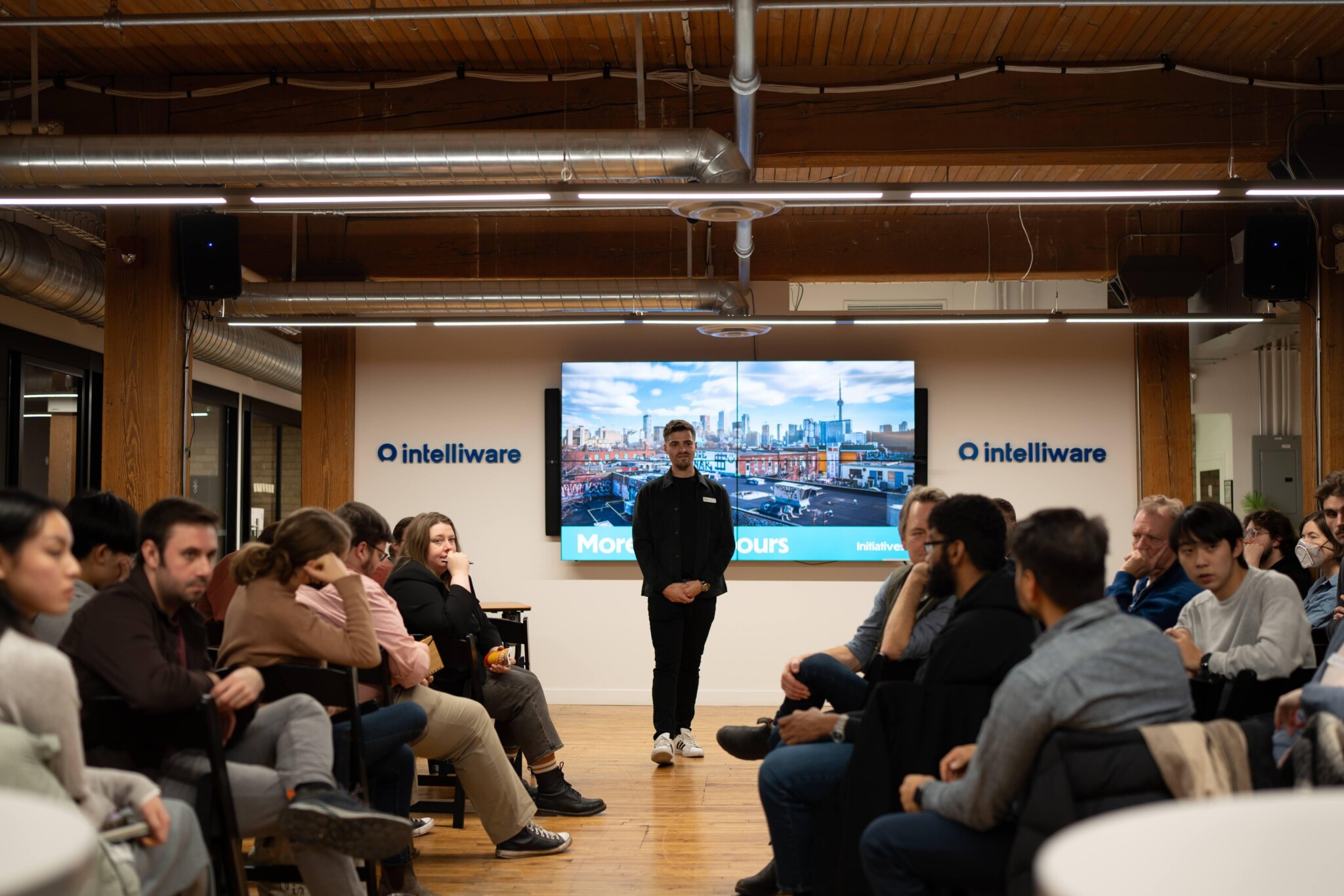
Eric Lombardi stands at the forefront of urban development and advocacy as the founder and president of More Neighbours Toronto, a volunteer…
Eric Lombardi is exploring a run for Ontario Liberal leader, arguing that the province is “managing decline” instead of fostering growth. He believes Ontario’s potential is hindered by a political mindset focused on scarcity, leading to normalized waiting in health care, a housing crisis driven by restrictive policies, and a lack of new job creation. Lombardi advocates for a “growth thinking” approach, emphasizing training more professionals, building more infrastructure and housing, and learning from successful global models. He posits that liberalism, at its best, is a positive-sum idea that links growth with social progress and aims to shift the political debate towards building capacity and achieving prosperity.
Is Ontario's 'managed decline' a result of poor leadership or systemic issues?
What are the core differences between 'scarcity governance' and 'growth thinking' in Ontario?
How does the article propose shifting Ontario from managing decline to building capacity?






Comments (7)
Doug Ford has been a disaster as Premier. But we seem stuck with him because people remember the recent Liberal governments and (at least those of us of a certain age) the NDP disaster, and the fact that neither opposition party can get its act together enough to overcome their history.
I’d very much like to see the Liberals produce a credible leader and platform. Ontarians need viable alternatives to keep the governing party on track. So I wish you luck.