Few pieces of legislation have managed to alarm Conservatives, faith leaders, civil liberties advocates, and the NDP at the same time. Bill C-9 is one of them.
Facing mounting backlash, the Liberal government has paused the so-called Combating Hate Act just as Parliament returned from winter break on Jan. 26. The justice committee’s decision to delay further study in favour of bail reform opens a brief but meaningful window for Ottawa to rethink the proposed law, which critics say risks criminalizing legitimate expression.
Bill C-9 was first tabled last September and moved closer to passage in December when the Liberals backed the Bloc Québécois’ proposal to remove religious exemption from hate speech law.
The amendment has incited concern from Conservatives and faith groups in rare agreement, including many Christians, Catholics, Muslims, and Jews. Earlier, a coalition of 37 civil society organizations called for the bill to be withdrawn, while even the NDP opposed the amendment, arguing it could chill lawful expression.
Critics have coalesced around three central concerns.

They argue Bill C-9 is unnecessary, since existing Supreme Court jurisprudence already sets a high bar for criminalizing hateful expression; risky, because changes to prosecutorial safeguards could lead to abuse of criminal law; and distracting, at a time when public anxiety is focused on violent crime and the justice system’s handling of repeat offenders.
Lower threshold for what constitutes hate
Under current law, the Criminal Code criminalizes the wilful promotion of hatred against identifiable groups, but only under narrow conditions. Supreme Court precedents, including R v. Keegstra (1990) and Saskatchewan v. Whatcott (2013), limit hatred to an “emotion of an intense and extreme nature that is clearly associated with vilification and detestation.”
Bill C-9 would make significant changes by lowering that threshold. The bill newly defines hatred as an “emotion that involves detestation or vilification, and that is stronger than disdain or dislike,” removing words like “extreme” and “intense” and capturing a broader scope of speech, even if it may not have met the previous threshold.
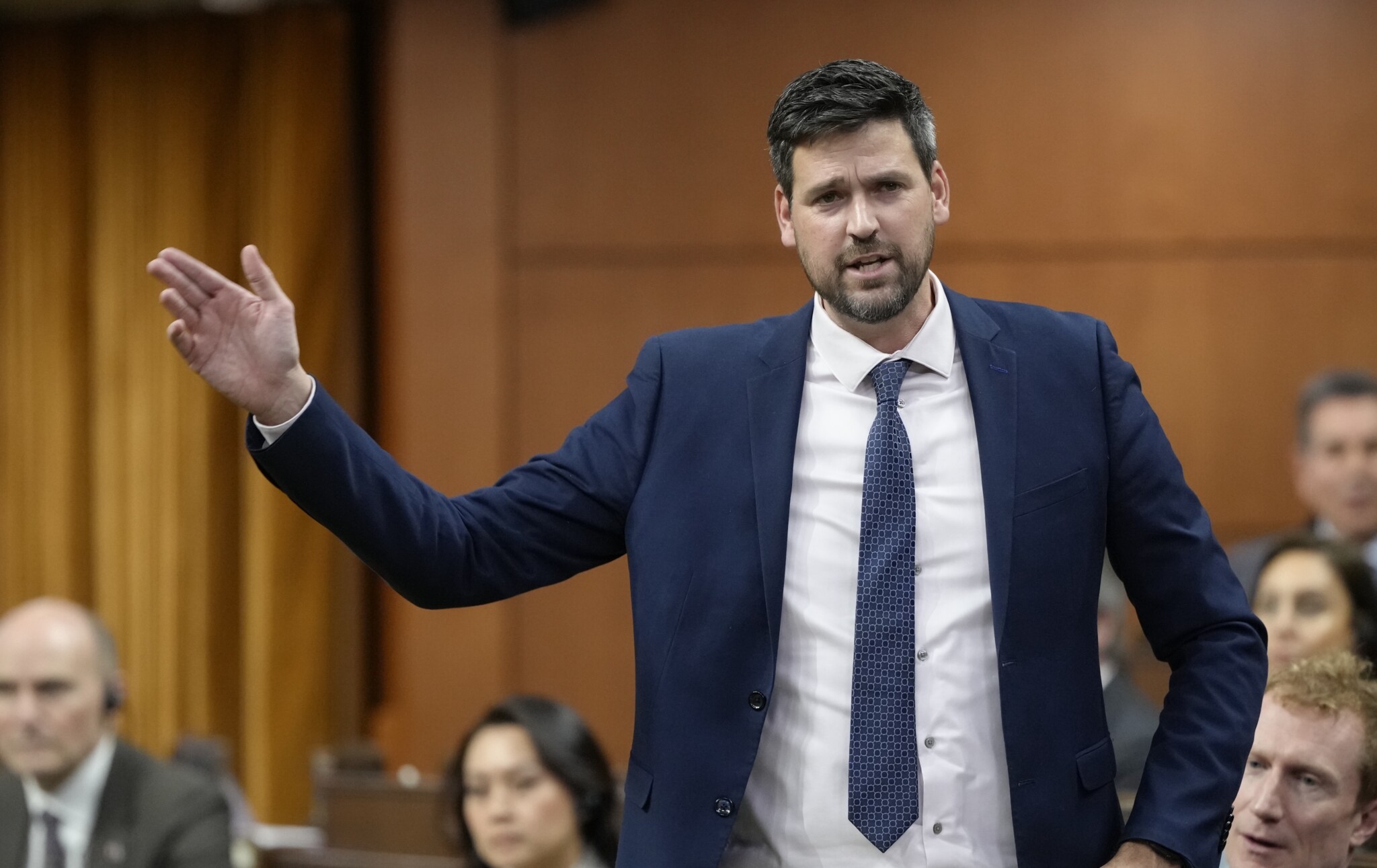
Justice Minister Sean Fraser rises during Question Period on Parliament Hill in Ottawa, Wednesday, Feb. 4, 2026. Adrian Wyld/The Canadian Press.
The Supreme Court had also upheld the constitutionality of the ruling for Canada’s hate-speech law in R. v. Keegstra because statutory defences like the religious speech defence existed.
“By removing this safeguard from the Criminal Code, which Bill C-9 will do if it passes, you may actually be upsetting the balance of the constitutionality of hate speech laws in Canada,” said Andrew Lawton, Conservative MP for Elgin—St. Thomas—London South.
Christine Van Geyn, litigation director at Canadian Constitution Foundation, said removing the religious speech defence was unnecessary because it has never been invoked successfully in court. For instance, R v. Harding ruled that the wilful promotion of hatred was not shielded merely because it was framed as a religious message.

Questions around law enforcement
Proponents of Bill C-9, including Justice Minister Sean Fraser, said that the bill is intended to address the rising rate of hate crimes. Hate crime has been rising in Canada, with police-reported cases nearly doubling from 2020 to 2024, and antisemitism spiking since October 7, 2023.
Ahead of the Parliament’s return from break, the Centre for Israel and Jewish Affairs (CIJA) issued a statement on Bill C-9, citing recent antisemitic attacks against Jews, including the Bondi Beach attack, and urged the government to pass the bill.
“Words of condemnation are not enough. We urge the government and all parliamentarians to act now by providing clear direction for authorities to enforce existing laws, strengthening Bill C-9 through targeted amendments,” they said, and also proposed a new offence for the wilful promotion of terrorism. Earlier in December, CIJA and four other Jewish organizations issued a joint statement urging the Parliament to “move forward with urgency” and pass Bill C-9.
Meanwhile, critics argue that the bill does not solve rising hate crimes, as the real problem is a lack of enforcement of existing laws.
View reader comments (6)
“Hate against people is wrong, and our society must confront hate and condemn it. But the criminal law is not the right tool for every social scourge,” Van Geyn wrote in a statement to the standing committee. She added that the criminal law “comes with a loss of liberty,” including chilling religious debate. Even if the government did not intend to criminalize quotes from religious texts, Van Geyn said the court would interpret the text of the bill and could apply it outside its intention.
“The question is, does the text of the legislation open up the possibility of that prosecution? I think it very well could,” she said.
Bill C-9 would also criminalize impeding access to places of worship or areas used by identifiable groups and create a new offence for publicly displaying Nazi swastikas and symbols linked to terrorist entities. Again, as Van Geyn notes, these actions were already prohibited under current law and required enforcement.

“Intimidation under the Criminal Code; mischief under the Criminal Code,” she said. “Those tools already exist. The concern around the intimidation provisions is just that it would have a chilling effect.” Critics also argue that Bill C-9 could go beyond combatting hate and open the door to politically motivated prosecutions since it removes the requirement for federal or provincial Attorney General approval to press charges.
Unlike other ordinary indictable offences, currently hate propaganda offences under section 319 of the Criminal Code are considered sensitive, requiring Attorney General consent, which prevents abuse of prosecutorial power. Allowing the police to lay charges directly under Bill C-9 would remove that safeguard.
“It invites arbitrary or inconsistent enforcement and opens the door to private prosecutions,” she said. Van Geyn added that Bill C-9 could lead to overcharging, as it creates a standalone hate-motivated offence instead of hate being an aggravating factor in sentencing under other charges. Van Geyn warned that this could lead to individuals facing significantly higher sentences if a hate-motivated offence were stacked on top of an underlying crime.
“You can get a penalty for withholding wages. But if they say you withheld wages and that was motivated by hatred, that’s now a criminal penalty on top of the regulatory offense and you’re subject to criminal liability,” she said.
Combined, the broader definition of hate and the removal of both the religious speech defence and attorney general consent could lead to charges for sincerely held but misinterpreted religious expression, chilling legitimate debate from fear of criminal sanctions.

Police keep a safe space between a small group of Palestinian supporters and a pro-Israel vigil on the anniversary of a Hamas attack on Israel that triggered the ongoing war in Gaza in front of McGill University, in Montreal, Monday, Oct. 7, 2024. Ryan Remiorz/The Canadian Press.
Scope of law could extend online
Responding to concerns about its impact on religious speech, Fraser told a Dec. 9 news conference that the bill would “in no way, shape, or form prevent a religious leader from reading their religious texts.” However, Lawton pointed to contradictory remarks by fellow Culture Minister Marc Miller on books in the Old Testament just a few weeks earlier.
“In Leviticus, Deuteronomy and Romans, there are passages with clear hatred towards, for example, homosexuals,” Miller said on Oct. 30, adding that “there should perhaps be discretion for prosecutors to press charges.”
Lawton further warned that Bill C-9 could apply to online spaces, citing the justice minister’s remarks at committee that “the law will apply equally online and in real communities.”
Critics have raised serious concerns about chilling speech in online spaces, and young people would be particularly impacted. 85 percent of Generation Z in Canada now get their news on social media, which influences how they stay informed and engage in their communities.
“There’s a real culture of fear around what is online. This will make that worse because now it becomes quite unclear what the line is,” said Van Geyn.

Distraction from more pressing justice issues
Morrigan Johnson, a researcher with LGB Alliance, has commented that the bill is a distraction from “real crime,” policing speech while violent crime remains unchecked through the “revolving door bail system.”
“In terms of the enforcement gap, Bill C-9 seems like complete hypocrisy to be able to throw people in jail on the basis of emotions,” he said.
Similarly, Conservatives have accused Liberals of deliberately cancelling committee meetings on a more pressing bail and sentencing amendment to advance the religious defence amendment. But prioritizing bail reform is not just a partisan issue: 79 percent of Canadians agreed that too many repeat offenders are being released on bail, according to a 2023 Leger poll.
It all came to a head when Parliament resumed this year, when the Liberals punted Bill C-9 to a later date.
“Your voices have been heard loud and clear,” Lawton told his audience on X following the vote to delay the bill, having spoken on livestreams and at town halls to rally opposition against it.
“For the next three meetings, we’re going to be focused exclusively on bail, which means we’ll be able to get serious about real crime, not thought crime,” he said.
While Bill C-9’s postponement offers a temporary reprieve for everyone involved, it also underscores the depth and breadth of concern surrounding the legislation. Critics across the political spectrum argue that Ottawa already has the legal tools needed to prosecute hate crimes. The real challenge lies in enforcing them effectively. In that context, expanding the criminal law into murkier territory risks undermining public confidence in both free expression and the justice system itself, without meaningfully improving public safety.
Bill C-9, Canada’s proposed Combating Hate Act, has been met with widespread criticism from diverse groups, including Conservatives, faith leaders, civil liberties advocates, and the NDP. The Liberal government has paused the bill amidst concerns that it risks criminalizing legitimate expression by lowering the threshold for what constitutes hate speech. Critics argue the bill is unnecessary, risky due to changes in prosecutorial safeguards, and a distraction from more pressing justice issues like violent crime and repeat offenders. Concerns also include the removal of the religious speech defense and the potential for chilling effects on online speech, particularly among young people. The debate centers on whether the bill effectively addresses rising hate crimes or undermines free expression and public confidence in the justice system.
Why is Bill C-9 facing opposition from such a diverse range of groups, including Conservatives, faith leaders, and the NDP?
How does Bill C-9 propose to change the legal definition of hate speech in Canada, and what are the potential implications of this change?
Given rising hate crime rates, why do some argue that Bill C-9 is a distraction from more pressing issues within the justice system?







Comments (6)
This bill strikes me as a classic case of good intentions paving the road to overreach—trying to fix a real problem (rising hate crimes, which the data supports) with tools that could easily backfire on free speech. The removal of the religious exemption feels particularly tone-deaf; even if it’s never been successfully used in court, as critics point out, its absence could indeed tip the scales on constitutionality, per precedents like Keegstra. Lowering the hate threshold from “extreme” to just “stronger than disdain” is vague enough to invite subjective enforcement, turning prosecutors into thought police. Imagine a heated online debate quoting scripture getting flagged as “vilification”—that’s not combating hate; that’s stifling discourse.
Proponents like CIJA make a fair point about enforcement gaps, especially post-October 7, but they’re missing the forest for the trees: if existing laws on intimidation, mischief, and hate propaganda aren’t being applied, why pile on more? Ditching Attorney General oversight is a red flag for abuse—without that gatekeeper, we’re opening the door to selective prosecutions based on politics or public pressure, which erodes trust in the system. And stacking hate as a standalone offense on top of other crimes? That’s punitive overkill, potentially turning misdemeanors into felonies if someone’s “motivated by hatred,” whatever that means in practice.
Politically, it’s fascinating how this unites unlikely allies—faith groups and civil libertarians rarely high-five Conservatives and the NDP. The distraction angle rings true too; with 79% of Canadians worried about bail for repeat offenders, prioritizing “thought crime” over actual violence seems like virtue-signaling at best, hypocrisy at worst. The government’s mixed messages (Fraser saying it won’t touch religious texts, while Miller hints at Old Testament passages as hate) don’t inspire confidence. Overall, pausing it is smart—Ottawa should enforce what they’ve got before expanding the criminal net. If they push ahead without fixes, it risks not just chilling speech but fueling more division in a country already polarized.