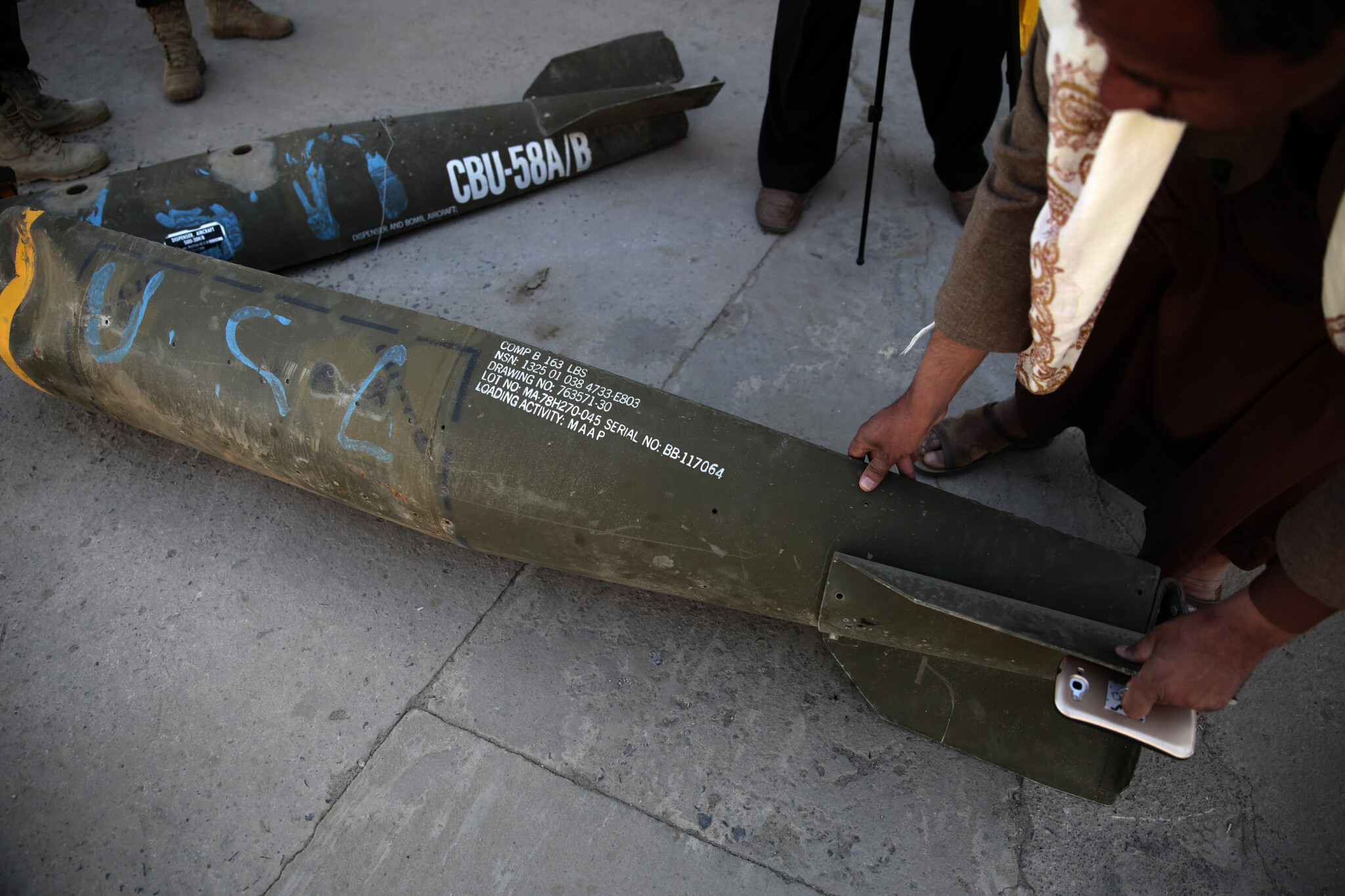
Iran’s deployment of cluster munitions against civilian areas has reignited fundamental disagreements among Canadian policy experts about whether international humanitarian law can meaningfully constrain state behaviour without enforceable authority.
Hub contributors Michal Cotler-Wunsh and Richard Marceau argued that Iran’s actions represent a clear breach of international law, while fellow contributor Stephen Staley questioned whether international law exists in any meaningful form, without a superior authority to enforce it.
“The use of cluster munitions against civilian population centres is therefore not simply reckless. It is unlawful,” argued Cotler-Wuns, a former Israeli legislator and special envoy for combating antisemitism, who is chief executive of the International Legal Forum and Marceau, a former member of Parliament, who is senior vice-president, strategic initiatives and general counsel at the Centre for Israel and Jewish Affairs, in their analysis of Iran’s recent attacks.

The debate highlights a critical enforcement gap in international humanitarian law. The 2008 Convention on Cluster Munitions prohibits the use, production, transfer, and stockpiling of these weapons due to their disproportionate impact on civilians. The weapons open up mid-air and release smaller explosives to target a wider area.
Neither Israel nor Iran signed that convention, creating a legal vacuum where non-signatory states operate outside established treaty frameworks, while still claiming protections under other international instruments.
Cotler-Wunsh and Marceau described devastating impacts from cluster munitions, including civilian deaths, damage to homes, neighbourhoods, and infrastructure, plus unexploded bomblets scattered in residential areas.
They criticized language that frames such attacks in general terms of “escalation” or “cycles of violence,” arguing that precision in identifying violations matters both on the battlefield and in public discourse.
“When civilians are deliberately or indiscriminately targeted, it is not a tragic byproduct of conflict. It is a deliberate violation of the law by genocidal terror proxies and their patrons that systematically trample it, while expecting to benefit from its protections and aid,” they argued

Their position faces direct challenge from The Hub’s director of Faultlines. Staley offers a broader critique of international legal frameworks.
“The cold reality is that rules only truly exist if a superior authority exists to impose them,” wrote Staley in a separate Hub commentary examining international law’s structural limitations.
Staley argued that apparent international law effectiveness has historically resulted from American power projection rather than genuine global legal authority.
“For much of the past 70 years, people convinced themselves that international law was real because it appeared to work,” he observed
This fundamental disagreement creates practical policy challenges for countries like Canada that have anchored foreign policy around strengthening the rules-based international order. Canada signed the Convention on Cluster Munitions and incorporated its prohibitions into domestic law, creating what Cotler-Wunsh and Marceau described as responsibility to speak clearly when international norms are breached.

But the enforcement dilemma becomes acute when dealing with non-signatory states like Iran, where traditional diplomatic and legal remedies prove inadequate. While treaties establish clear legal standards, their real-world impact faces increasing challenges from great power competition and weakening multilateral institutions.
Cotler-Wunsh and Marceau positioned Canada’s role as a champion of the rules-based international order as carrying specific obligations to respond when humanitarian law is breached, warning that silence and moral equivalence erode the legal framework Canada claims to uphold.
The debate exposes persistent questions about international humanitarian law’s practical effectiveness when enforcement depends primarily on voluntary compliance by signatory states and political consequences imposed by the international community. This leaves middle powers like Canada grappling with how to maintain credible deterrence against international law violations, when traditional enforcement mechanisms show clear limitations.
This story was edited using NewsBox AI.
The debate among Canadian policy experts regarding the effectiveness of international humanitarian law following Iran’s use of cluster munitions against civilian areas is heating up. Some argue that Iran’s actions are a clear violation of international law, specifically the 2008 Convention on Cluster Munitions, which prohibits the use, production, transfer, and stockpiling of these weapons. Others question the very existence of international law without a superior enforcing authority. The debate highlights the enforcement gap and the challenges faced by countries like Canada, which have anchored their foreign policy around strengthening the rules-based international order when dealing with non-signatory states.
Does Iran's use of cluster munitions undermine the credibility of international law? Why or why not?
What policy challenges does Iran's actions pose for countries like Canada, which champion the rules-based international order?
How does the debate over Iran's actions highlight the limitations of relying on voluntary compliance in international law?



Comments (0)