‘An entire generation disappeared’: Why Venezuela’s real reconstruction will take decades
Episode Description
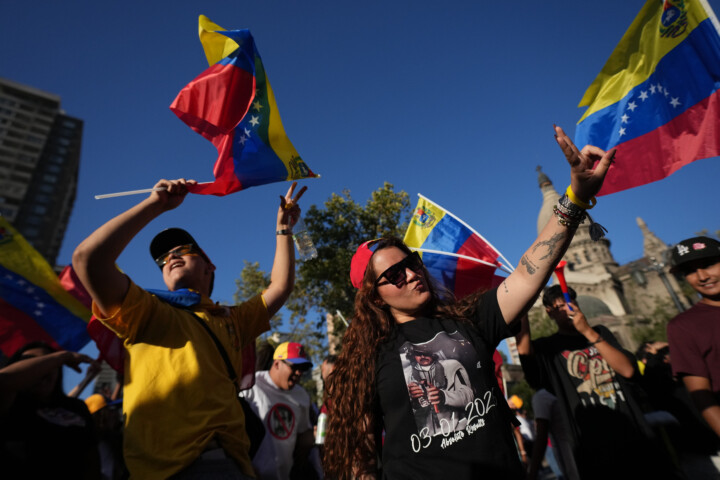
While international attention focuses on political upheaval and military threats surrounding Venezuela, a quieter crisis continues to unfold through one of the largest talent migrations in modern history. The exodus of millions of Venezuelans over recent decades has created diaspora communities worldwide, with significant concentrations in regions like Alberta’s energy sector, where Venezuelan petroleum engineers have become a familiar presence.
The departure of skilled professionals represents a critical dimension often overlooked in discussions about Venezuela’s future. Chemical engineers, energy specialists, and other technical experts who once formed the backbone of the country’s oil industry now contribute their expertise to economies abroad. This migration pattern reflects not just political instability but a fundamental collapse of the conditions necessary for professional and personal development.
The contrast between life in Venezuela and destination countries has become stark. Basic services that citizens in developed nations take for granted have deteriorated significantly. Public transportation systems, infrastructure maintenance, and everyday conveniences have degraded to levels that make routine activities challenging. The erosion extends beyond physical infrastructure to encompass broader quality of life indicators that drive migration decisions.
Recent political developments have sparked renewed discussion about restoring Venezuelan oil production and revitalizing the economy. However, optimistic projections about rapid recovery face substantial obstacles. Energy companies have already begun expressing reservations about the practical challenges involved. The human capital dimension presents a particularly complex problem that technical and financial solutions alone cannot address.

The roots of Venezuela’s decline trace back to institutional erosion and declining public trust in democratic systems. When citizens lose faith that hard work will lead to advancement or that their lives will surpass previous generations, the foundation for social stability weakens. This breakdown created conditions where populist appeals gained traction by promising solutions to legitimate grievances about inequality and opportunity.
The appeal of populist movements stemmed from real frustrations within Venezuelan society. Messages about redistribution and addressing economic disparities resonated with populations feeling left behind by existing systems. However, the implementation of these promises led to outcomes that accelerated rather than reversed the country’s decline, creating cycles of deterioration that proved difficult to escape.
For diaspora communities now established abroad, the question of return involves complex calculations. Many professionals have spent significant portions of their careers outside Venezuela, building lives and contributing to their adopted countries. The prospect of reversing this migration depends on more than political change or infrastructure investment. Restoring the conditions that make return attractive requires rebuilding trust, establishing stable institutions, and creating environments where professional development and quality of life can flourish.
The challenge of attracting back the most productive segments of the diaspora may prove more difficult than physical reconstruction. Professionals at career peaks represent exactly the talent base needed for genuine recovery, yet they also have the most to lose by returning prematurely. Their decisions will likely depend on sustained evidence of fundamental change rather than promises of rapid transformation.
This is an automated summary. Please check against delivery.
Venezuela’s collapse is often discussed in terms of oil production and geopolitics. Far less attention is paid to the human capital that left, and what that loss means for rebuilding the country.
In this episode of Alberta Edge, Venezuelan-Canadian engineer and University of Calgary energy researcher Luis Virla speaks with The Hub’s Falice Chin to explain how a socialist authoritarian government dismantled Venezuela’s institutions and hollowed out its economy. That collapse triggered a mass exodus of skilled workers, many of whom eventually rebuilt their careers in Canada, especially in Alberta’s energy sector.
Drawing on his own experience, Virla describes what daily life looks like inside a failed petro-state, and why restoring trust and talent in his home country may prove harder than restoring oil output.
This podcast is generously supported by Don Archibald. The Hub thanks him for his ongoing support.

Comments (1)
In the 2000’s and early ’10’s my company hired many dozens of Venezuelan expat professionals to assist with Oilsands development. In all, hundreds (at the very least) were hired into Calgary oilpatch firms. Consummate professionals all! A huge loss for Venezuela = a major gain for Alberta.