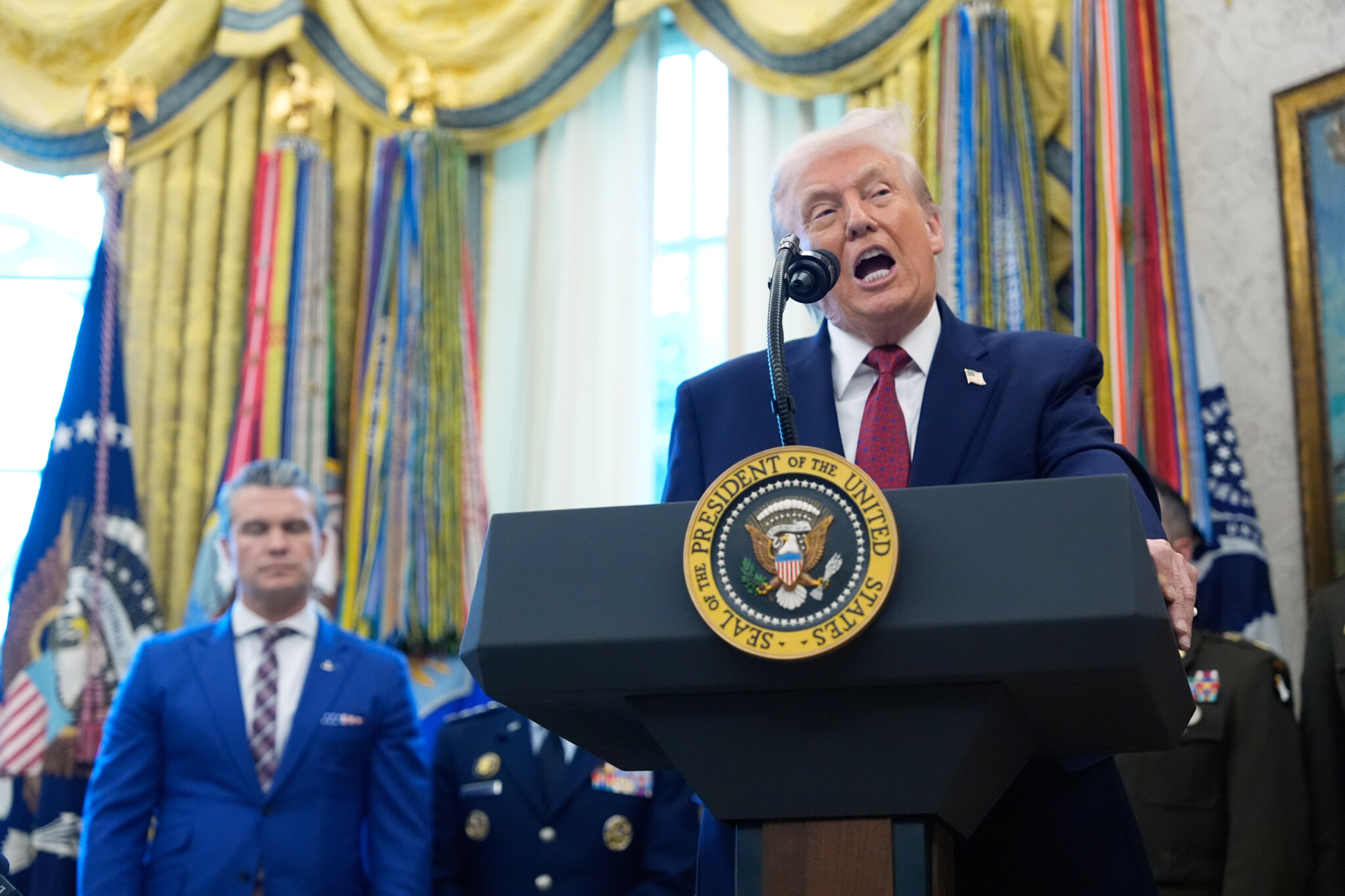
‘A more dangerous world’: America’s Venezuelan invasion—should Canada be worried?
Rudyard Griffiths and Sean Speer discuss the U.S. military’s incursion into Venezuela, the capture of dictator Nicolás Maduro, and its implications for a new world order. They examine whether President Trump’s actions signal a broader hemispheric strategy and the erosion of moral principles in U.S. foreign policy. They then explore historical parallels, the risks of great power conflict, and urgent policy recommendations involving Canadian sovereignty and security.
You can listen to this episode on Amazon, Apple, and Spotify.

Program Summary
This is an automated summary. Please check against delivery.
The United States military intervention in Venezuela over the weekend has sparked broader concerns about a fundamental shift in global geopolitics, with analysts suggesting the action may signal a return to 19th-century concepts of regional spheres of influence that could reshape international relations for years to come.
The intervention comes amid growing attention to the Trump administration’s recently released national security strategy, which articulates a hemispheric approach emphasizing American dominance throughout the Western Hemisphere. This doctrine appears to draw from the Monroe Doctrine, a 19th-century policy that asserted American primacy in the Americas, raising questions about whether the Venezuelan action represents an isolated incident or the beginning of a broader regional agenda.
The implications extend far beyond Venezuela itself. Political observers note that if the United States is establishing an explicit sphere of influence doctrine, it could fundamentally undermine the international order that has prevailed since World War II. Such a framework would implicitly legitimize similar actions by other major powers in their respective regions, potentially emboldening China in Asia and Russia in Eastern Europe.
This concern carries particular weight for American allies and partners worldwide. Taiwan, South Korea, Japan, and NATO members in the Baltic states could find themselves more vulnerable if the principle of spheres of influence becomes normalized in international relations. The precedent set by unilateral intervention in a sovereign nation’s affairs, regardless of the justification, could be replicated by other powers with fewer democratic credentials.
Canada faces unique vulnerabilities in this emerging framework. The country’s geographic proximity to the United States, combined with deep economic integration and asymmetric power dynamics, places it in an exposed position if American foreign policy continues along this trajectory. References to Greenland and other territories in recent presidential statements have heightened concerns about the scope of American ambitions in the hemisphere.
The domestic political response within the United States has been notably muted. Neither Democratic opposition nor the American public has mounted significant resistance to the Venezuelan intervention, suggesting broader acceptance of more assertive regional policies than might have been expected. This bipartisan acquiescence raises questions about whether such approaches might persist beyond the current administration.
Historical parallels offer cautionary lessons about spheres of influence systems. Such arrangements have repeatedly led to instability as smaller nations seek protection from rival powers, creating alliance networks that become flashpoints for great power conflict. The complex web of alliances that contributed to World War I demonstrates how regional tensions can escalate into broader conflagrations.
For Canadian policymakers, the situation demands strategic recalibration. Reducing asymmetric dependence on the United States through investments in Arctic security and economic diversification has become more urgent. The assumption that current policies represent temporary aberrations rather than durable shifts in American strategic thinking may prove dangerously complacent.

Comments (2)
Thx Zev will aim to do better in the future. 🙂