Welcome to Need to Know, The Hub’s twice-weekly roundup of expert insights into the biggest economic stories, political news, and policy developments Hub readers need to be keeping their eyes on.
Once again, domestic politics trump foreign policy considerations in Canada
By Wodek Szemberg, former broadcaster and publisher of The Idler, a literary and political monthly magazine
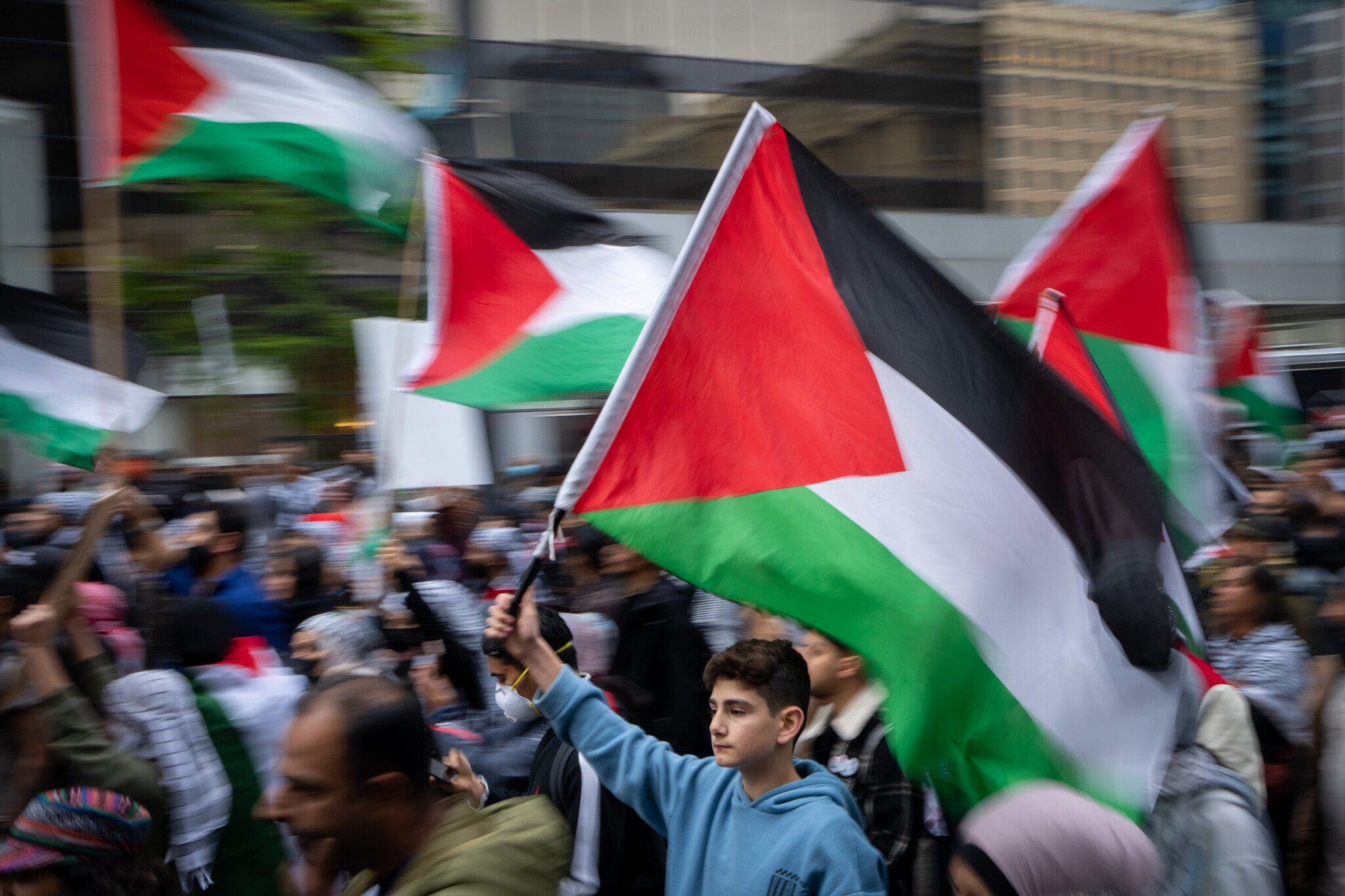
The Canadian prime minister sets impossible conditions for Canada’s recognition of a non-existent state of Palestine, and, lo and behold, a few days later, the Holocaust-denying President of the Palestinian Authority, Mahmoud Abbas, embraces them. During a meeting with Germany’s foreign minister in Ramallah, Abbas called for general elections that would exclude any factions unwilling to accept a demilitarized Palestinian state: “one state, one law, one legitimate weapon.” It was almost concept-for-concept the language Ottawa had just issued in its threat to Israel.
The conditions Canada has attached to the promise of recognition—democratic reforms by the Palestinian Authority, general elections in 2026 with Hamas banned, and the complete demilitarization of any “future” Palestinian state—make the recognition theoretical by design. Ottawa isn’t recognizing Palestine as it exists today; it is recognizing a Palestine that most likely will never exist at all, whose potential citizens are people who—within two months after the October 7 massacre—overwhelmingly (72 percent) called “the attack” “a good idea”; a figure that only fell to 50 percent this May.
Within hours of Abbas’ statement, Hamas and other armed factions rejected the plan outright, dismissing it as “a free service to the Zionist occupation.” The future Canada proposes to recognize is already playing out as theatre: Abbas auditioning for the responsible democratic statesman, Hamas taking its usual role as the implacable opposition, and Ottawa writing a script for a state that doesn’t exist under terms that have not been conceived of yet.
Lester Pearson, here I come.
It’s classic Canadian statecraft in the Mackenzie King tradition: “Recognition, if necessary, but not necessarily recognition.” We never miss the diplomatic train, especially when France and Britain are already aboard. We pose as even more principled than they are, while leaving the escape hatch wide open. The signal to Washington is unmistakable: this is theatre at a time when Trump himself is losing patience with Netanyahu. To Israel: You have 45 days to prove to us that you really mean to make peace and feed the hungry in Gaza. The signal to ourselves is even clearer: our national conscience is clean.
And the best thing about the recognition threat is that it brought about a new consensus on all things Middle Eastern in the Liberal caucus. The anti-Israeli wing of the party feels it has been heard. As much as Carney went out of his way to deny any domestic considerations, it’s impossible not to consider the telltale pull of domestic politics masquerading as foreign policy. Canada’s foreign policy increasingly relies on the support of the various ethnic demographics. Would Canada’s support for Ukraine have been as vocal—if not material—if Ukrainians in Canada were not 4 percent of the population? I wonder. Muslims make up roughly 5 percent of Canada’s population, Jews 1 percent. The arithmetic of suburban Toronto and Vancouver has become a quiet compass for Ottawa’s global positioning. In a decade, the share of the Muslim population is projected to rise to 8 percent while the Jewish percentage will remain the same. The two-state solution is not only being negotiated in the Middle East; it’s going to be arbitrated in the ridings across Canada. Do Canadian Jews have reason to fret? In the meantime, we can all rejoice in this most authentically Canadian foreign policy move imaginable: virtuous, hedged, and applauded by those who mistake signalling for action. There are a lot of ways Canada could help in the Middle East. Recognizing Palestinian statehood isn’t one of them By Dr. Casey Babb, director of the Promised Land project at the Macdonald-Laurier Institute Many have criticized Prime Minister Mark Carney’s decision to recognize Palestinian statehood, arguing that it rewards terrorism, prolongs the conflict, and blatantly disregards the feelings of Jewish Canadians. All of these points are valid. However, this foreign policy misstep is perhaps most injurious in that it completely undermines Ottawa’s relations with Jerusalem and Washington, D.C., at a time when strong international bonds are badly needed. From this perspective, it isn’t just that Canada is aimlessly watching the world change from the sidelines. It’s that we risk jeopardizing relations with our closest Middle Eastern ally amid an unprecedented period of regional transformation, while further sabotaging relations with America—the most important ally we’ve ever had. That said, it isn’t too late to turn things around. Going forward, Canada could and should stop with the theatrical political performances and focus on our strengths. For instance, we have a storied history and expertise in peacekeeping that could go a very long way in a place like Gaza. The same can be said for our work in contributing to the security of demilitarized zones— something we did, for instance, during the Korean War and Rwanda. Canada also has robust programs —comprised of multiple departments, agencies, and international partners—focused on conflict prevention and stabilization efforts in fragile and conflict-affected states. These programs and resources could benefit the lives of Israelis and Palestinians alike. Perhaps there’s even a role for our elite special forces, who are known to be some of the very best in the world. From supporting Israeli security and intelligence practitioners in securing the hostages, to persecuting those responsible for the murder of eight Canadians on October 7, 2023, to uprooting Hamas from Gaza, there may very well be opportunities for Canada’s military to put their expertise to good use. All told, Canada’s move to recognize Palestinian statehood is reckless and shortsighted. But the future of our foreign policy doesn’t need to be the same. Indeed, no one benefits from empty promises and hollow platitudes—least of all Palestinians. America’s Got Talent is more than just a TV show By Sean Speer, The Hub’s editor-at-large I admit it: I like America’s Got Talent. I also like American Idol. I watch both shows whenever I can, and I often find myself rewatching YouTube clips late at night—sometimes more than I’d care to admit. America’s Got Talent is now in its 20th season, and American Idol has been on the air for even longer. After all these years, they still draw me in. I’ve often wondered why. Part of it is simple sentimentality. I’m a sucker for Horatio Alger-style stories of people overcoming difficult circumstances and finding redemption on stage. A timid teenager who’s been bullied at school steps into the spotlight and delivers a performance that leaves the judges stunned. A middle-aged single mother with a beautiful voice finally gets her shot after decades of singing in church basements. I can’t help but fall for it. But I think the deeper reason is that these shows speak to one of my most strongly held beliefs: the importance of egalitarianism and meritocracy. I’m motivated by the idea that we should aspire to live in a society where genuine talent can thrive irrespective of where it resides. It shouldn’t matter if you grew up in a small town or an urban high-rise, or whether your family had wealth or connections. The opportunity to rise should be available to anyone with ability, determination, and a little luck. Our meritocracy isn’t perfect—as I’ve written before—but it’s better than we often give it credit for. One of my favourite moments from the last federal election was seeing Pierre Poilievre and Mark Carney vying to be prime minister. Whatever one thinks of their politics, both are genuine meritocrats. They climbed the ladder of social mobility based on intellect, ambition, hard work, and timing. It speaks well of Canada that people of such different, modest origins were competing for the country’s top job. Writers like Malcolm Gladwell and Cass Sunstein have explored the idea of “lost Einsteins”—talented people whose abilities go undiscovered because of the accidents of birth or circumstance. That, to me, is one of the greatest individual and collective losses. Forgone opportunity is perhaps the single most compelling reason to care about income and wealth inequality—not envy or redistribution, but the waste of human potential. Which brings me back to America’s Got Talent and American Idol. Yes, these are commercial shows designed to entertain and make money. But they also represent one of the purest forms of modern meritocracy. Personified by Susan Boyle—the shy, middle-aged woman from rural Scotland who stunned the world in Britain’s Got Talent’s third season—these stages offer obscure and unassuming people a shot at discovery. They’re entry points for the “lost Einsteins” of show business. And that’s why I like them. They are, in their own flashy, overproduced way, small sanctuaries of egalitarianism and meritocracy—reminders of the society we should aspire to be.
The Hub’s mission is to create and curate news, analysis, and insights about a dynamic and better future for Canada in a single online information source.