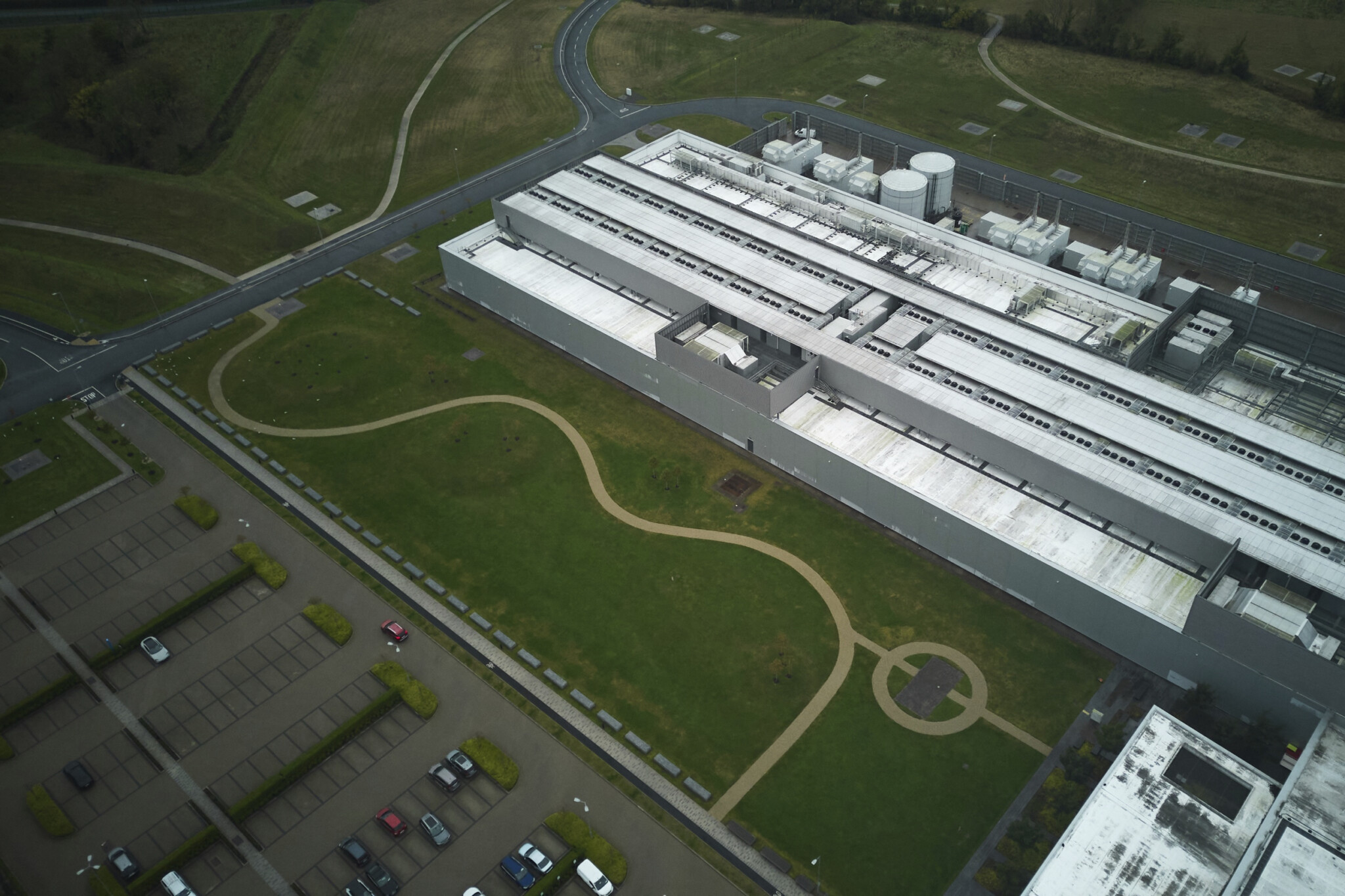
Alberta wants to be at the centre of the artificial intelligence arms race, but in order to achieve that dream, it will need to grapple with the physical limits of what it can power and sustain.
For all its advantages—vast swaths of land, an abundance of energy, rich technical know-how, and a deregulated electricity market—signficant challenges lie ahead.
“The scale of power being requested is unlike anything we’ve ever seen,” said Melanie Bayley, CEO of Energex Partners, an Alberta-based firm that advises investors, developers and utility companies on how to plan for large-scale energy infrastructure.
“Even if a fraction of these projects proceed, we’re talking about [nearly] double Alberta’s electricity demand,” she said.
According to the Alberta Electric System Operator (AESO), which manages and coordinates the province’s power grid, the demand for data centres has outpaced any other industrial operation of any kind.

Doubling demand as a starting point
As of late October, more than 21,000 megawatts of new load requests tied to AI and cloud computing facilities are on the AESO’s connection queue—roughly twice what the transmission system currently handles on a daily basis.
They include more than 30 proposed projects scattered across Alberta, from the Indigenous-led Mihta Askiy Data Centre, about 500 kilometres northwest of Edmonton, to the Newell Data Centre in Brooks, about 180 kilometres southeast of Calgary.
Excluded from that list is the motherlode of data centres—the latest moonshot from reality-TV capitalist Kevin O’Leary—the aptly named Wonder Valley, which he claims will sprawl over 3,000 hectares of land near Grande Prairie in northern Alberta.
Mr. Wonderful himself described the $70-billion proposed AI compute park as the largest project of its kind on Earth.
“We’re not talking about adding a few tech campuses. We’re talking about creating new industrial cities made entirely of servers,” commented Bayley, who previously served as president of ATCO Electric, which delivers electricity to more than 220,000 customers in Alberta.
Unlike most provinces, Alberta’s electricity system is not run by a Crown utility. The generation fleet operates under a fully deregulated, energy-only market, where private companies compete to sell power into a wholesale pool. Prices fluctuate hourly based on supply and demand, and no single public entity builds or guarantees new generation.
Robust as it may be, Alberta’s grid was built for industries and households whose electricity use ebbs and flows. Data farms, by contrast, draw thousands of megawatts around the clock.
“Alberta cannot possibly connect all those proposed data centre projects in the short term,” the CEO of the independent AESO, Aaron Engen, said in June.

Natural gas, geothermal, nuclear, and more
Nate Glubish, the province’s minister of technology and innovation, has been pitching the “bring your own power” model as a solution. The idea is to encourage developers to build their own generation rather than rely entirely on the provincial grid.
It fits neatly within Alberta’s free market ethos.
Ideas being floated include tapping into stranded natural gas reserves, experimenting with geothermal generation, and supplementing with wind and solar power.
However, developers would have to “overbuild” their systems to handle emergencies and downtime. Without a grid connection, each facility would require not only its primary source of power but a redundant backup supply.
“Behind-the-fence generation sounds independent, but every one of those facilities still depends on the grid,” Bayley said about the need for power backup and stability.
In practice, she noted most of the extra power would have to come from natural gas.
Premier Danielle Smith has also championed the idea of bringing nuclear power into the mix, investing public money and resources into studying the feasibility of small modular reactors. The technology remains years away from commercial deployment.
These challenges are not unique to Alberta. In fact, Budget 2025 makes clear that the competition for AI compute capacity is now a national economic priority—meaning the entire nation will need to build the supporting infrastructure at scale.

Grid impact on price, stability
An immediate concern is the impact on our electricity bills.
In the United States, a Bain analysis found that rising data-centre loads could push up electricity bills for consumers by about 1 percent annually through 2032.
“If you can imagine our demand suddenly doubled—and the market is based on supply and demand economics—you know what that’s going to do to the price,” Bayley said.
That risk is one reason the AESO has temporarily limited how much new data-centre load it will connect, as it works out a longer-term plan to ensure the grid can handle the jump.
What worries some experts isn’t just how Alberta will power these projects, but how it will govern them.
“Lots of provinces are rushing to provide incentives and tax breaks for companies who are setting up operations in Canada,” said Graham Reeder, an environmental lawyer with Gowling WLG.
“It’s an open question for me whether requiring an operation to pay for its electricity and water use up front will be waived in order to attract them as an incentive,” he said. “Then that cost gets passed on to the communities.”

Loads of uncertainty and incentives
What is clear is that there’s no shortage of money to get projects moving.
At the federal level, Ottawa’s Canadian Sovereign AI Compute Strategy pledged up to $2 billion to boost the country’s AI compute capacity. It is also developing a $15 billion co-investment fund to encourage Canadian pension funds to finance green-powered data centres, and a new federal tax incentive offers a 15 percent refundable credit on eligible low-carbon generation, storage, and transmission infrastructure.
Provinces like Quebec have gone further, layering targeted incentives to bolster AI projects.
Alberta’s approach is different, though it still prioritizes growth.
A modest 2 percent hardware levy for large data centres, set to take effect in 2026, will be offset by corporate tax credits—a way to reward long-term operators rather than short-term speculators.
“Back in the day, when a customer came along and connected to the grid, you could count on that customer being there for many, many years,” Bayley explained, adding that the grid may need new approaches to manage the uncertainty that comes with integrating such a new, large, and fast-moving industry.

One way to de-risk it, she said, is to cluster data centres rather than scatter them across the province.
“If you have to build transmission, [generation], or substations 10 different times, that’s a huge cost,” Bayley said. “But if you put them near each other or near existing industrial zones, you can share those assets and build smarter.”
She likened it to a “grid behind a grid,” where clustered data centres would draw from shared generation, only relying on the main grid for balancing and backup.
None of the current proposed sites on the AESO list are designed that way.
Long-term planning
For now, the AESO has capped near-term connections at about 1,200 megawatts—roughly a tenth of Alberta’s peak demand—reserving that limited capacity for the most advanced and financially secure developers.
Longer-term regulatory adjustments will likely require rewriting the rulebook—from how new lines are built to who pays for them.
The good news is that Alberta is already used to managing large industrial projects.
“Obviously, there are other resource-extraction activities that have a way bigger impact on the environment in Alberta that are highly complex,” said Reeder.
“It would be a shame if industry wants to come to our province and they can’t because we can’t provide them with energy,” Bayley said. “That’s what we do best.”
The Hub will publish a follow-up analysis about the land-use and socio-economic impact of data centres in Alberta next week.

Falice Chin is The Hub’s Alberta Bureau Chief. She has worked as a reporter, editor, podcast producer, and newsroom leader across Canada…
Can Alberta's grid truly handle an AI boom, or is it a pipe dream?
Is the 'bring your own power' model a sustainable solution for AI data centers?
What are the potential economic impacts of this AI boom on Albertans' electricity bills?







Comments (4)
Solid article. I would just add that NIMBY attitudes that are attributed to solar and wind power projects also applies to nuclear power and data centres. Conservatives and Liberals are equally NIMBY types, something that neither side acknowledges.
The federal government spending billions here and billions there on the next cool thing is why we are paying so much in interest payments now. Instead of making it easier to build, the attitude is to always throw money at the problem. The federal government does not even make the case that subsidies and the rest are necessary, they just assume it.