

In the Weekly Wrap, Sean Speer, our editor-at-large, analyses for Hub subscribers the big stories shaping politics, policy, and the economy in the week that was.
Dismiss populism at your own peril, politicians
Pollara Strategic Insight’s new research on populist sentiment in Canada offers a striking insight into the country’s political mood—and a challenge to the prevailing narrative that populism has little or no purchase in our politics.
The headline finding is that Canadians dislike the term “populism.” It evokes discomfort and even hostility. Just 4 percent of respondents express excitement when the term is used to describe a politician. In fact, “populist” ranks lower than virtually any other political descriptor that Pollara tested.
On its face, this would seem to confirm the conventional wisdom that Canada is inhospitable terrain for the populist style and message that have reshaped politics across Europe and the United States.
Yet this is only half the story. When Pollara moves beyond labels and asks Canadians how they actually feel about a series of propositions that are proxies for populist sentiment, the results flip. In some cases, they fully invert.

A remarkable 80 percent of Canadians agree that politicians should follow the will of the people. Sixty-eight percent believe elected officials are beholden to the top 1 percent. Sixty-six percent say politicians should listen less to experts and more to ordinary people. Nearly 60 percent believe citizens—not politicians—should make the country’s most important policy decisions. These aren’t marginal views. They are broad-based, cross-cutting, majoritarian intuitions about power and politics.
Pollara’s Andre Turcotte has aptly called this dynamic “Canada’s populist paradox”: Canadians dislike populism in theory but seemingly support it in practice. And if these are the numbers for the general population, one can reasonably assume they’re even higher among Conservatives, Western Canadians, and the politically disengaged.
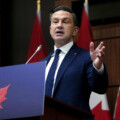
This should give pause to those who argue that Pierre Poilievre must distance himself from populist themes or moderate his tone to avoid alienating swing voters. The polling suggests something closer to the opposite. His sharper messages about gatekeepers, insiders, and unresponsive institutions may turn off the small minority that rejects these propositions. But for most of his supporters—and for many voters beyond the Conservative base—they’re a feature, not a bug.
The paradox, then, isn’t simply that Canadians reject populism as a label. It’s that they increasingly embrace the ideas and impulses beneath it. Canada may not have populists, but it plainly has populism. The political class dismisses that at its own risk.

Alberta’s health-care reforms are just the first step
The Smith government’s legislation to create a dual-practice model for physicians in Alberta—allowing doctors in the province to work both in the public and private systems—has been criticized on different grounds.
One of the more persistent claims is that it won’t make any difference because of a lack of doctors themselves. The argument is that, as a result, it will merely shift some procedures from the public to the private system without increasing the overall number of surgeries.
There’s no denying that Alberta, like other provinces, faces supply constraints in the short term. We have too few surgeons, too little operating-room time, and too much unmet demand.
Canadians dislike 'populism' but support its policies. Why the disconnect?
Will Alberta's dual-practice health model truly increase surgical capacity?
Are 'settled issues' in Canadian politics based on untested assumptions?





Comments (3)
The problem with populism is that the populists often are correct in diagnosing problems (or some of the problem) but often their solutions are worse than the status quo. The best leaders channel the populist frustration into progress.