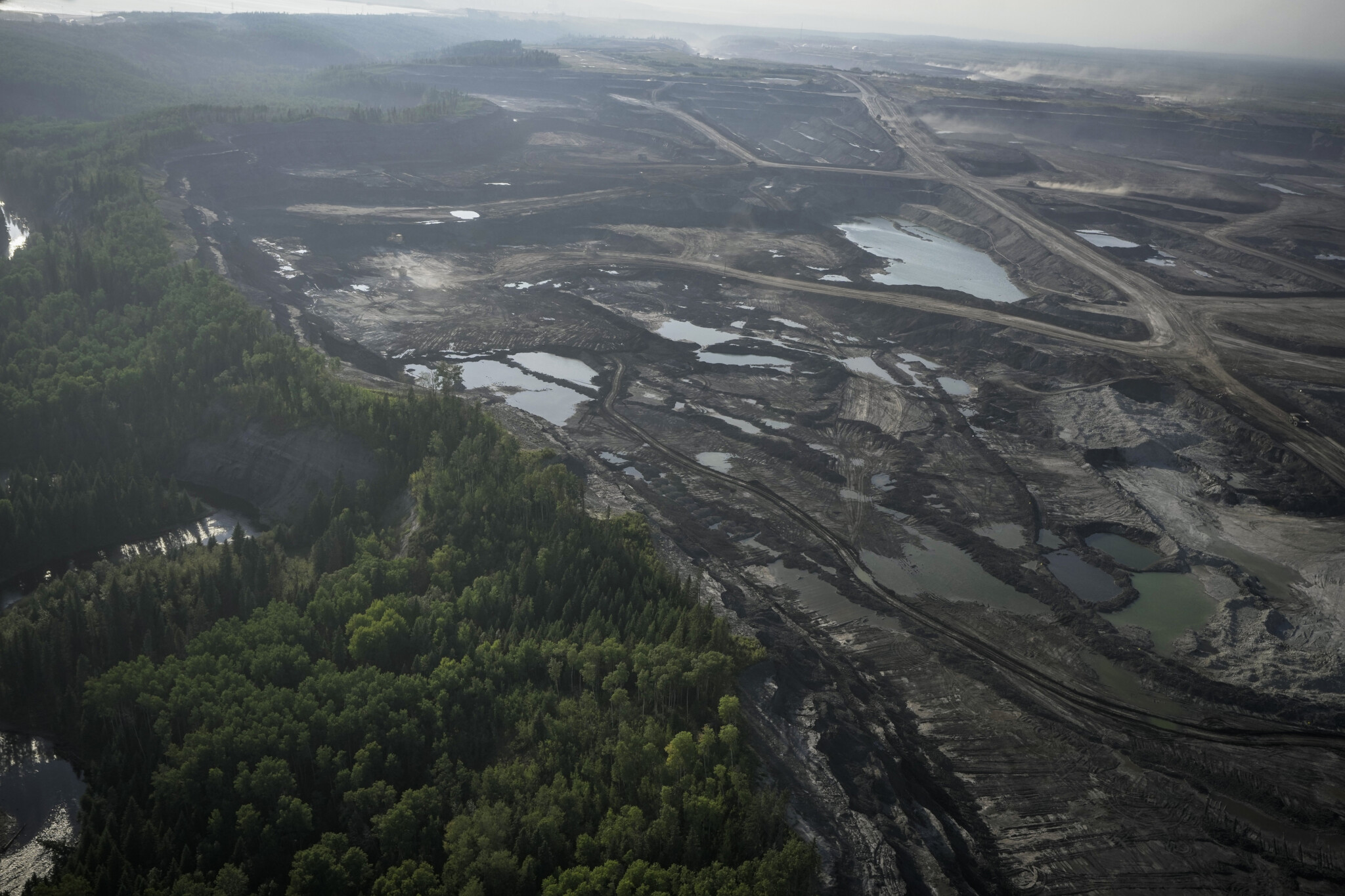
In a year packed with political drama, tech disruption, trade tensions and shifting global alliances, one business story stands out in Alberta: Cenovus Energy’s takeover of MEG Energy.
The $8.6-billion acquisition unfolded against the backdrop of a turbulent 12 months that saw Donald Trump renew U.S. tariff threats against Canada, a change in the federal government, and a subsequent energy truce that brought Ottawa and Alberta into rare alignment on a pathway to a new bitumen pipeline to the West Coast.
Taken together, these developments made energy the axis around which Canadians debated issues around our GDP, sovereignty, and global competitiveness in 2025.
And while the Cenovus-MEG deal was only a small piece of that broad economic story, it offers a revealing window into the state of Alberta’s oil and gas sector—where it’s heading, what it has become, and why the structure of the industry matters now more than ever.
“You’ve had a number of significant companies being put together to make even more significant companies on a go-forward basis, and a much more consolidated picture of the basin,” said Will Lacey, a former energy executive and analyst who now writes a popular Substack.
The MEG saga, which included a months-long takeover battle and a failed counter-bid from Strathcona Resources, is the latest expression of that trend.

The pattern has become so familiar in downtown Calgary, it has its own industry punchline.
“There was the running joke that one day everybody in the city is either going to be working for Mike or Murray,” Lacey said, referring to Tourmaline’s Mike Rose and Canadian Natural’s Murray Edwards.
Pathways Alliance becomes shorthand for oilsands oligopoly
In that vein, the MEG purchase marks yet another move away from the era of foreign majors, ambitious juniors, and the feverish rush to claim and exploit the world’s third-largest proven oil reserves.
What remains today is uniquely a Canadian story, where a handful of large, well-capitalized domestic operators—Cenovus, Canadian Natural (CNRL), Suncor, and a rising Strathcona—dominate the oilsands after years of buying the assets that the multinationals chose to shed.
The first three, along with the last foreign players still operating at scale—ConocoPhillips and Imperial Oil (nominally Canadian but majority-owned and directed by ExxonMobil)—have formed what is effectively an industry bloc in the Pathways Alliance. In fact, it bills itself as representing 95 percent of oilsands production.
There’s a word for that: oligopoly.
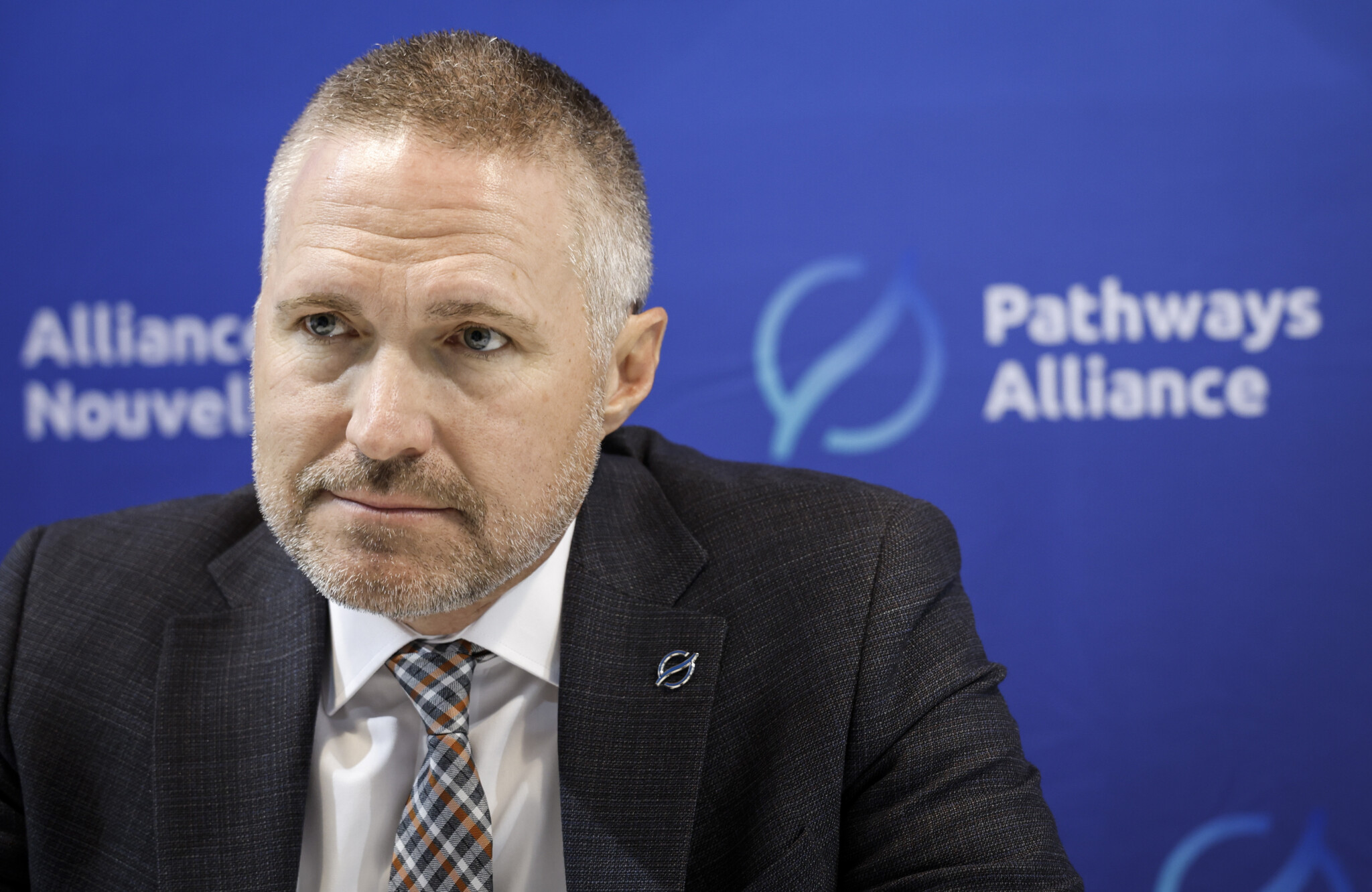
Pathways Alliance CEO Kendall Dilling is interviewed at the World Petroleum Congress in Calgary, Monday, Sept. 18, 2023. Jeff McIntosh/The Canadian Press.
“These companies have all their eggs in the oilsands basket,” said Richard Masson, an executive fellow with the University of Calgary’s School of Public Policy.
“Their success depends on it, and they understand it deeply,” he said.
For many, the term “oligopoly” evokes less-than-pleasant associations with the country’s telecom, airline, banking, and grocery sectors. These are industries where a small cluster of players limit our daily choices, set the boundaries of competition and price, and often dictate the pace of innovation.
Successive governments have, by and large, insulated entire sectors from disruption. Layers of regulations and approval regimes have at times entrenched incumbents, preventing new entrants from challenging the status quo.
Critics—including The Hub—have not been shy about pointing out the sclerosis that can take hold when markets consolidate too far.
But that’s not an accurate description of the oilsands oligopoly.
An industry shaped by outside pressures
For all the surface similarities—the concentration of a few, the disappearance of smaller competitors, and the feds now setting the terms by making the Pathways carbon capture project the premise for a new bitumen pipeline—the oilsands operate under a fundamentally different set of incentives.
That difference is anchored in the fact that every company, no matter how influential, is a price taker.
“Whether it’s for crude oil, bitumen, natural gas—pick your product—somebody else is setting that price for you,” Lacey said. “And so you’ve got to operate within that construct.”
Unlike telcos or grocery stores, Canada’s oilsands giants don’t sell to a protected domestic market. They operate in a brutal, global commodity system where prices are beyond Calgary or Ottawa’s control, and where inefficiency is punished instantly.
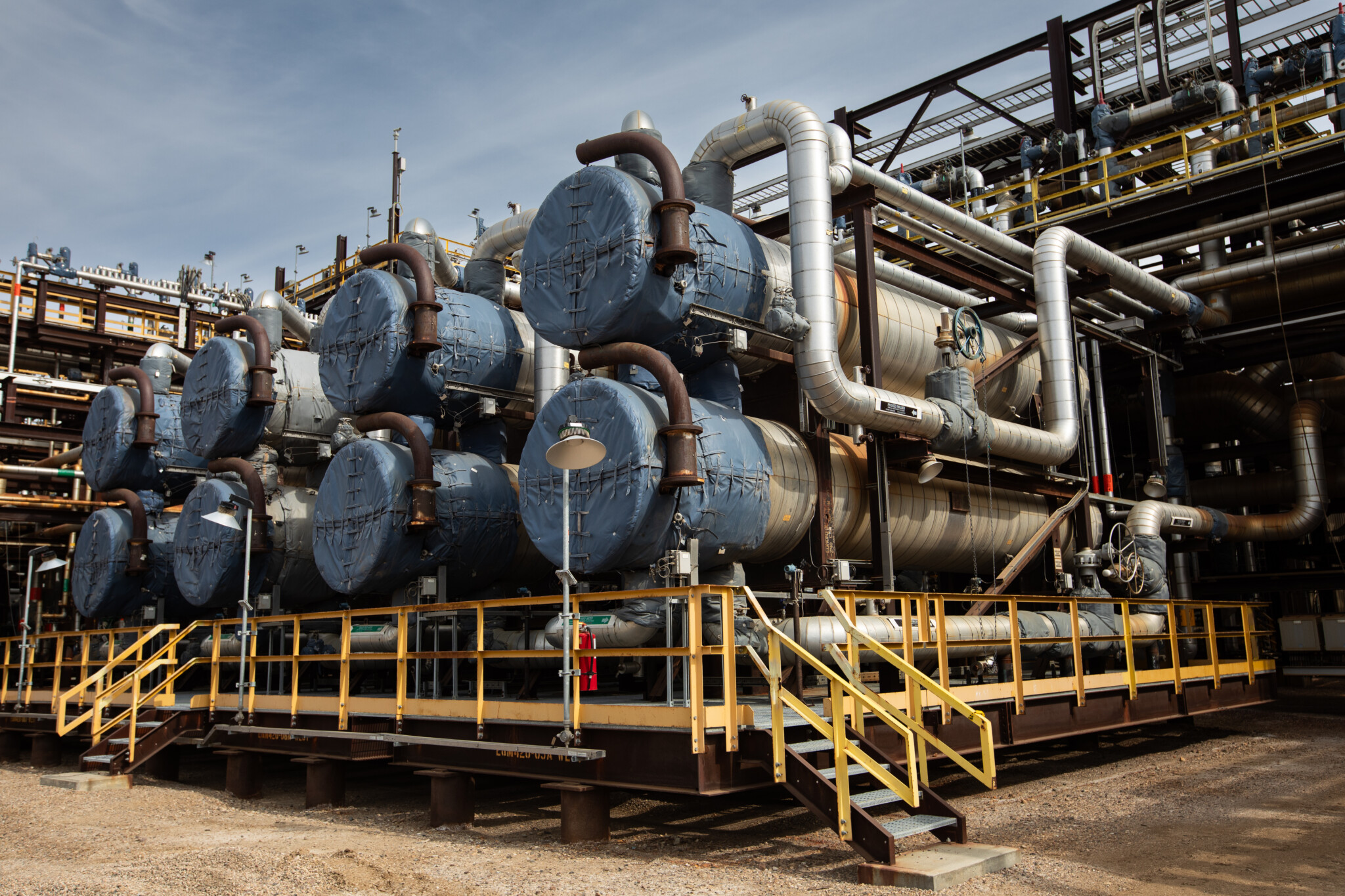
The plant—where steam is created, water is processed, and bitumen is diluted and prepared to go for further processing—at the Cenovus Christina Lake oilsands facility southeast of Fort McMurray, Alta., on Wednesday April, 24, 2024. The most current steam-assisted gravity drainage (SAGD) technology requires less energy per wellhead to harvest bitumen. Amber Bracken/The Canadian Press.
“If something goes wrong, if we don’t have enough market access, and the differential blows out by $10 a barrel, it makes a very big difference,” Masson said about profit margins. “So these companies are very, very focused.”
That reality has, over time, imposed a discipline bordering on obsession over costs, uptime, logistics, and incremental efficiency gains that have resulted in major innovations.
Today, the marginal oilsands barrel is no longer a $100 bet. Many operators peg the current break-even West Texas Intermediate benchmark price at around $40.
Multiple boom-bust cycles
For much of its early history, the oilsands were anything but a guaranteed success.
In the 1980s and early 1990s, the financial, technological, and even harsh boreal climate realities of northern Alberta were such formidable barriers to development that, as Masson recalls, the government’s primary objective was simply to prove there was a viable business case in the first place.
“There was a thing called the national oilsands task force that was put together by industry, working with the Alberta and federal governments, to standardize the fiscal terms for oilsands development,” said Masson, who was appointed to the task force in the mid-’90s.
“At the time, they said, ‘Our stretch goal is to reach 1.3 million barrels a day of production,’ which would have tripled output,” he said. “I remember thinking, ‘Holy cow! If we could do that, we would be so happy.’”
Today, Alberta’s oilsands output exceeds 3 million barrels a day.
A turning point happened in the late 1990s, when steam-assisted gravity drainage (SAGD) proved commercially viable in unlocking in-situ reservoirs far beyond the reach of mining. Combined with a more predictable royalty framework, the technology gave investors the confidence to scale up.
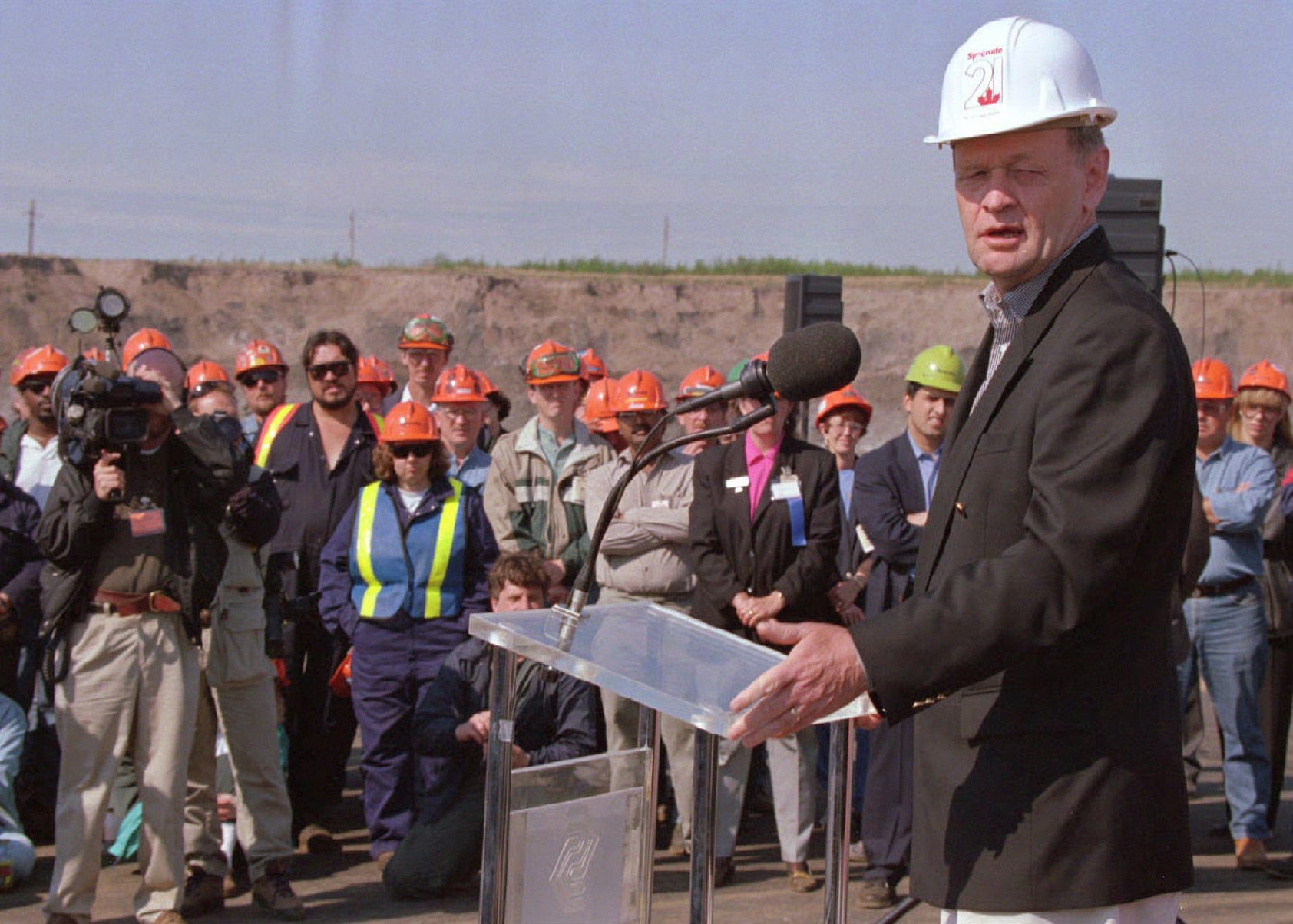
Prime Minister Jean Chretien talks to Syncrude workers at the open pit oilsands mine in Fort McMurray in 1996. The prime minister announced the signing of a $5-billion expansion in the oilsands by 18 of Canada’s largest oil companies. Dave Buston/The Canadian Press.
What followed was an extraordinary period of expansion in the 2000s, fuelled by surging global demand and oil prices.
But within a decade, the sector had become overheated.
Global majors like BP and Total, state-owned firms like Norway’s Statoil, and a wave of ambitious newcomers rushed to secure acreage and build projects, fueling what many Albertans still remember as the “good, ol’ days.”
Then came the crashes.
The global financial crisis in 2008 was an early warning, but it was the oil price collapse of 2014 that delivered the most lasting shock.
“If I was to try to reflect on the meltdown of oil prices from north of $100 coming way back down to earth, down to $40-$50 range, I would say…It was the worst of times, and it was the best of times for the business because it really did force a rethink,” Lacey said.
An exodus ensued, cheered by environmentalists who saw an obvious target in the oilsands.
Shell, Total, and Statoil cited capital discipline and shifting global priorities as reasons to retreat. U.S. firms like Devon sold assets and headed elsewhere.
Throughout this tumultuous period, Canadian firms like CNRL scooped up projects at a discount, refocusing the business on efficiency. Surviving long enough to drive costs down required precision, deep pockets, and an even deeper faith in the resource.
All the restructuring, paired with automation, triggered a brutal labour reset.
Between 2014 and 2019, Canada’s oil and gas downturn erased tens of thousands of jobs, many of which were high-paying. Various estimates suggest 53,000 direct jobs, and as many as 85,000 evaporated once the spill-over effects were accounted for.
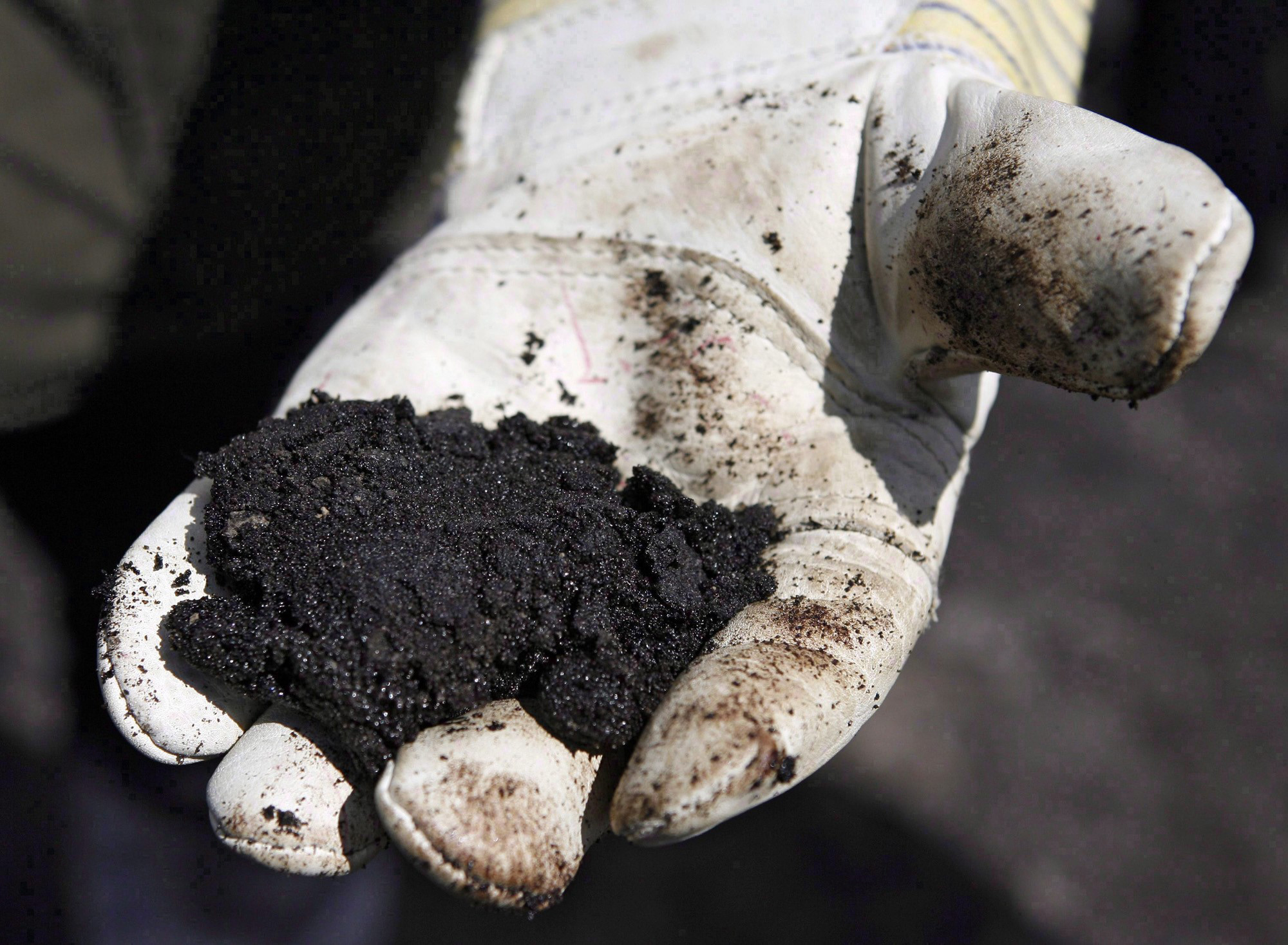
An oil worker holds raw sand bitumen near Fort McMurray, on July 9, 2008. Jeff McIntosh/The Canadian Press.
At the same time, policy shifts from Ottawa during the Justin Trudeau era often landed as salt in an open wound. Pipeline cancellations and abandonments, changing approval rules, net-zero targets, and prolonged regulatory uncertainty made it difficult for those inside the industry to disentangle market forces from political ones.
But out of that wreckage, a different industry emerged.
Leaner, more focused, and more “Canadian”
Stripped of excess, oilsands companies rebuilt around a narrower set of priorities involving far less tolerance for risk. Expansion shifted from sprawling greenfield megaprojects to incremental, brownfield additions.
That recalibration ultimately produced today’s oilsands oligopoly—a story shaped by resilience and survival, but also austerity.
Incredibly, public revenue from the sector rebounded—and then some. By Pathways Alliance’s estimate, oilsands extractions contribute roughly $35 billion a year in taxes and royalties.
Lacey has run his own numbers that put that scale in perspective.
“When I look at the big four banks in Canada, they made a contribution in current taxes last year of almost $14 billion,” he said. “Not an insignificant amount. But if you look at the big four oil companies in Canada—Canadian Natural, Cenovus, Imperial, Suncor—they contributed $22 billion during that same 12-month period.”
Of course, banks don’t pay resource rents on a finite public asset, nor do they face the same environmental and remediation obligations. But the comparison underscores the point that energy continues to underpin a huge share of Canada’s economy, in ways that are often overlooked.

Steam rises from office towers in the downtown as the temperatures dip below -25C and rush hour traffic is stalled in Calgary, Tuesday, Feb. 4, 2025. Jeff McIntosh/The Canadian Press.
Masson puts it in more personal terms.
“If I look back at the beginning, we would have said the Canadian dominance of the oilsands business was a huge goal,” Masson said. “We would be very happy with what has been achieved.”
More than a few who have left the oilpatch—including those who were squeezed out during the downturn—describe the end result, often with mixed emotions, as the “Canadianization” of the oilsands.
Consolidated energy superpower
Entry into the oilsands was never cheap, but the march toward oligopoly absorbed assets large and small across the value chain. The junior culture that once dominated downtown Calgary has thinned out substantially.
“Alberta actually has one of the highest unemployment rates [in the country]. I think that’s reflective of the fact that the oil and gas industry isn’t hiring people,” Lacey said.
There’s nothing to suggest the fallout from the Cenovus-MEG deal will be different.
“I guarantee you—they may switch some people around, there may be a few added people, but there will be layoffs,” Lacey concluded.
The chatter is already out there. A quick scan of industry forums and online discussions confirms a familiar undercurrent of anxiety about reorganizations and cuts.
It’s a byproduct of consolidation in any oligopoly, really.
And like other oligopolies, the oilsands’ structural advantages flow in no small part through the state. Producers operate largely on Crown land, pay royalties under a framework that was deliberately smoothed to encourage investment, rely on publicly funded infrastructure, and now sit at the centre of provincial and federal carbon capture incentives.
What is different on the other end is how the sector is deploying the advantages that come with owning the competition.
Unlike grocery chains, banks, telcos, or even airlines, the goal isn’t necessarily to extract more from Canadian consumers. Instead, the industry is positioning itself as an energy superpower on the global stage—increasingly coordinated and aligned.

Falice Chin is The Hub’s Alberta Bureau Chief. She has worked as a reporter, editor, podcast producer, and newsroom leader across Canada…
Why call the oilsands an “oligopoly," and how is it different from Canada’s other oligopolies?
If the industry is leaner and more profitable now, why are workers still losing jobs?
Just how “Canadian” is the oilsands industry today?






Comments (14)
Excellent piece.
Thank you.