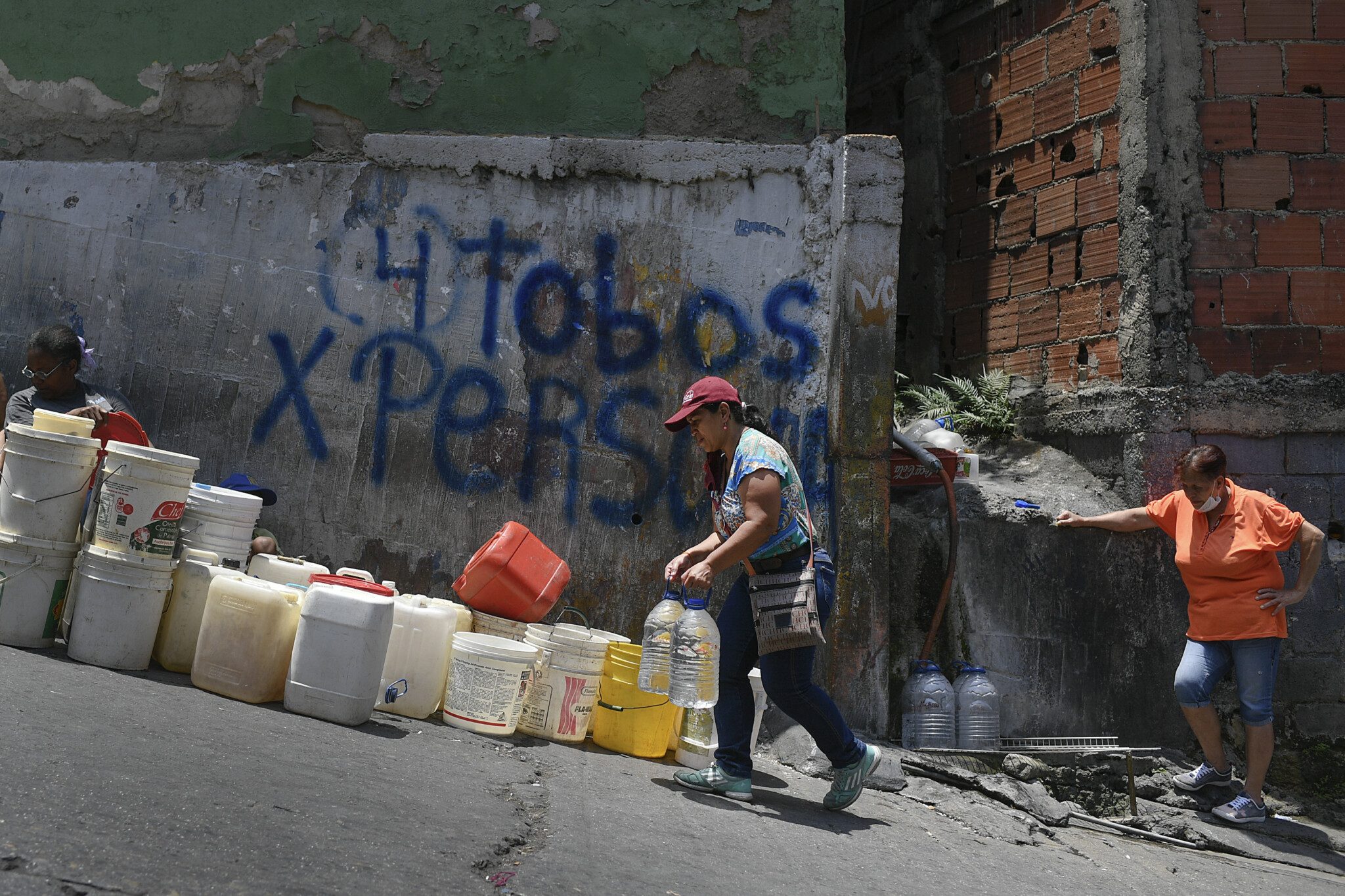
The swift removal of Venezuelan President Nicolás Maduro from power represents a dramatic revival of assertive American intervention in Latin America—a policy approach not seen in decades, according to historian Niall Ferguson. The operation, which Ferguson describes as a “surgical strike” comparable to America’s 1989 Panama invasion, but executed with far fewer troops, signals what he calls the “Trump Corollary” to the Monroe Doctrine.
Here are five key takeaways from his recent interview in The Free Press, analyzing the historical significance of the operation:
1. The Trump Corollary revives Theodore Roosevelt’s 1904 doctrine: Ferguson argues the Trump administration has explicitly resurrected the Roosevelt Corollary to the Monroe Doctrine, which asserted America’s right to remove Latin American governments it deemed problematic—a policy that had fallen into disuse for decades.
2. Non-intervention has produced worse outcomes than intervention: Comparing Cuba, Nicaragua, and Venezuela to countries like Chile, Ferguson contends that allowing leftist regimes to consolidate power has resulted in longer-lasting tyranny than the effects of U.S.-backed government transitions.
3. The operation demonstrates exceptional capabilities of U.S. special forces: The extraction of Maduro required remarkably few boots on the ground compared to the 27,000 troops needed to remove Panama’s dictator General Manuel Noriega in 1989, suggesting highly skilled covert operations.
4. Venezuela’s transition remains uncertain and challenging: The country faces a humanitarian crisis comparable to Syria’s, with millions displaced. Restoring democratic institutions and economic stability will require sustained commitment without large-scale military deployment.
5. This represents a broader shift to 19th-century realpolitik: Ferguson sees Trump’s approach—including openly acknowledging economic motives—as a return to pre-Second World War foreign policy norms, prioritizing American interests over the liberal international order.
The Trump Corollary revives Theodore Roosevelt’s 1904 doctrine
Ferguson traces the Venezuela intervention directly to language in the Trump administration’s National Security Strategy, released late last year.
“The most important thing about this document is what it says about the Trump Corollary and the Western Hemisphere,” the Hoover Institution senior fellow explained. The original 1904 Roosevelt Corollary gave the United States the right to intervene in Latin American affairs when it deemed necessary, becoming a strategy that shaped American foreign policy for decades.
Non-intervention has produced worse outcomes than intervention
Ferguson challenges the conventional liberal critique of U.S. interventionism in Latin America.
“When the United States has not intervened, and it has allowed leftist governments to gain a hold of power, the results have been terrible and terrible for a very long time,” he argued, citing Cuba’s half-century under Castro as the primary example.
Ferguson viewed the operation as a necessary correction after years of American passivity in the region.
“For me, it’s long overdue that the government in Venezuela of Nicolás Maduro is overthrown because for a quarter of a century, the Chavistas have been ransacking what was once a wealthy country and have turned it into a failed state.”
While he acknowledges the brutality of regimes like the Pinochet regime in Chile, which received forms of American backing, he notes a crucial difference.
“It didn’t last all that long, and it transitioned ultimately peacefully to democracy, leaving, incidentally, the Chilean economy as the strongest economy in the region.”
By contrast, he points out that Cuba, Nicaragua, and Venezuela have remained under authoritarian control for decades, with devastating humanitarian consequences.

The operation demonstrates the exceptional capabilities of U.S. special forces
The logistical achievement of removing Maduro, seemingly using only special forces and CIA operatives, suffering no casualties, impressed Ferguson from a military history perspective.
“It is remarkable that the [Venezuelan] president has been spirited out of his own country by helicopter and by boat to face justice in the United States,” he observed. “27,000 American troops were needed to achieve that operation [in 1989 Panama].”
“This was a highly successful covert operation, which bears comparison with a lot of covert operations in the history of CIA involvement in Latin America that did not go nearly as well,” Ferguson said, contrasting this weekend’s operation with major failures like the 1961 Bay of Pigs invasion, which claimed the lives of 114 American-backed Cuban exiles. As of today, Venezuelan officials report 40 were killed in the attack there, including military personnel and civilians.
Ferguson cautioned, however, that “no journalist ever accurately comments on a covert operation within 24 hours of its being executed.”
Venezuela’s transition remains uncertain and challenging
Despite the operation’s tactical success, Ferguson expressed concern about what comes next.
“A lot depends on what takes the place or who takes the place of Mr. Maduro,” he noted. Currently, Maduro’s vice-president, Delcy Rodriguez, is serving as interim president.
The historian also emphasized the scale of Venezuela’s collapse.
“The number of displaced people from Venezuela is comparable with the number who were displaced by the Syrian civil war.”
View reader comments (0)
However, he sees reason for optimism.
“There’s a memory, in other words, a Venezuelan middle class that remembers how to have something resembling the rule of law and democracy. And that makes it actually a brighter prospect than, say, Haiti.”
The challenge will be providing sufficient support without a large-scale U.S. military deployment—something Ferguson believes the administration wants to avoid, given Trump’s “forever wars” critique.
This represents a broader shift to 19th-century realpolitik
Ferguson sees Trump’s approach as fundamentally different from post-Second World War American foreign policy.
“Part of President Trump’s charm, if you want to use that word, is that there’s no hypocrisy. He doesn’t pretend to be motivated by a desire to build utopia,” Ferguson said. “He makes it clear that his foreign policy is heavily motivated by the profit motive.”
This extends to Trump’s openness about oil companies’ interest in Venezuelan resources.
“Donald Trump is a 19th-century figure who’s not outraged or scandalized by the idea that there might be some private economic motives involved,” Ferguson explained. The historian views this as “refreshingly honest” compared to the “high-minded” approach that he says left the U.S. with little economic benefit from Iraq intervention.
This commentary draws on a Free Press video. It was edited using AI. Full program here.
Does the 'Trump Corollary' signal a return to interventionist U.S. foreign policy in Latin America, and is this approach more effective than non-intervention?
What are the primary challenges Venezuela faces in its transition, and what lessons can be learned from past U.S. interventions?
How does Niall Ferguson characterize Trump's foreign policy approach, and what does this mean for the future of international relations?

Comments (0)