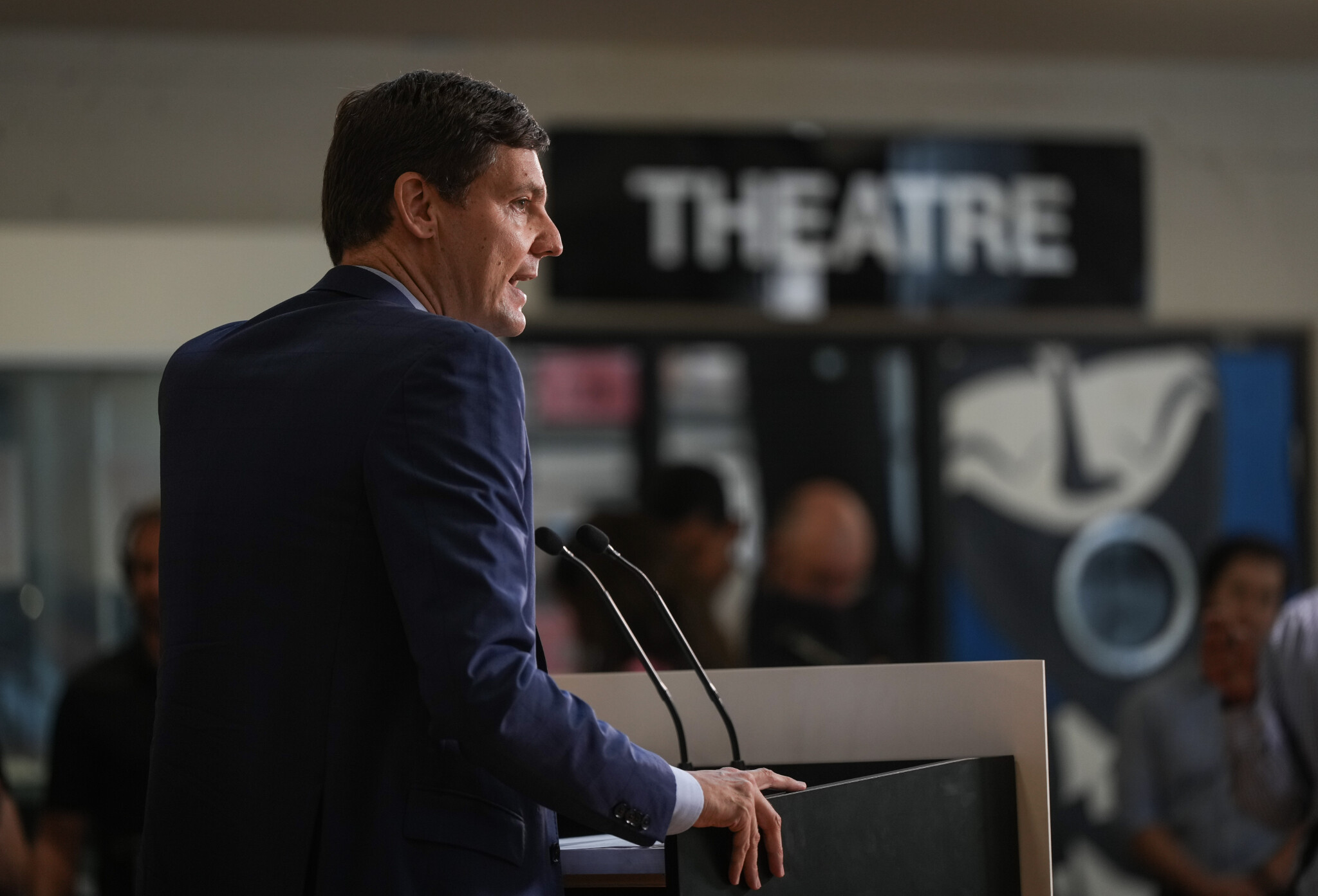
If David Eby is serious about his latest suggestion that tax dollars should be used to build a Canadian refinery, then it follows that the B.C. premier must also be open to a pipeline or two. And, presumably, lifting the tanker ban.
Because fuels—raw, upgraded, or refined—don’t move themselves.
“It’s like, OK, what should we build? The socket or the plug? One doesn’t really work without the other,” said Keerit Jutla, CEO of Jutla Strategies, who previously worked for the B.C. government.
“If you’re building the asset where more resources are going to be refined, you’re also acknowledging that you would need the transport hubs to get oil from A to B so that it can be shipped by tanker in a different refined form.”
It’s a fair logistical point. Refineries don’t replace pipelines. If anything, they intensify the need for them.
Last week, amid great uncertainty over what a potential surge in Venezuelan oil production could mean for Canadian crude, Alberta Premier Danielle Smith argued that the situation only heightens the urgency of securing new market access via a new pipeline to the West Coast.
Eby’s response was to pivot the conversation elsewhere.
“If we’ve got tens of billions of dollars to spend, I think we should spend it on a refinery, and we should develop oil products for Canadians and for export, instead of being reliant on American and Chinese refineries to do it for us,” Eby said.
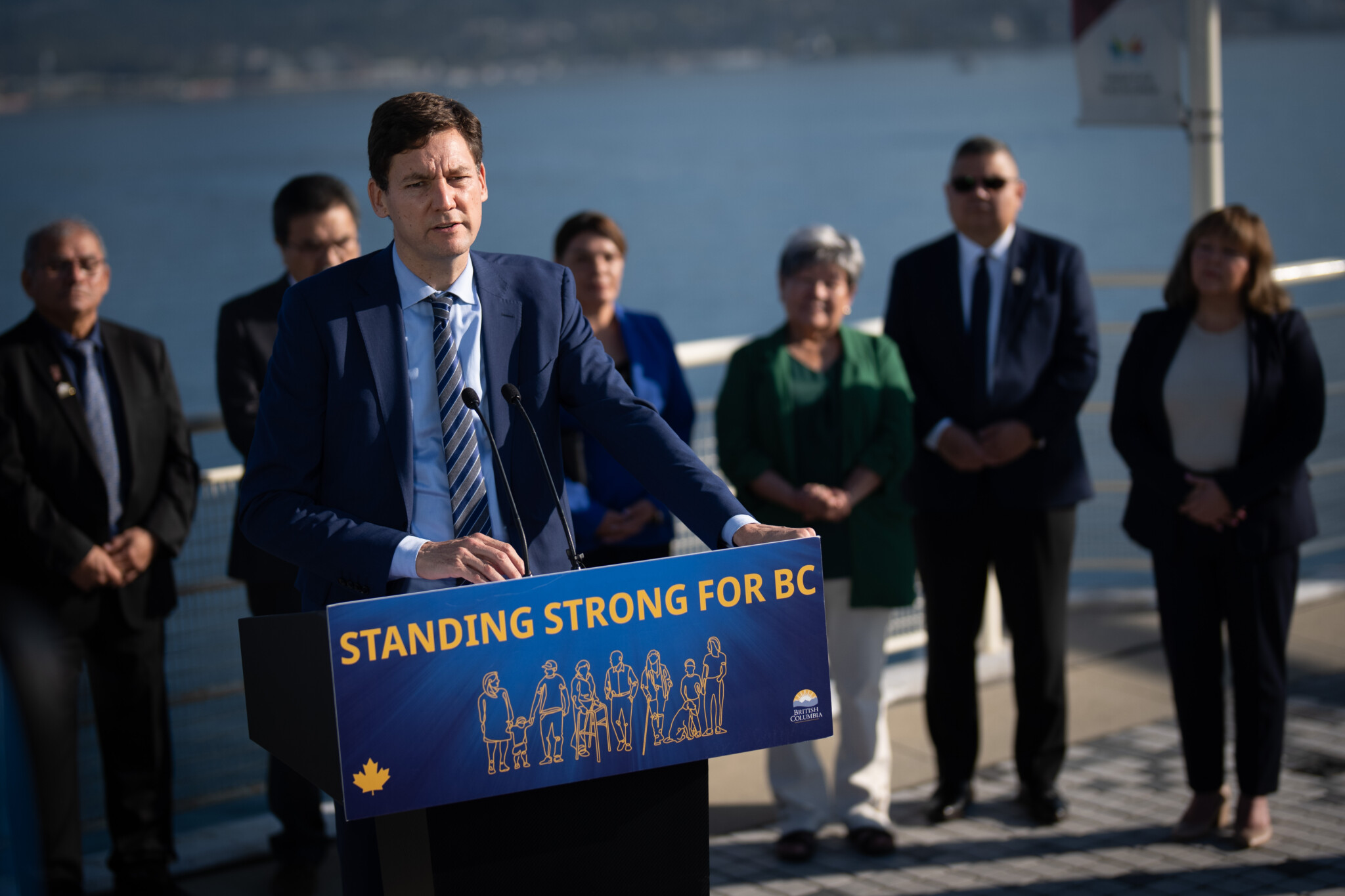
B.C. Premier David Eby, speaks during a Ksi Lisims LNG announcement of an environmental assessment certificate from the Government of British Columbia in Vancouver, on Tuesday, Sept. 16, 2025. Ethan Cairns/The Canadian Press.
It’s an old idea, and a familiar one among New Democrats.
“This was one of the predictable responses that has come out of many NDP governments,” said Jutla. “I remember the last iteration of the pipeline discussion was, ‘Well, why don’t we have refineries here?’”
Refineries are money pits
Refineries are among the most capital-intensive pieces of energy infrastructure we can build in Canada. The costs would run in the billions, with long construction timelines, and notoriously thin margins once they’re operating.
They take on price risks across multiple outputs. Gasoline, diesel, jet fuel, and naphtha all fluctuate independently.
But location matters even more.
As former Alberta energy minister Sonya Savage explained rather exasperatedly on the CBC’s West of Centre podcast, refineries only make sense when they sit close to large, stable pools of end users.
“So the refineries are built in the United States, because that’s where the largest market for refined products are,” she said last Friday. “We have huge refinery complexes now in Asia and other parts of the world—because that’s where the population is.”
That’s why the “just build refineries” argument resurfaces whenever pipelines become politically inconvenient, and disappears the moment investors start running the numbers.
“He can’t be that energy illiterate,” said Savage, concluding that at this point, the B.C. premier should just “back out of the conversation.”
Who are the customers?
Susan Bell, an expert on crude and refined product markets at Rystad Energy, put the global context bluntly.
“If you were to build a refinery in British Columbia to produce gasoline and diesel, who are you going to sell it to?” Bell asked.
She said North America is already straddling the line between balanced and long on products, which is just market shorthand for oversupplied.
“So it doesn’t make sense to make more products into a market that’s already long,” Bell concluded.
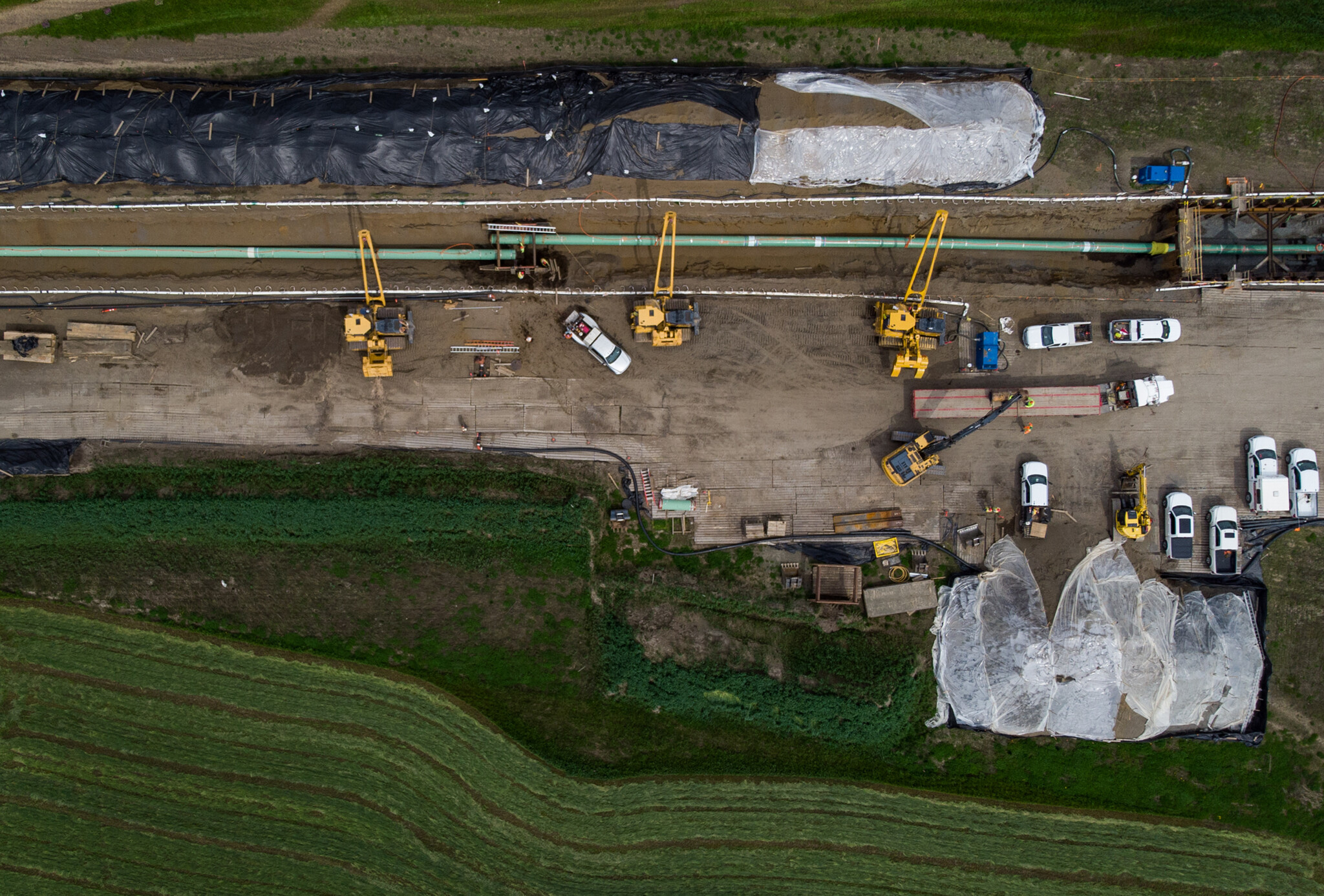
Workers lay pipe during construction of the Trans Mountain pipeline expansion on farmland, in Abbotsford, B.C., on Wednesday, May 3, 2023. Darryl Dyck/The Canadian Press.
Eby did seem to imagine Canadians as the main customer, with the idea that a refinery would displace gasoline and diesel imports from the U.S. But any government or firm willing to sink billions on such a facility would want the option to sell wherever the market allows.
And once exports enter the equation, we’re potentially back in tanker politics over the B.C. North Coast, where a moratorium restricts crude and other “persistent” oil.
Unless, of course, the premier wants all exports to be diverted through the Vancouver area, using only existing infrastructure, with no options to expand.
How else to move forward?
“I don’t know what the vision is,” Jutla said. “You know, B.C.-designed EV vehicles to transport bitumen from Fort McMurray to this refinery, wherever it’s built—and then, I don’t know, EV ships?”
He went on to evoke a line from Zoolander, delivered by Will Ferrell’s character Mugatu.
“It’s like that scene where he says, ‘I feel like I’m taking crazy pills,’” Jutla said. “All of the math—everything—is so clear cut.”
So yes. If Eby wants a refinery, he also wants a pipeline.
Great. Glad we cleared that up.

Falice Chin is The Hub’s Alberta Bureau Chief. She has worked as a reporter, editor, podcast producer, and newsroom leader across Canada…
British Columbia Premier David Eby’s suggestion to use tax dollars for a Canadian refinery logically implies a need for pipelines and the lifting of tanker bans. Experts highlight that refineries don’t replace pipelines but intensify their necessity, and that building them without proximity to large, stable markets is financially unsound. The capital-intensive nature of refineries, their thin operating margins, and the global oversupply of refined products make the “just build refineries” argument politically convenient but economically illogical.
If building a refinery necessitates pipelines, why does the idea of refineries resurface when pipeline discussions become politically difficult?
What are the primary economic challenges associated with building and operating refineries in Canada, according to the article?
Given North America's current product supply, who would be the primary customers for a new refinery built in British Columbia?






Comments (15)
Good points.
I have to think the “build refineries” option presented is a disingenuous to deflect the pipeline debate with misinformation. The NDP has repeatedly brought this option up to make it sound like they aren’t opposed to economic development when they know full well these refineries would never be built.
If “We” refers to a group that includes David Eby or BC taxpayers, then “We” don’t have “tens of billions of dollars to spend” on a refinery. This only makes sense if you believe that Central Planning is the only way to allocate capital. The NDP also likes to frame this as creating more “value added” jobs. But we don’t try to apply this same logic to restrict exports of wheat.