
Fault Lines examines the pressures pulling Canadian society apart and the principles that can hold it together. We look beyond headlines to understand how institutions, communities, and democratic norms are fraying. Our mission is to show how better choices can repair what is broken.
Genocide no longer functions primarily as a legal category. It has become a symbolic designation—determining who may appear as a legitimate victim of absolute evil, and who must be cast as its permanent perpetrator.
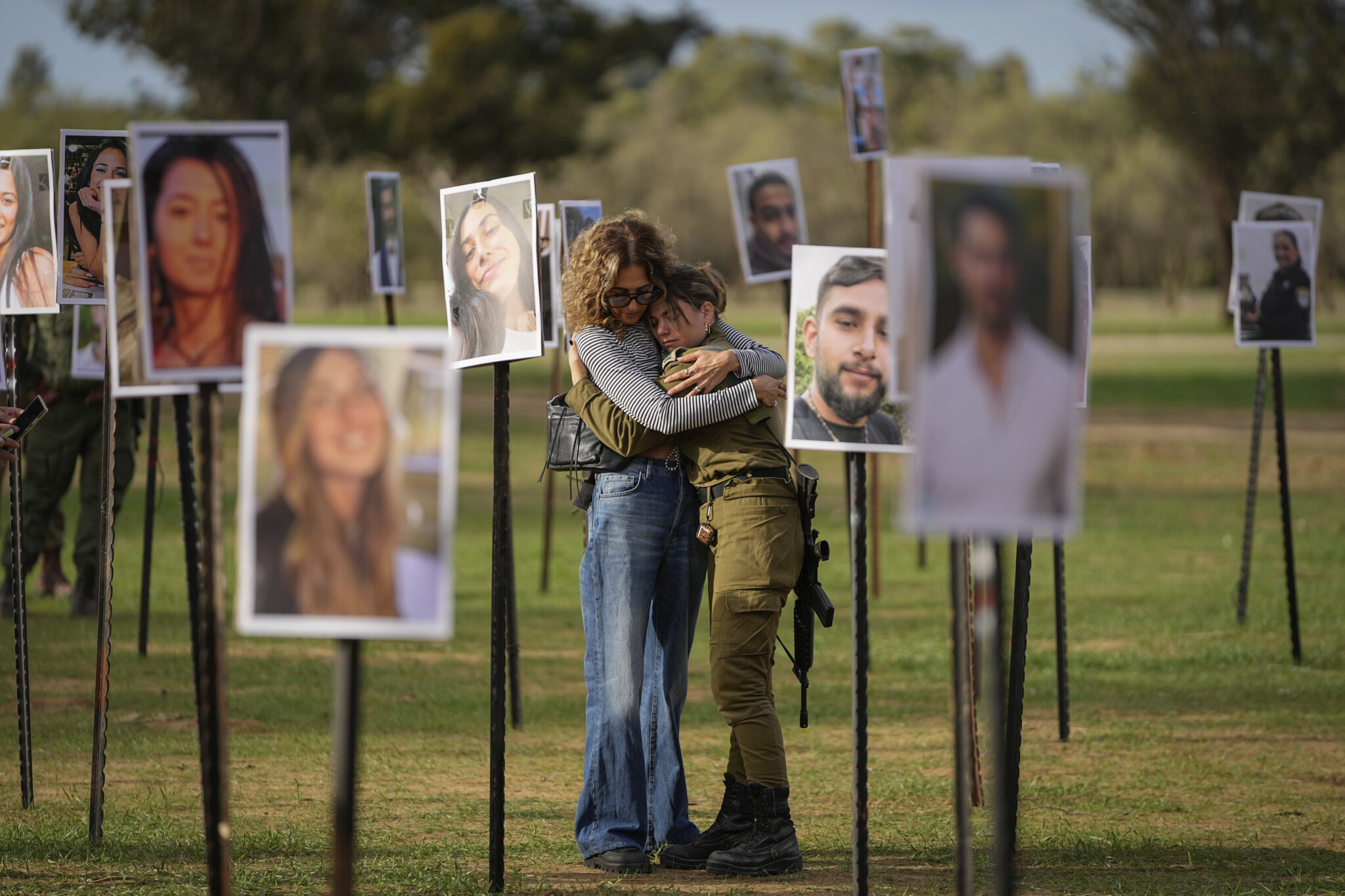
It is in this context that Amnesty International—a human rights organization increasingly criticized for selective advocacy—recently released its long-anticipated report on the crimes committed by Hamas during its October 7th, 2023, attack on Israeli civilians.
Reporting from The Free Press showed Amnesty International chose not to publish its report on Hamas’ October 7th attack during the war out of concern that doing so might benefit Israel. When the delayed report was finally released after the ceasefire, the organization documented the mass murder of civilians but stayed silent on the question of whether Hamas’s actions constituted genocide. Instead, it classified the attack as “extermination”—a crime against humanity, but not genocide.
Some hesitation in naming October 7th a genocide—even among observers not invested in the demonization of Israel—is understandable, and in certain respects warranted. After more than a year in which the term has been aggressively diluted, stretched, and politicized in efforts to apply it to Israel, many are understandably reluctant to participate in a further erosion of its meaning.
Strictly speaking, however, genocide does not require completion. Where genocidal intent (mens rea, dolus specialis) is openly declared, and mass civilian slaughter (actus reus) is carried out in pursuit of that intent, the crime is therefore established under international law, regardless of whether it is ultimately successful.

Hamas’ intent was clear
Hamas has expressed genocidal intent in numerous respects. Its leaders and clerics regularly cite the infamous hadith that portrays the end-times killing of Jews as total and inescapable: “The rocks and trees will say: O Muslim, O servant of Allah, there is a Jew behind me—come and kill him.” Found in Sahih Muslim, this hadith has long functioned as a stock trope in modern jihadism. It was already mobilized by Haj Amin al-Husseini, the Grand Mufti of Jerusalem, in speeches in the late 1930s that fused Islamic eschatology with genocidal incitement against Jews. In the decades since, it has been repeatedly invoked by jihadist movements, including Hamas, ISIS, and al-Qaeda, as scriptural authorization for the murder of Jews and Israelis. Variants of the same motif have also appeared in sermons and public statements by influential religious authorities aligned with Islamist politics, including figures associated with Egypt’s al-Azhar establishment, such as Muhammad Sayyid Tantawi, as well as media clerics like the Qatar-based Yusuf al-Qaradawi.
On November 1, 2023, Ghazi Hamad, a senior member of Hamas’ political bureau, stated in a televised interview that the October 7th massacre was “just the first time,” adding that there would be “a second, a third, a fourth” until Israel was eliminated. As Israeli legal scholar Avraham Shalev has shown in a detailed legal analysis, this combination of declared intent to annihilate Israeli Jews and mass civilian slaughter straightforwardly satisfies the U.N’s Genocide Convention.
Amnesty International has refused to label Hamas’s October 7th attack as genocide, arguing that the organization’s stance is politically motivated and undermines the legal definition of the crime. However, it can be argued that Hamas’s declared genocidal intent, coupled with mass civilian slaughter, meets the criteria for genocide under international law. Amnesty applies a “dual intent” standard to Israel, which it deems incoherent, and for selectively interpreting evidence to accuse Israel while downplaying Hamas’s actions. This serves a narrative that casts Israel as uniquely criminal and perpetuates anti-Jewish violence.
Why does Amnesty International's classification of Hamas's actions as 'extermination' instead of genocide spark debate?
How does the article suggest the term 'genocide' has become politicized, particularly concerning Israel?
What is the article's core argument regarding the 'collapse of reason' in discussions about genocide accusations?







Comments (13)
I agree with most everything here and applaud The Hub for engaging with this issue in such depth. The term “genocide” has been badly cheapened by those who use it to describe Israel’s defensive war.
If the war in Gaza were a genocide, then every war would be a genocide. Using the word this way drains it of meaning and disrespects the true victims of genocide. Genocide is not synonymous with “a deadly war I oppose.” For that reason, I avoid the tit-for-tat use of the term to describe other conflicts that Hamas supporters routinely ignore.
I was reminded of this recently when I saw a meme from an Israeli activist I greatly respect that referred to the slaughter of Iranian protesters as “genocide,” meant to highlight the hypocrisy of Hamas cheerleaders in the West. While I agree with the moral outrage behind the message, I do not think that label is accurate or appropriate for what is happening in Iran.
When it comes to October 7th, I truly believe it was an atrocity with genocidal intent — an attempted genocide. But they failed, and for me there’s a distinction.