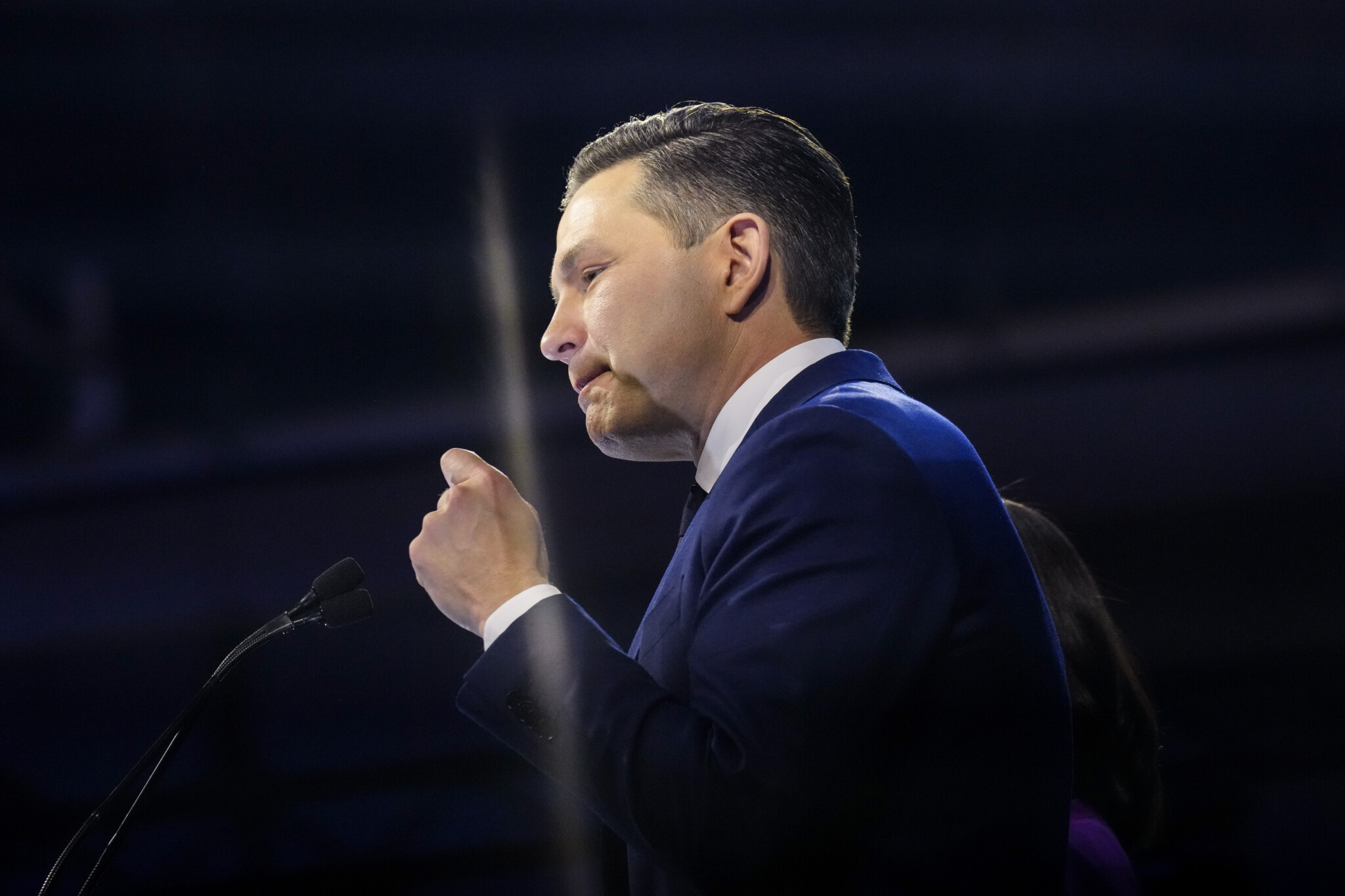
As Conservative delegates prepare to vote on Pierre Poilievre’s leadership in Calgary, the public debate has centred on falling favourability ratings and a handful of high-profile caucus exits.
Inside the party, however, former Conservative executive director Ian Brodie says those are sideshows. The leadership review, he argues, will be decided by institutional mechanics and a delegate base far more concerned with consolidating authority than indulging internal drama.
Brodie, who also served as chief of staff to former prime minister Stephen Harper from 2006 to 2008, compared this upcoming weekend to the party’s 2005 leadership review following Harper’s first election loss, which focused on discipline and closure.
Even so, he cautioned that secret ballot votes can produce surprises.

The 2026 Conservative convention is set to take place at Calgary’s BMO Centre on Stampede grounds. Credit: Calgary Stampede.
Here are eight things to pay attention to when the convention kicks off Thursday:
1. This is not a public referendum
The leadership review will be decided by convention delegates chosen by their riding associations, not by party members at large, and certainly not by the broader electorate.
Each riding carries equal weight, regardless of size, giving disproportionate influence to politically engaged activists rather than casual supporters. Brodie stresses that this institutional design explains why leadership reviews often diverge sharply from public polling.
“These are not just people who signed up, took out a $10 or $20 membership to vote in a leadership vote,” Brodie explained. “These are people who have a longer-term commitment to the party.”
2. Poilievre is his own benchmark
While Poilievre technically needs only 50 percent plus one to remain leader, such a narrow result would amount to political failure.
Leadership reviews are judged against expectations. As such, Poilievre has set the bar high.
In 2022, he clinched the party’s leadership on the first ballot with a commanding margin, winning more than 68 percent of the available points and sweeping nearly every riding. Coupled with the party’s strongest popular vote performance in a generation last year—and the absence of any credible challenger—that history has only raised the standard that delegates will use to assess his mandate.
3. Convention designed to signal discipline and unity
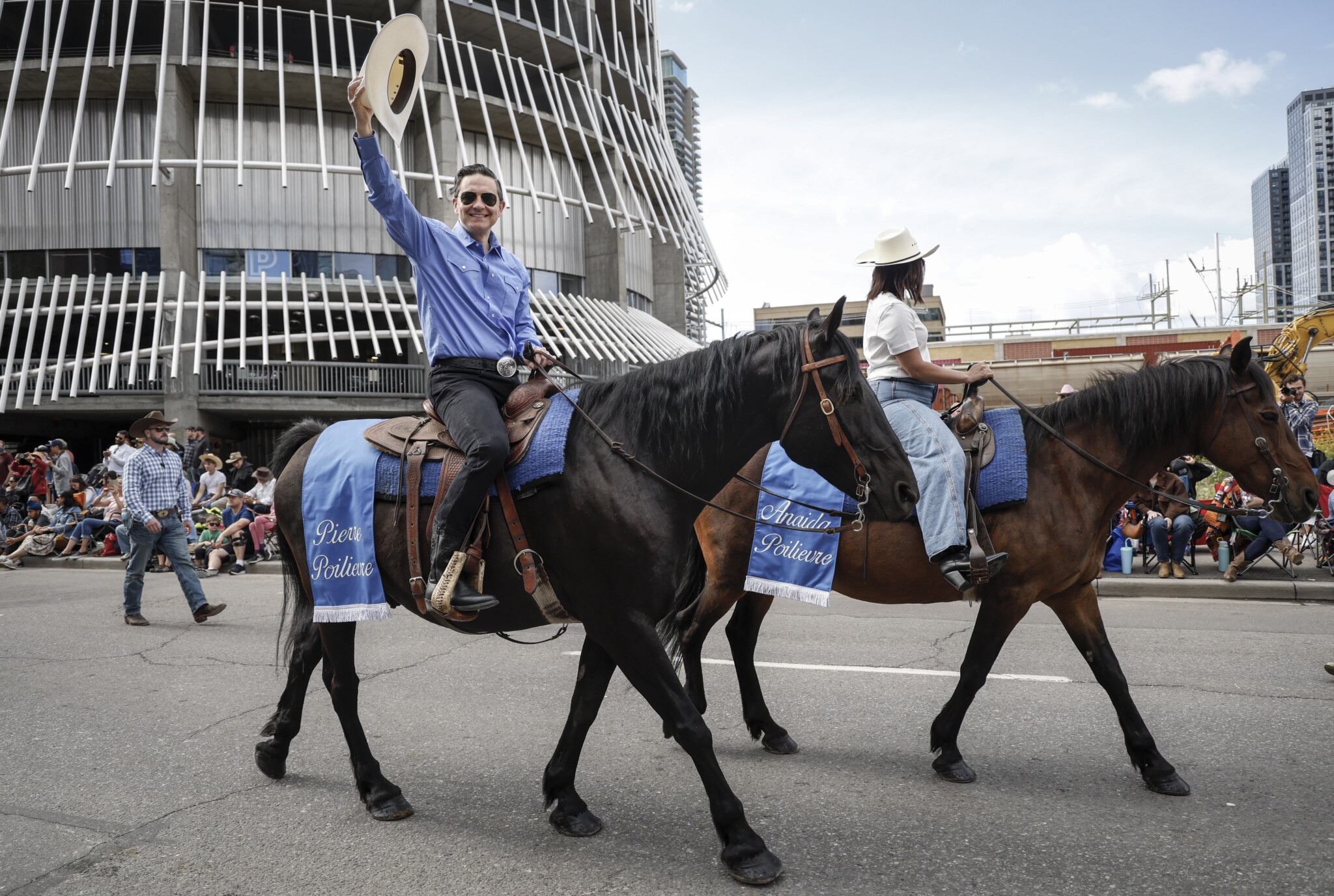
Conservative Leader Pierre Poilievre, left, waves to the crowd as he rides in the Calgary Stampede parade in Calgary, Alta., Friday, July 4, 2025. Jeff McIntosh/The Canadian Press.
Federal Conservative conventions are structured to minimize public conflict.
Policy and governance proposals are filtered through breakout sessions to ensure only broadly supported items reach the plenary floor. This reflects a long-standing institutional preference for closure and cohesion, rather than a place to entertain fringe ideas.
4. Liberal floor-crossing rumours have cooled
Speculation that the Liberals could use the Conservative convention to spring another floor-crossing announcement appears to be fading.
The Liberals, who returned to the House of Commons this week two seats short of a majority, remain motivated to make incremental gains that would strengthen their hold on Parliament. But while rumours of more imminent defections circulated widely around the holidays, insiders now say momentum has slowed.
That has not stopped Liberal strategists from closely watching the outcome of Poilievre’s leadership review. A clear doubling down on his vision and style of politics could encourage any remaining skeptics to consider alternatives—or so the theory goes.
5. Signals of election readiness
For Brodie, the leadership review functions as a sorting mechanism. A strong result for Poilievre would not only affirm his leadership but also clarify the party’s trajectory heading into the next election.
That trajectory will be reinforced by what the party reveals about its financial position. Brodie has pointed to the Conservative fund report, scheduled for Friday morning, as a key moment when delegates and observers will get fresh insight into how well-positioned the party is for a future campaign.
“Delegates will want to hear that the party has secured both enough cash in the bank and enough of a line of credit to withstand an election at any time,” Brodie said.
6. Federal-provincial relations
A lot of hay has been made of the recent differences between Poilievre and conservative premiers, particularly in Alberta and Ontario. Brodie urges caution against overinterpreting those tensions.
“These sorts of things are inevitable,” he said. “Provincial premiers answer to provincial electorates.”
Advocating for their jurisdictions means premiers often have to work pragmatically with whoever is in Ottawa. By contrast, a federal opposition leader must differentiate and define a national alternative.
Nevertheless, the overlap at the grassroots level—where the same volunteers often canvass and fundraise for both federal and provincial conservative organizations—is precisely why the scheduling conflict between the CPC convention and the Ontario PC convention matters.
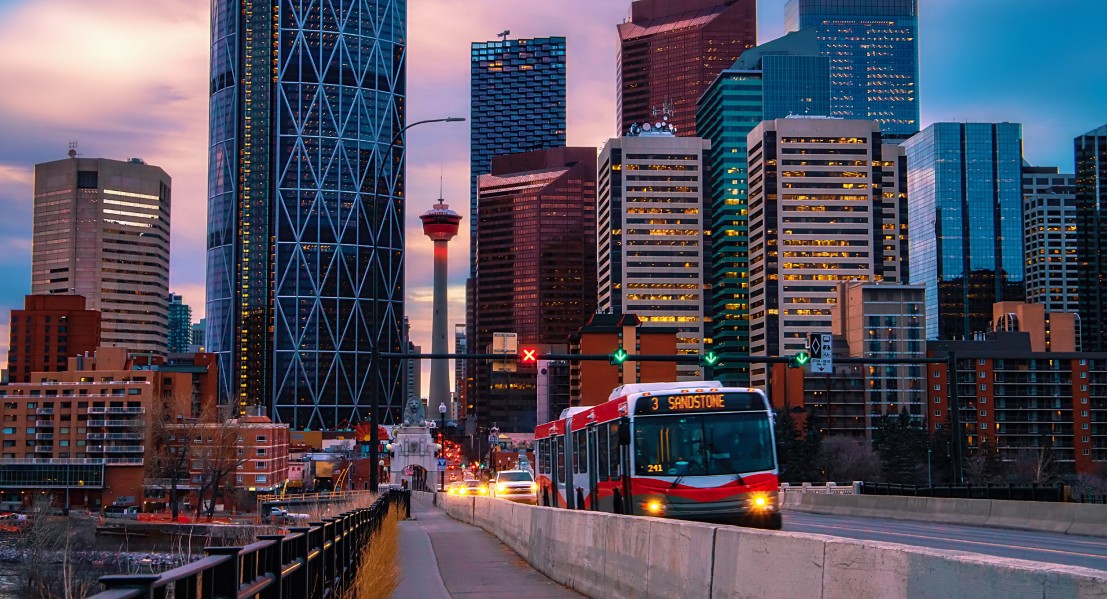
The Conservatives’ convention pamphlet features images of downtown Calgary. Credit: Conservative Party of Canada.
It will be worth watching how many Ontario Progressive Conservative activists choose to attend the federal convention despite the clash. Attendance could signal, quite literally, where the real action is at amid a polar vortex in Ford Nation.
7. Poilievre’s most controlled stage
For three days, everything from speakers to program sequencing is engineered by the party. Brodie calls it the only venue Poilievre will have for years that is entirely “his show.”
“We’re going to get Mr. Poilievre in his purest form, the way he wants to reveal himself,” he said.
That makes it the clearest window into how he intends to frame his coalition, his grievances, his policy direction, and his route back to power. It also makes his leadership speech particularly revealing. How much of it is aimed at reassuring core Conservatives versus projecting outward to the broader electorate may signal just how confident he is about the result he is about to receive.
“There’s a psychology of disappointment from the election campaign last year,” Brodie said. “How he’s going to acknowledge that the campaign fell short, and yet cheer up the delegates enough to support him for the next push forward—that’s the challenge.”
8. Surprises are still possible
For all the emphasis on discipline, structure, and managed outcomes, Brodie is careful not to oversell certainty. Leadership reviews are conducted by secret ballot, and that alone introduces an element of unpredictability—just ask Jason Kenney.
“You’ll recall that it was three years ago now that Mr. Kenney called a leadership review…for his leadership of the United Conservative Party here,” Brodie said about the former Alberta premier.
“He won [nearly] 52 percent backing of his leadership in that vote and deemed that was not enough for him to carry on, and so resigned the leadership and made way for Danielle Smith’s victory.”
Delegates may signal loyalty publicly while making different calculations privately. It can happen, sometimes even within a narrow window after hearing the leader’s speech, which immediately precedes the vote.
A dramatic upset is unlikely, but leadership reviews are designed to test authority in real time. Even in the tightly controlled environment that is the BMO Centre this weekend, the final number can raise eyebrows.
Stay tuned: The Hub’s Alberta Edge podcast will tape and release an episode straight from the CPC convention this Thursday!

Falice Chin is The Hub’s Alberta Bureau Chief. She has worked as a reporter, editor, podcast producer, and newsroom leader across Canada…
As Conservative delegates gather in Calgary for their party convention, the focus is on Pierre Poilievre’s leadership review. While public discourse centres on falling favorability and caucus exits, former party executive director and University of Calgary political scientist Ian Brodie argues these are distractions. The review’s outcome will hinge on institutional mechanics and a delegate base prioritizing consolidated authority. Brodie compares the situation to Stephen Harper’s 2005 leadership review, emphasizing discipline and closure. He notes that secret ballots can still yield surprises, and the review is decided by committed activists, not the general electorate, with Poilievre’s past success setting a high benchmark for his current mandate.
Does the Conservative leadership review truly reflect public opinion?
What does Pierre Poilievre's leadership review benchmark mean for his mandate?
How might the delegate selection process influence the leadership review outcome?




Comments (3)
A couple of thoughts:
1) “Each riding carries equal weight.” This is theoretically true. However, I moved from Calgary to Toronto three years ago, and since then I have tried to get involved in my local constituency association. It appears that there isn’t one. And, judging by the lack of response to my multiple emails to the party and to the Ontario National Council representatives, no interest in having one.
Admittedly, inner Toronto is not exactly an electoral gold mine for Conservatives, but this still seems inexplicable to me. I live in one of the toughest Toronto ridings for Conservatives, yet the candidate – a sacrificial lamb appointed by party office well after the election started – came second with 11,060 votes (~19% – 6.4% higher than the 2021 election). Surely a moderately talented organiser could coax a few of those into forming quorum at some constituency meetings, and maybe actually campaign in elections?
I am forced to wonder if this lack of interest is in some way a tactic of those who wish to “consolidate authority” (as paranoid as that sounds). I would have attended the Convention next week were I able to become a delegate but, as far as I know, there will be no delegates from my riding. I wonder how many other ridings in Ontario or elsewhere that that is also the case? In theory there should be about 4,116 delegates, assuming a full cohort, not including special delegates. It will be interesting to see how many are actually certified at convention.
2) One risk of the secret ballot – that is probably low at this moment, but not zero – is the possibility that Pierre will be weakened by a low vote of support, not by delegates who want him to be more moderate/friendlier/centrist/etc., but by those who want him (or someone else) to be *less* so (Trumpers, separatists, antivaxxers, PPC-sympathetic, etc.). I certainly don’t hope for this, as it would be a disaster for party and Canada, but we live in very uncertain times.