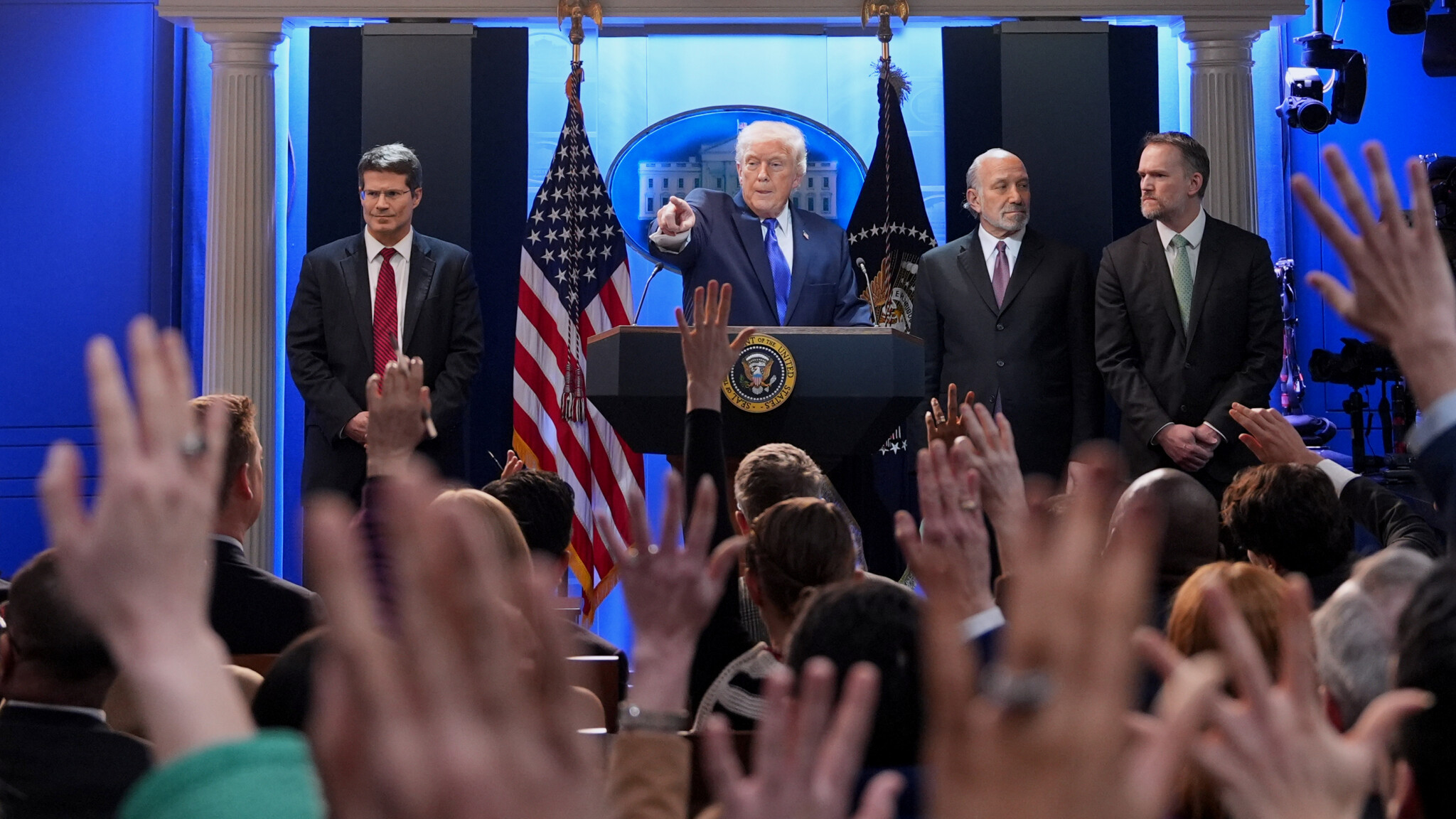
Last Friday morning, the U.S. Supreme Court delivered a long-awaited decision limiting President Trump’s tariff powers. The Court held that the International Emergency Economic Powers Act (IEEPA) does not authorize the president to impose tariffs. IEEPA was the statute the Administration used to justify many of its 2025 tariffs, including the country-specific levies tied to declared “national emergencies” related to fentanyl trafficking and trade deficits.
Within hours, the White House pivoted to a different tool: Section 122 of the Trade Act of 1974. The president signed a proclamation imposing a global import surcharge of 10 percent. The following day, he announced on social media that he was raising the new global tariff to 15 percent, the statutory maximum. Unlike the IEEPA regime, Section 122 is explicitly time-limited: these new global tariffs only last for 150 days unless Congress passes legislation to affirm them.
The replacement of country-specific IEEPA tariffs with the new Section 122 global levy does not end high U.S. tariffs—it mostly reshuffles them. Sectoral tariffs imposed under Section 232 on products like steel, aluminum, autos, and lumber remain in force, and the new surcharge does not apply on top of them. Countries that had very high IEEPA rates, especially those whose export baskets are concentrated outside the main Section 232 sectors, will see their effective tariff rates fall. Others, like the United Kingdom, that had negotiated tariffs below 15 percent, will face higher rates. The Yale Budget Lab provides some estimates that in the aggregate, the effective U.S. tariff rate may only fall by two to three percentage points.
But the decision matters beyond the arithmetic. In ruling that President Trump cannot use IEEPA to impose tariffs, the Court has curtailed his ability to use tariff threats as leverage or punishment. Tariffs on Denmark for refusing to cede Greenland, or on Canada for airing a television ad highlighting Ronald Reagan’s support for free trade, are now off the table. The president can still set tariffs, but no longer on a whim and no longer targeted at individual countries through IEEPA.
At the same time, the president’s response to the ruling creates a new source of policy uncertainty. The Section 122 global tariff expires after 150 days unless Congress extends it, and the administration will likely pivot to yet another tool if legislators fail to act. Some legal experts argue that Section 122, which was designed for the Bretton Woods era’s fixed exchange-rate system, does not apply in the modern macroeconomic context, which could set the stage for additional litigation.
For Canada specifically, the near-term impact is modest. Prior to the Court’s ruling, Canada faced the lowest overall tariff rate of any U.S. trade partner—about 6 percent when weighted by 2024 trade flows, according to estimates in the Yale Budget Lab. Canada’s headline IEEPA tariff rate of 35 percent was fairly high, but most of our exports, except those subject to Section 232 sectoral tariffs, received preferential treatment under CUSMA. The new 15 percent global tariff maintains the CUSMA exemption and does not alter the sectoral tariffs, so Canada’s effective tariff rate will remain largely unchanged in the short run.
View reader comments (0)
Looking ahead to the CUSMA review process that begins this summer, the Supreme Court’s decision quietly changes the bargaining geometry. President Trump can still withdraw from CUSMA on six months’ notice, but that outcome may be less painful now that he cannot use IEEPA to punish Canada with country-specific tariffs, especially if the Section 122 global surcharge sunsets after 150 days.
There is, however, one other statute the president can still use to target Canada: Section 301 of the Trade Act of 1974, which authorizes him to levy tariffs on a country in response to “unreasonable or discriminatory” foreign trade practices. This law cannot be deployed on a whim—it requires an investigation and consultations with the government of the country in question—but it imposes no upper bound on the tariff rate and has a much longer sunset period of four years.
Canada has several trade policies that could reasonably justify a Section 301 investigation. The two most obvious examples are the provincial embargoes on U.S. alcohol products that were enacted in response to President Trump’s IEEPA tariffs, and our scheme for allocating dairy import quotas that is designed to give domestic processors an unfair advantage over American producers.
Now that the Supreme Court’s ruling has ended all country-specific tariffs targeted at Canada, we should work quickly to correct these discriminatory practices before the review process starts.
The U.S. Supreme Court has limited President Trump’s tariff powers by ruling that the International Emergency Economic Powers Act cannot be used to impose tariffs. In response, the administration implemented a 10 percent global import surcharge under Section 122 of the Trade Act of 1974, quickly raised to 15 percent. This new tariff is time-limited to 150 days unless Congress acts. While the overall U.S. tariff rate may only slightly decrease, the ruling curtails the president’s ability to target individual countries with tariffs. For Canada, the immediate impact is modest due to CUSMA exemptions, but the ruling alters the CUSMA review process. Canada should address discriminatory trade practices to avoid potential tariffs under Section 301 of the Trade Act.
How does the Supreme Court's decision limit the President's trade power, and what's the potential impact on future trade negotiations?
What are the potential economic consequences of the new global tariff, and which countries might be most affected?
What actions should Canada take to mitigate potential trade risks, given the changing US trade policy landscape?



Comments (0)